APEC in Shenzhen: the village near the summit that paints for the world
This week a lot of eyes are on Shenzhen. The 33rd APEC Economic Leaders' Meeting is being held in the city on 18–19 November 2026, and the streets around us have changed colour — red flags, purple APEC banners, flower displays at the roundabouts. We walked out of the studio and found the same banners hanging in our own lane.
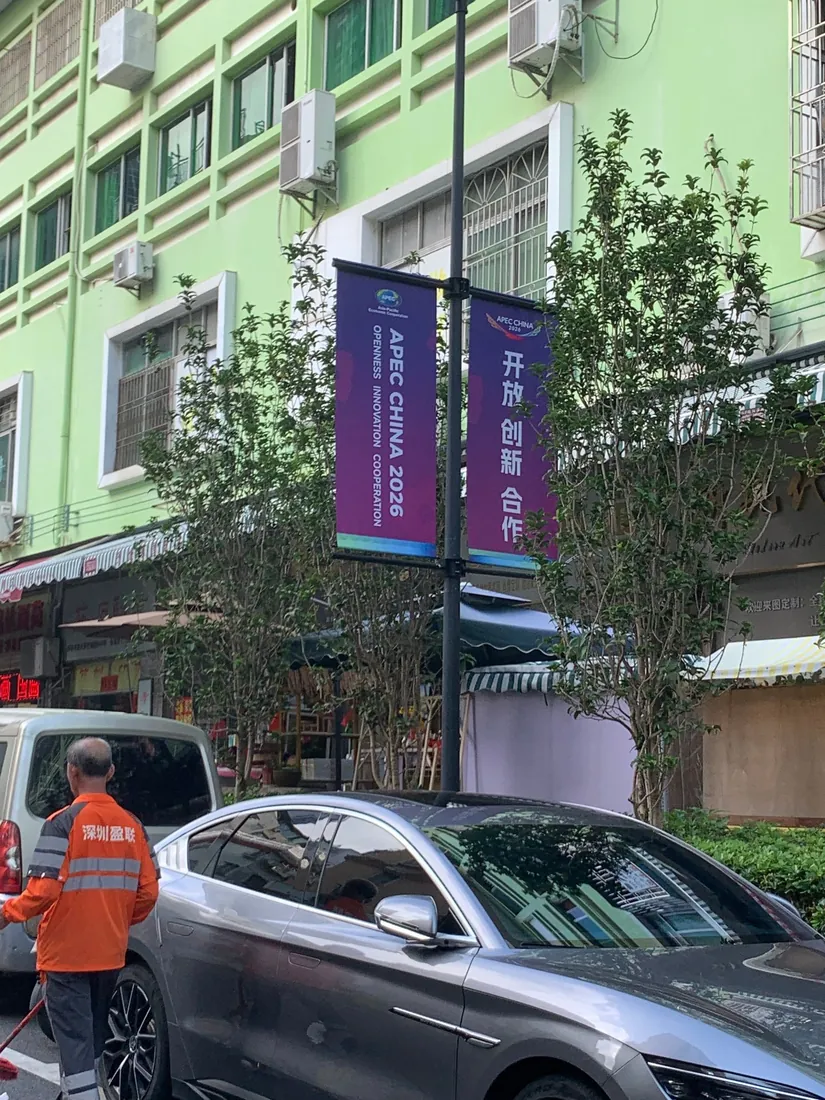
We are not writing this as commentary on the meeting. We are a painting studio, and our work is more ordinary than that. But there is a small, useful thing to say from where we sit: when a city suddenly becomes interesting to the world, the places that make things by hand become interesting too. Dafen is one of those places.
Why Shenzhen is in the spotlight
China is hosting APEC for the third time, and the theme chosen for 2026 — "Building an Asia-Pacific community and promoting shared prosperity" — sits alongside three priorities: openness, innovation and cooperation. Around 300 events are taking place across the year, with the leaders' meeting and the CEO summit in Shenzhen this week.
Visitors arriving for the meetings are seeing a city that is hard to describe in one sentence. Shenzhen grew from a small fishing settlement into a dense, modern metropolis in roughly four decades. Overseas coverage this week has leaned on that contrast: drone deliveries, robot shops, an unusually futuristic skyline. "ShenzhenTravel" has become a search term in its own right.
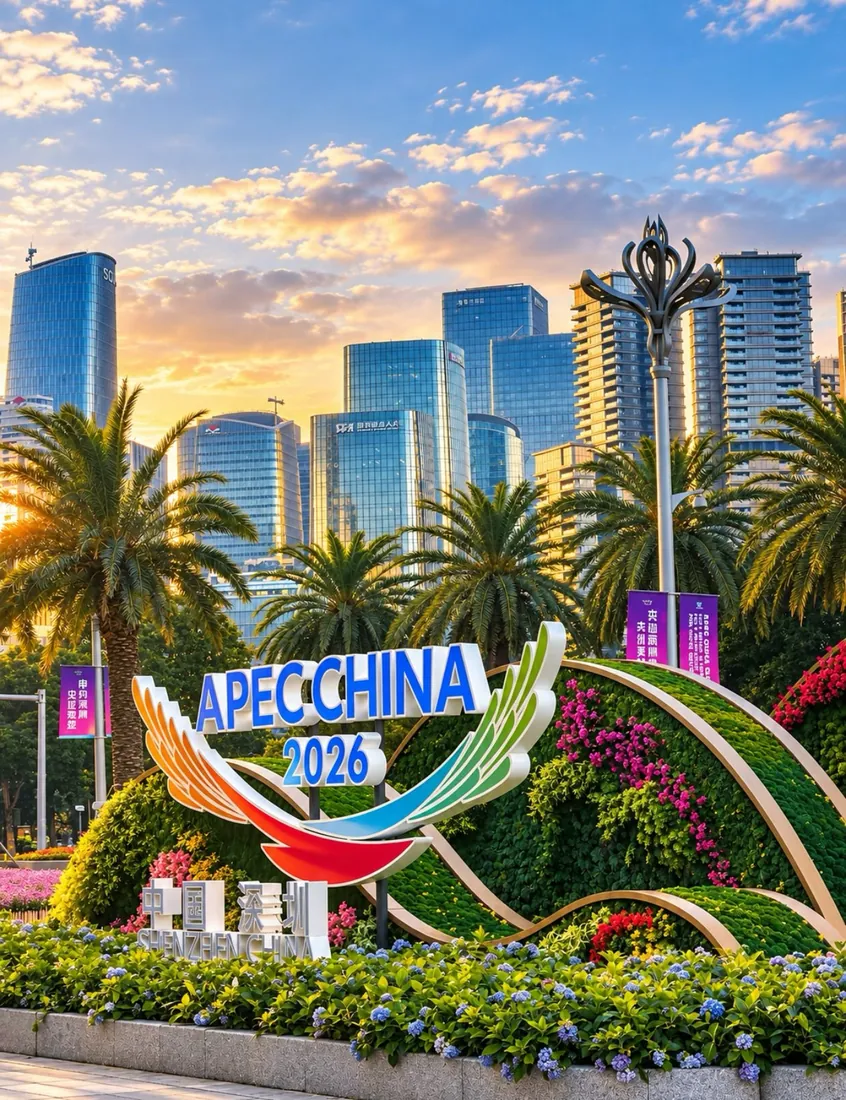
If you are one of the people who has landed here because of APEC — for the meetings, for business, or just following the pictures — this is a practical guide to a smaller corner of the city, about an hour from the main venues by car.
A short way to spend a half-day in Dafen
Dafen Oil Painting Village is in Longgang district, in the north-east of Shenzhen. It is not a polished art quarter; it is a working village where galleries and studios occupy ordinary apartment blocks. That is most of its charm. A half-day is enough for a first look.
- Start at the village sign and the brush sculpture. It is the familiar photo stop, and a fair introduction: a huge hand holding a brush, pointing up.
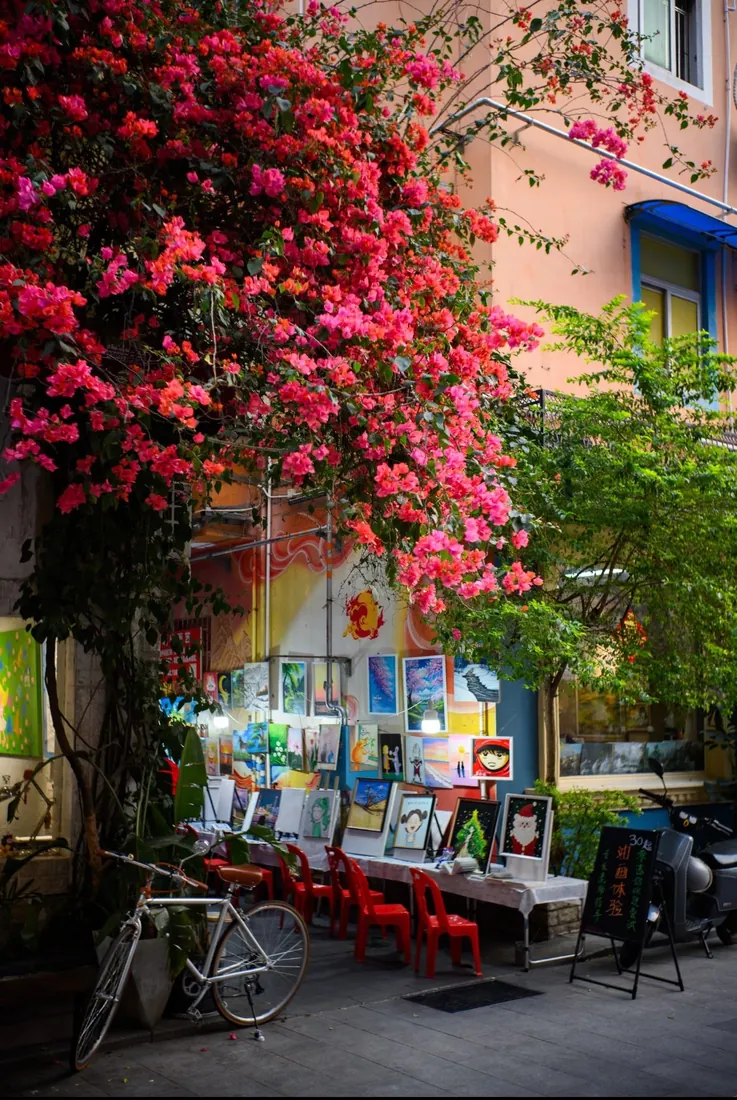
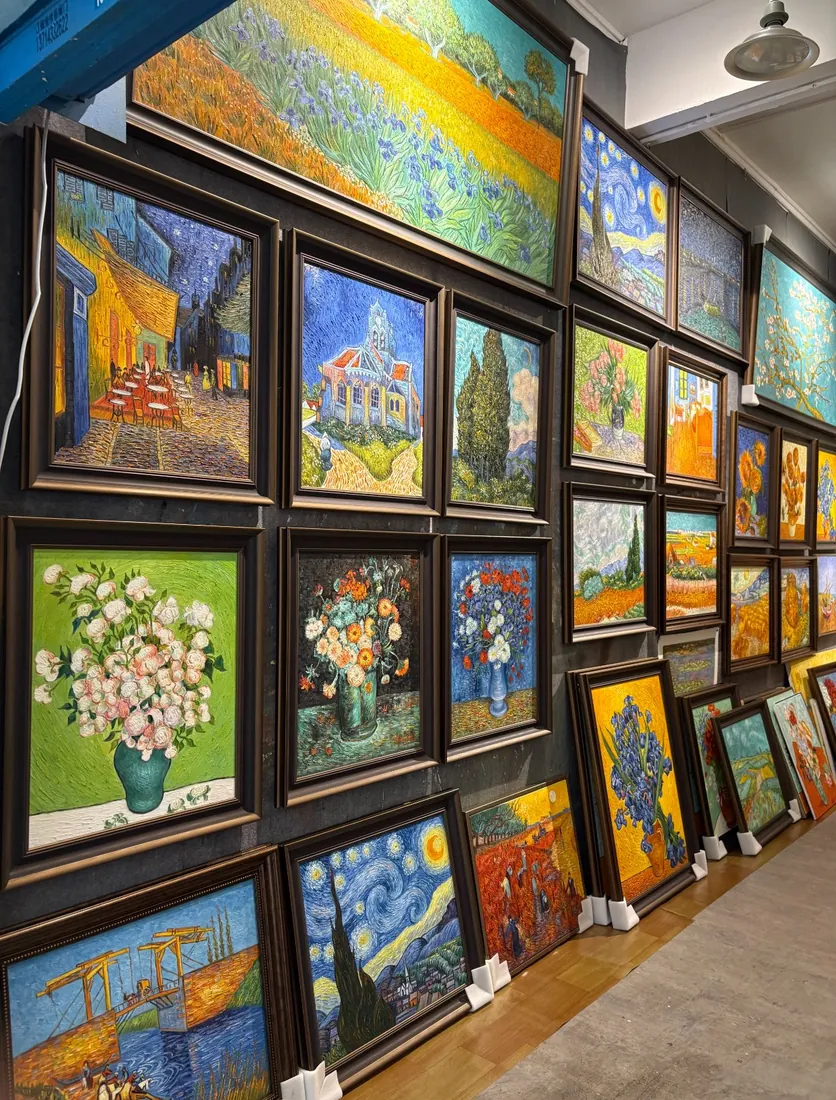
- Walk the lanes rather than the main road. Paintings lean against walls, easels sit under flowering vines, and many shops will let you look in without any pressure to buy.
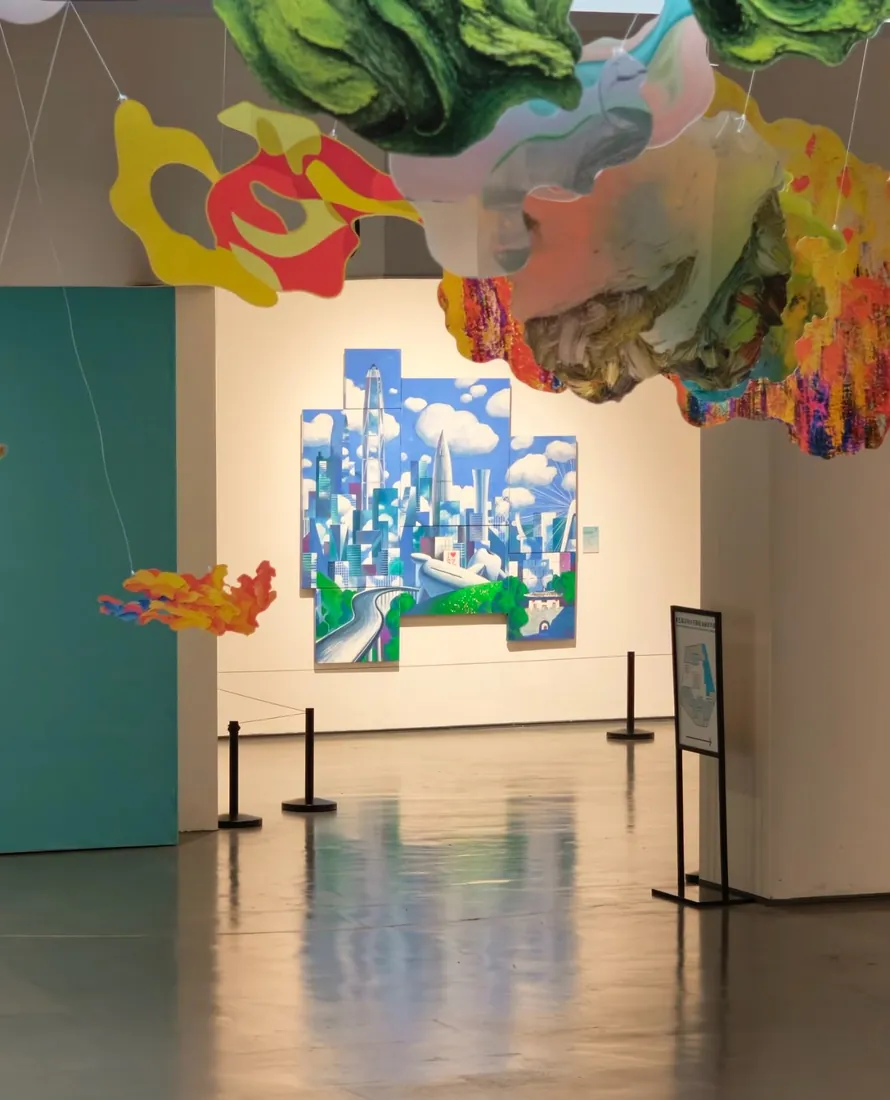
- Step into the Dafen Art Museum. It opened in 2007 and is a quiet counterweight to the commercial streets. Exhibitions here often show work that is deliberately contemporary — a useful check on the idea that the village only copies.
- Leave time to sit down. A few galleries have tables and chairs outside; it is a slow place once you stop trying to "do" it.
Getting here, in plain terms
Dafen is reachable on Shenzhen's metro — look for the Dafen station on Line 3 — and the village is a short walk from there. If you are staying near the city centre or the Convention and Exhibition Centre for the APEC events, allow roughly an hour each way depending on traffic; this week, allow more. Taxis and ride-hailing apps work well, and the village is used to visitors who do not speak Chinese.
Most people who come leave with either a small canvas or a conversation about a bigger one. If you want something made to a particular size, it is simpler to arrange it before you fly home: send the dimensions and a reference image over WhatsApp, and the finished painting can be shipped to you rather than carried through an airport.
What people actually take home
The obvious souvenir is a reproduction of a public-domain masterpiece — Van Gogh's sunflowers and starry skies appear on more walls here than anywhere else we know. Those are painted by hand, at many price levels, and they travel well rolled in a tube.
A growing share of visitors ask for something more personal: a pet, a family photograph, a view from a hotel window. That is the part of the village that has changed most in the years we have worked here. It is still a place that can produce a conventional reproduction quickly, but it is also a place where an original idea can be painted from a photograph and shipped abroad.
Practical questions
- Is Dafen open during the APEC meetings?
- The village is a residential and working area rather than a ticketed attraction, so galleries generally keep their own hours. During the APEC week (18–19 November 2026) traffic and security arrangements in Shenzhen may affect travel times, so check locally before you set out.
- How far is Dafen from the APEC venues?
- Dafen is in Longgang district in the north-east of Shenzhen; the main meeting and exhibition venues are in other districts. It is a cross-city trip rather than a short walk — allow around an hour by car in normal traffic, longer during the summit week.
- Can I get to Dafen by metro?
- Yes. Shenzhen Metro Line 3 serves Dafen; the village is a short walk from the station. It is usually the least stressful option during big city events.
- Do I need to speak Chinese to buy a painting?
- Not necessarily. Many gallery staff use translation apps, and arranging a commission over WhatsApp is straightforward — you can send photographs and measurements and receive a written quote in English.
- Can a painting be shipped instead of carried home?
- Yes. A finished canvas is usually rolled in a tube or packed as a stretched painting and sent by tracked courier. We photograph the finished piece for approval before packing it.
- Are the paintings hand-painted?
- In the galleries here, hand-painted oil reproductions are the norm, alongside some printed canvas sold at lower prices. If it matters to you, ask the shop directly and look closely at the surface — brush texture is the giveaway.
- What should I know about shipping costs?
- Freight depends on size, whether the canvas is stretched or rolled, and the destination. Ask for the painting and the delivery as separate lines on the quote so you can see what you are paying for.