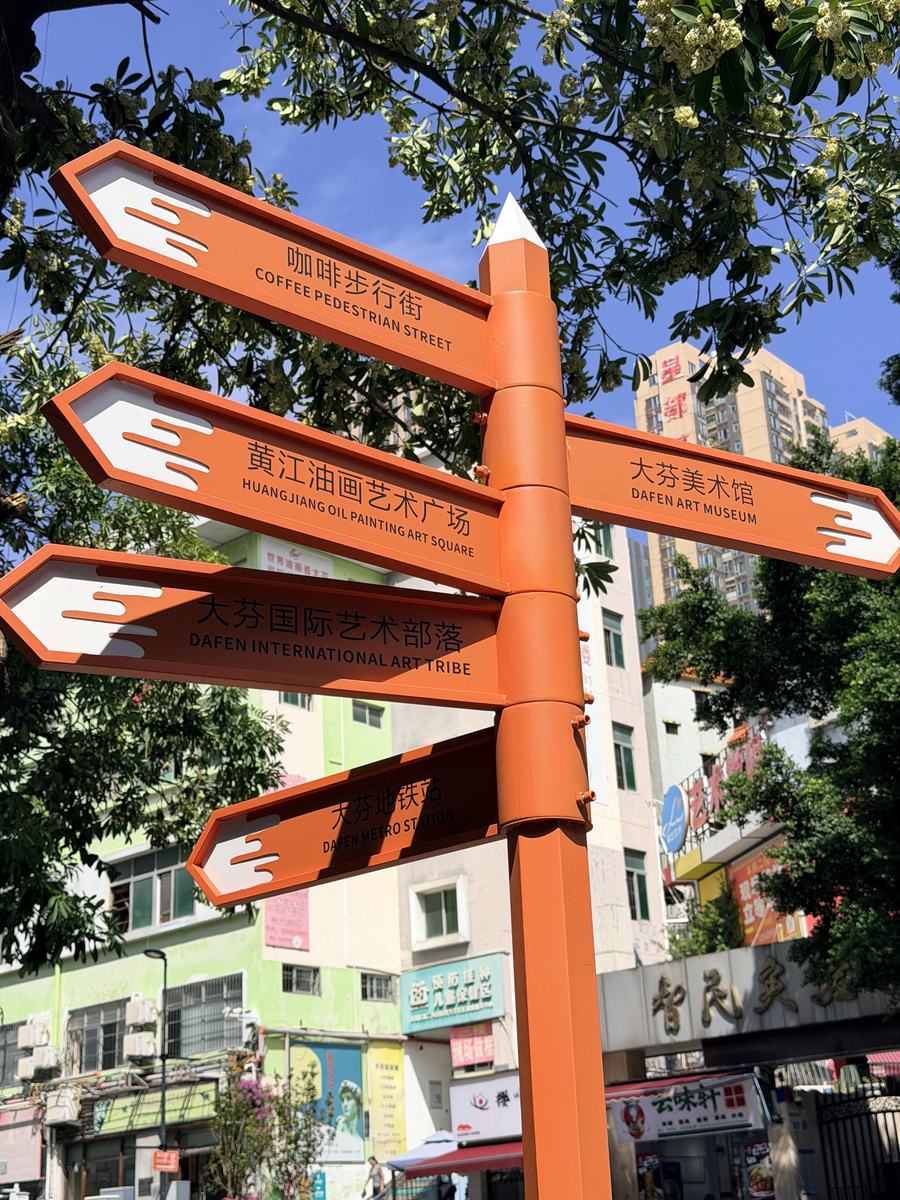
Thirty-five years ago, Dafen was a Hakka farming hamlet of about 300 people with a per-capita income under 200 yuan a year. Today it is the source of a large share of the world's hand-painted oil paintings. The story of how a rice field became an art factory is short, strange, and worth knowing if you are about to order a painting from it.
This is the timeline, drawn from government and press records, of how Dafen Oil Painting Village came to be.
Want a hand-painted oil on your wall? Tell us the size and frame — exact quote back within the hour.
💬 Get a Quote on WhatsAppBefore 1989: a village like any other
Dafen was a Hakka village in Buji, Longgang District, Shenzhen. People farmed. Per-capita income was under 200 yuan a year. There was no art industry and no reason to expect one.
1989: the man who brought painting to Dafen
In 1989 the Hong Kong art dealer Huang Jiang arrived in Dafen, rented rooms, hired painters and students to copy works, bought the output and exported it in bulk. That single move seeded what became 'Dafen Oil Painting Village'.
The 1990s: a village becomes a brand
Through the late 1990s, painters and shop owners opened to the public, media discovered and reported on the place, and the name 'oil painting village' stuck. What had been a quiet production hub became a destination.
1998–2004: the government gets involved
In 1998 the Longgang and Buji authorities upgraded the environment and guided the industry; the number of shops passed 100. In 2004 Dafen became the first sub-venue of the Shenzhen (later national) Cultural Fair; a thousand-painter event set a Guinness record; it was named a National Cultural Industry Demonstration Base; annual visitors passed 3 million.
2005–2008: the peak
Between 2005 and 2008, about 70 percent of the oil paintings in the US and EU market came from China, and about 80 percent of China's from Dafen. Export value ran around 1.2 billion yuan a year at the height.
2007–2008: a museum, then a crisis
The Dafen Art Museum opened in 2007 at roughly 20,000 square metres — then the largest in Shenzhen — and won BusinessWeek and Architectural Record's Best Public Project in 2008. That same year the financial crisis hit: export orders fell by more than 60 percent and came close to zero in 2009, pushing the village toward the domestic market and original work.
2010: the 'Dafen Lisa'
At the 2010 Shanghai World Expo, the Shenzhen pavilion — themed on Dafen — had nearly 1,000 painters produce a giant pixel-mosaic Mona Lisa from small oil-painted squares. It was nicknamed the 'Dafen Lisa' and became a media moment.
2016–2018: a new scale
In 2016 and 2017 total output value reached 4.15 billion yuan (about 614 million US dollars), split roughly half domestic and half export. In 2018 the first Dafen International Oil Painting Biennale launched.
Today
Dafen now has more than 1,200 galleries and shops and over 8,000 painters (about 20,000 including the surrounding area), producing and selling more than one million canvases a year. Original work has risen to roughly a fifth or a third of output, with 300-plus original painters.
- Tell us the painting, size and frame. WhatsApp is fastest — send a photo of the wall if you want sizing advice.
- Get an exact quote with the timeline confirmed in writing.
- 70 percent deposit starts the painting. Bank transfer, PayPal, credit card or Wise.
- We send photographs of the finished painting. You approve it before anything ships.
- Pay the 30 percent balance, then we ship by tracked worldwide courier.
Related pages
→ Dafen Oil Painting Village: the complete guide → Why Dafen became the world's oil painting factory → A shorter history of Dafen Village → Browse hand-painted reproductionsFAQ
When was Dafen Oil Painting Village founded?
Painting production began in 1989, when the Hong Kong dealer Huang Jiang brought copy-work to the village. The 'oil painting village' name and public profile built through the 1990s.
Who is Huang Jiang?
Huang Jiang is the Hong Kong art dealer credited with starting Dafen's oil-painting industry in 1989 by hiring local painters to copy and export Western masterpieces.
How big is Dafen today?
More than 1,200 galleries and shops, over 8,000 painters, and over one million canvases produced and sold each year.
Is Dafen really the source of most of the world's paintings?
At its 2005–2008 peak, about 80 percent of China's oil-painting exports and a large share of the global market came from Dafen. It remains the world's largest hand-painted oil cluster.
Can I visit Dafen?
Yes. The village and the Dafen Art Museum are open to visitors in Shenzhen. See our Dafen Village tour guide for what to see.
How do I order a painting from Dafen?
WhatsApp is fastest: send the painting, size and frame you want, get a written quote, pay a 70 percent deposit to start, approve finished photos, then pay the 30 percent balance and we ship.
Ready to commission a Dafen painting? Send the size and frame — quote back within the hour.
💬 Start My Order