You buy from the studio that paints it — no gallery markup, no reseller margin. Final quote depends on size, frame and destination.
Price by canvas size
Every Pulcinella we paint is made to order, so the price tracks the canvas size and the amount of brushwork involved. These are the sizes our customers order most:
| Size (inches) | Size (cm) | Estimated price | Best for |
|---|---|---|---|
| 16 × 20 in | 40 × 50 cm | $369 | A shelf, a gallery group, a small study wall |
| 24 × 32 in | 60 × 80 cm | $649 | Bedroom, hallway, above a console |
| 35 × 47 in | 90 × 120 cm | $1,099 | Living room focal wall, above a sofa |
| 47 × 63 in | 120 × 160 cm | $1,499 | Large open-plan wall, lobby, hospitality |
Estimates only — the final quote depends on your exact size, frame and shipping destination. Framing and shipping are quoted separately. Duties and import taxes are the buyer's responsibility (DAP).
Tell us your size and frame — we reply with an exact quote, usually within the hour.
💬 Get a Pulcinella Quote on WhatsAppPlanning a wall or comparing options? Save this painting to Pinterest
Why a print cannot do this painting
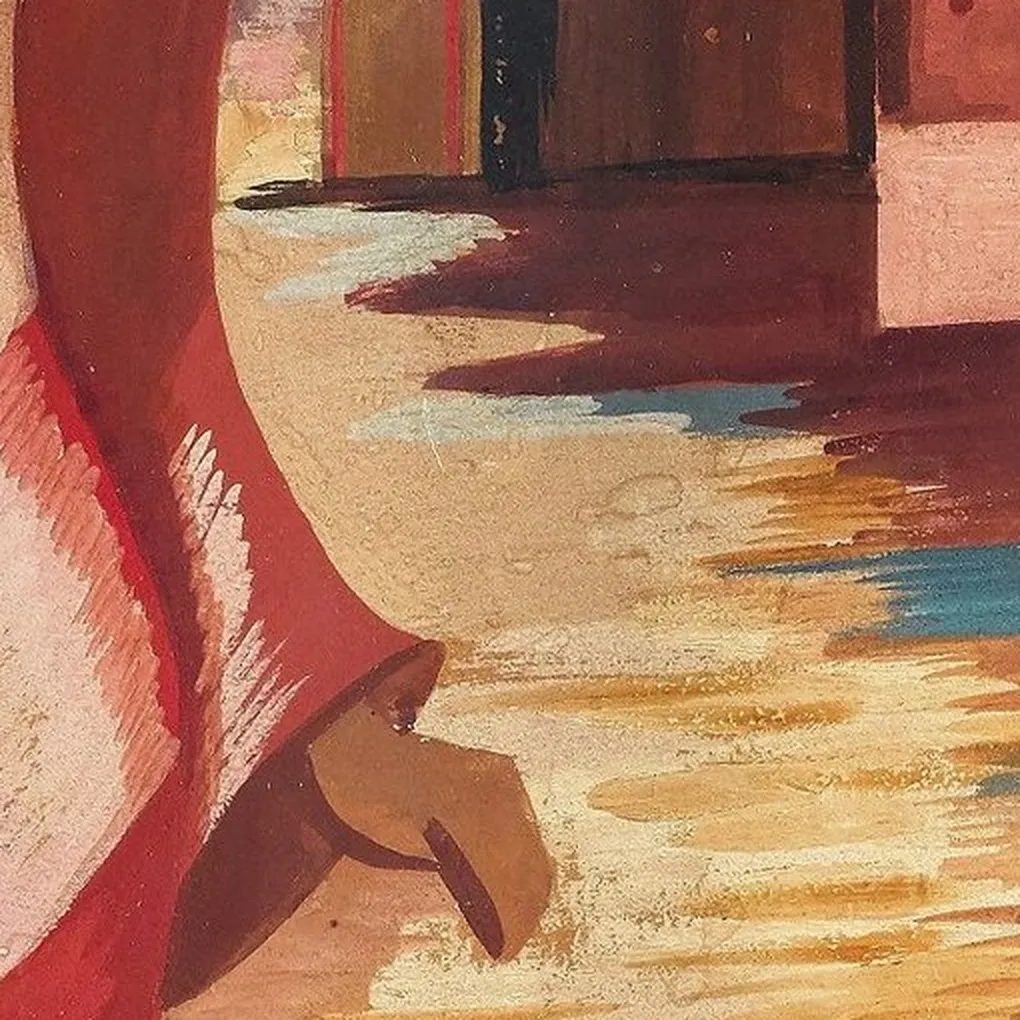
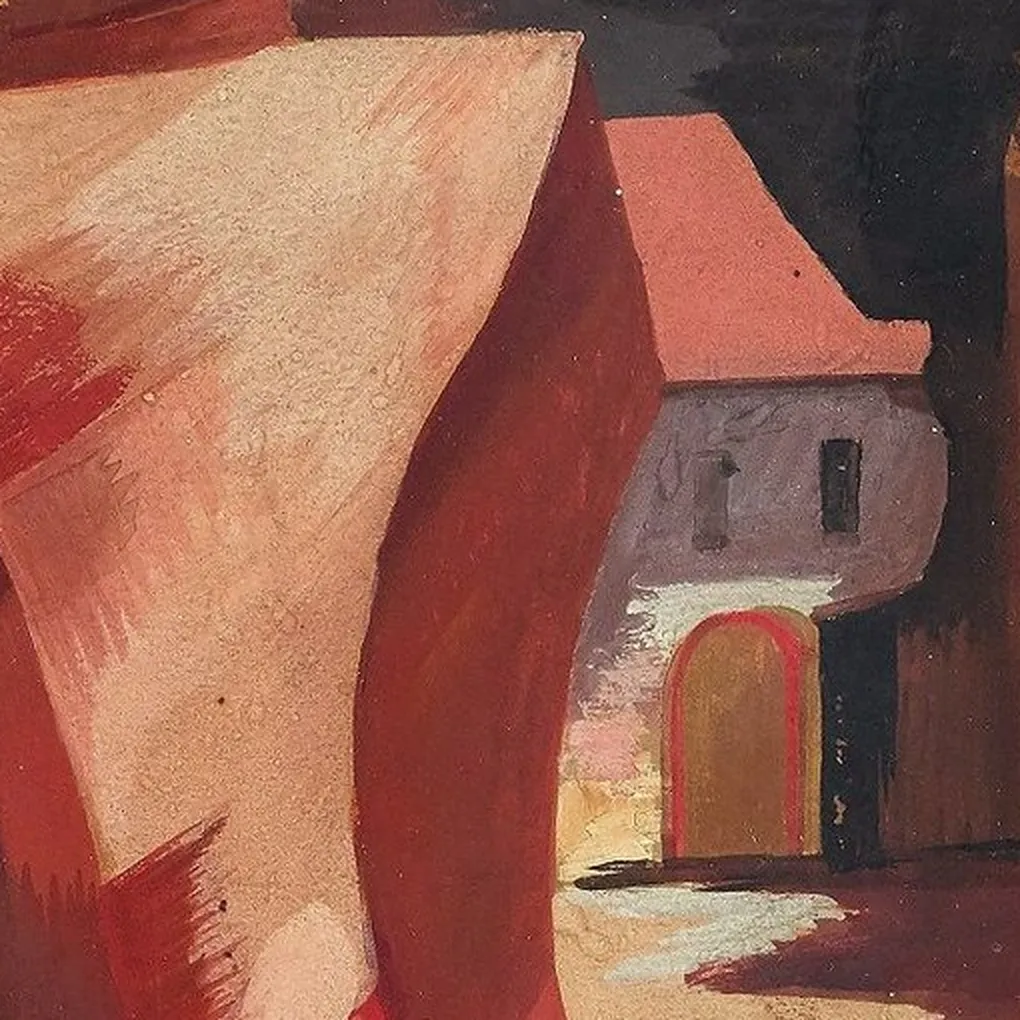
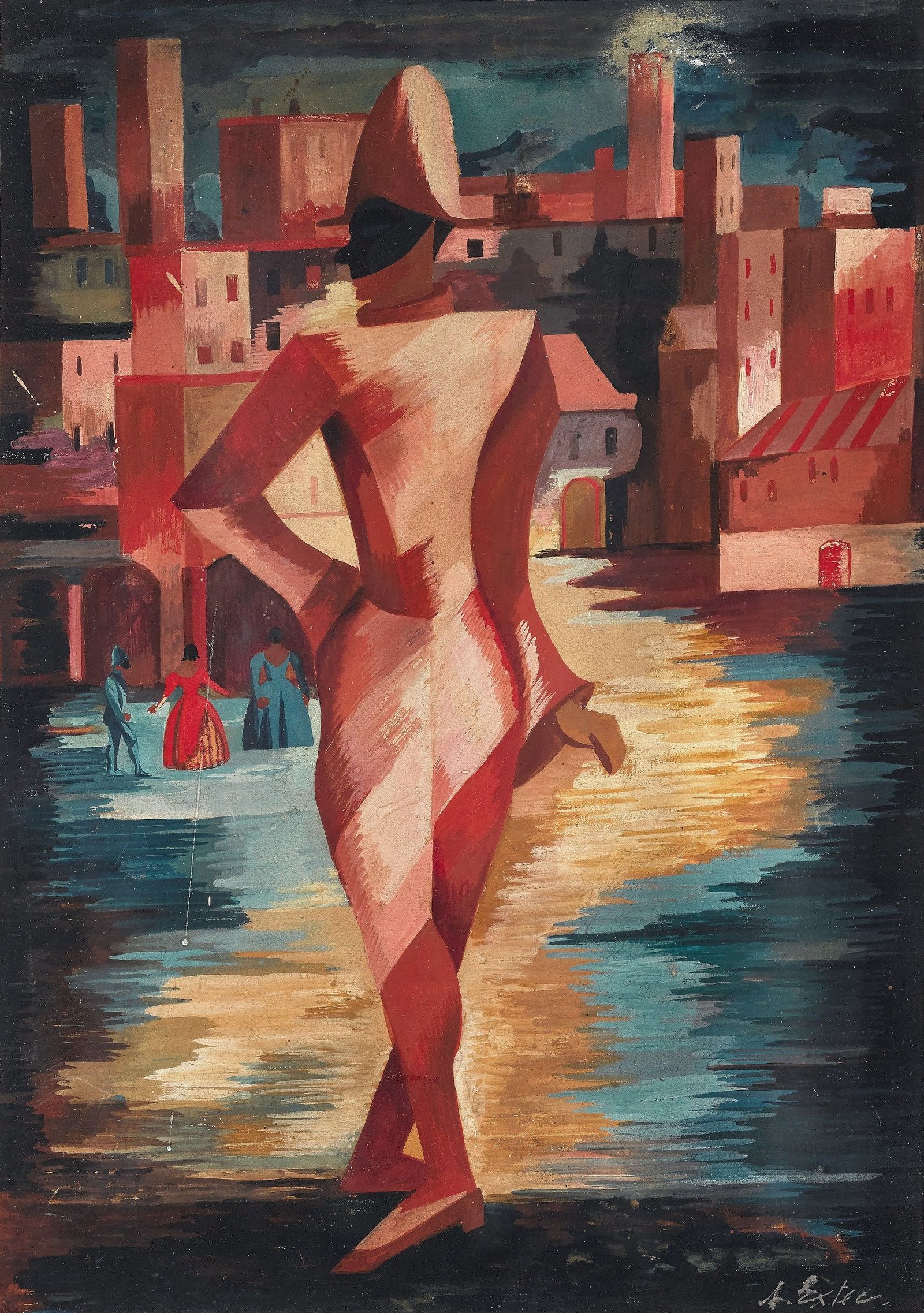
The colour is the whole problem. She puts saturated reds and oranges against black, and printing either dulls the saturation or blows out the black: there is no middle ground, because the picture needs both to be true at the same time. In oil the black can stay a real black while the red stays luminous, because the two are not competing for the same ink.
A print reproduces the colour and the composition but none of that behaviour. The details that make Pulcinella worth looking at collapse into pattern, and the canvas stops being the thing that was made. Under a picture light, ours still behaves like paint.
There is a test we encourage buyers to use on any "oil painting" they are offered: run a fingernail very gently across the surface. A hand-painted canvas feels like terrain. A print feels like glass.
The painting itself
Made in the late 1920s or the 1930s. Pulcinella is a commedia dell'arte character, and she designed for the stage as well as painted, so the figure belongs to the theatre rather than to a life model.
We lay her blacks as a deep mixed dark rather than a tube black, so they stay transparent instead of going chalky, and the saturated passages go over a light ground so the colour reads as lit from within. The hard edges are cut clean with a small brush and we do not feather them.. Reproducing it means solving those problems again at your chosen size rather than enlarging a photograph of someone else's answer.
How our painters reproduce it
Our studio is in Dafen Oil Painting Village, Shenzhen — the centre of hand-painted oil reproduction for more than thirty years. A Pulcinella here is not traced, projected or transferred. The painter works freehand from a high-resolution reference, in layers:
- Composition and ground. The canvas is toned and the main forms laid out in a thin underpainting, matching the original proportions to your chosen size.
- Colour build-up. The palette is mixed in oil, not acrylic — only oil gives the same depth, slow blending and the slightly translucent glow the original depends on.
- Impasto and surface passes. The signature strokes go on last, loaded with paint, following the direction of the original's brushwork. This is the slowest and most skilful stage.
- Drying and inspection. Layered oil needs days to set properly. We let it. Then the finished canvas is checked against the reference for colour, composition and stroke character.
We lay her blacks as a deep mixed dark rather than a tube black, so they stay transparent instead of going chalky, and the saturated passages go over a light ground so the colour reads as lit from within. The hard edges are cut clean with a small brush and we do not feather them.
Where it hangs best
- Music room
- Gallery wall
- Boutique hotel room
- Living room
Framing
Choose gold to echo the original's warmth, matte black for a contemporary room, walnut for a traditional interior, or no frame at all as a gallery-wrap canvas ready to hang. Frames are quoted separately and packed with corner protection.
How ordering works
- Tell us the painting, size and frame. WhatsApp is fastest — include a wall photo if you want sizing advice.
- Get an exact quote. Usually within the hour, with the timeline confirmed in writing.
- 70% deposit starts the painting. Paid by bank transfer, PayPal, credit card or Wise.
- We send photographs of the finished painting. You review it before anything ships. If something clearly does not match your order notes, tell us and we adjust it.
- Pay the 30% balance, then we ship. Tracked worldwide courier, rolled in a rigid tube or crated if framed.
FAQ
Is this hand-painted or printed?
100% hand-painted in oil on artist canvas by a studio painter in Dafen. No printing, no transfer, no giclée. You can feel the brushwork on the surface.
How much does it cost?
Est. $369–$1499 depending on canvas size, from 16 × 20 in up to 47 × 63 in. Frame and shipping quoted separately.
Can I order a size that is not on the list?
Yes — any size. The painter works freehand on a blank canvas, so we can also crop the composition slightly to fit your wall proportions.
How do I approve it before shipping?
We send photographs of the finished painting. You approve first, then pay the 30% balance and we ship. If something clearly does not match your order notes, tell us and we adjust it before it leaves.
How long does it take?
Most take 9–15 days in the studio depending on size and the studio queue. Layered oil needs proper drying time. The timeline is confirmed in writing before any deposit.
Who pays import duty?
Shipping is worldwide and tracked, typically DHL or FedEx, quoted separately. Import duties and taxes in your country are the buyer's responsibility (DAP).
Ready to commission a real Pulcinella? Send the size and frame — quote back within the hour.
💬 Start My Pulcinella OrderBrushwork details
Close-up crops of this 100% hand-painted oil reproduction — real oil texture, never a print.