
The message we get most often is not "how much does a painting cost." It is some version of this: I have never imported anything from China. What happens when it reaches the border?
That is a fair thing to worry about, and it is worth answering properly, because the answer is more boring than people expect. A hand-painted oil painting is one of the least dramatic things you can import. It is not perishable, not restricted, not subject to quarantine, and in most of the world it carries no customs duty at all. What you pay on arrival is usually a consumption tax, and the amount is calculated on a number you can work out in advance.
Below is the whole path: what DAP means, the tariff line your painting enters under, what buyers in six countries actually pay, how we pack, and the five steps from first message to canvas on the wall.
Want a landed-cost estimate before you commit? Send the size, frame and your country — we quote the painting and the duty estimate together.
💬 Get a Quote on WhatsAppOn this page
1. What DAP means, in plain terms 2. The tariff line: HS 9701 3. Duty, VAT and GST by country 4. Why "executed entirely by hand" is the phrase that matters 5. Rolled or framed: it changes freight and the tax base 6. The paperwork you get 7. How long it takes 8. How ordering works 9. FAQ1. What DAP means, in plain terms
DAP stands for Delivered At Place. We pay the freight, the insurance and the handling to get the painting to your address. What DAP does not include is the import duty and the import taxes in your country — those are paid by you when the shipment arrives.
The alternative is DDP — Delivered Duty Paid — where we prepay those charges and nothing is owed at the door. American and European trade buyers tend to ask for it, because it turns a variable into a fixed number and they can pass the landed cost straight into a client budget. If you want DDP, ask when you order and we will quote it with the duty line shown separately, so you can see what it saves you.
2. The tariff line: HS 9701
Countries classify imports using the Harmonized System, and paintings have their own chapter — Chapter 97, works of art. Within it, paintings, drawings and pastels executed entirely by hand sit under HS 9701 (in US filings usually 9701.91; in the UK, commodity code 9701 91 00 00).
The useful part: in most major markets this line is duty-free. Zero. Not "reduced" — zero. The charge you meet on arrival is a consumption tax that applies to imports from anywhere, not a penalty aimed at art or at China.
There is one real exception worth knowing about, and it applies to US buyers: goods of Chinese origin can carry an additional Section 301 tariff on top of the ordinary duty line. At the time of writing that sits at 7.5% for artwork, plus a Merchandise Processing Fee of 0.3464% of declared value. The measures layered on top of Chapter 97 have been revised repeatedly, so treat any figure as a planning number and confirm the current rate when you order. Your broker makes the final call — not us, and not a blog post written a year ago.
3. Duty, VAT and GST by country
Here is what the arrival costs look like in the markets we ship to most. These are planning figures for a hand-executed oil painting, not a quotation.
| Country | Customs duty | What you pay on arrival | Transit |
|---|---|---|---|
| United States | 0% under HS 9701.91 | 7.5% Section 301 (China origin) + 0.3464% processing fee | Express 3–7 days; sea 14–18 days |
| United Kingdom | 0% under 9701 91 00 00 | Effective 5% import VAT on qualifying works of art | Express 3–7 days; sea 25–35 days |
| Germany (EU) | 0% under HS 9701 | 7% import VAT on works of art | Express 4–6 days; rail 16–20; sea 28–35 |
| Australia Shipping to France | 0% under HS 9701 | 10% GST above the A$1,000 line, plus import processing charge | Express 3–5 days; sea 15–25 days |
| Singapore | No duty | 9% GST | Express 2–4 days |
| United Arab Emirates | 5% GCC duty | 5% VAT | Express 2–4 days; sea 14–18 days |
Two things in that table are worth pulling out, because they are the questions that follow.
Why is UK import VAT effectively 5% when the standard rate is 20%? Because for a qualifying work of art, HMRC values the import at a quarter of its worth under section 21 of the VAT Act 1994. A quarter of 20% is 5%. A printed reproduction gets no such reduction and pays the full 20% — which is one of the quiet reasons a hand-painted canvas can be the cheaper thing to import.
Can a business reclaim the VAT? Often yes. A VAT-registered business in Germany can usually reclaim import VAT as input tax on its next return, which is why trade buyers there treat the 7% as a cash-flow item rather than a cost. Private buyers cannot reclaim it. We issue a proper commercial invoice so the reclaim is straightforward — ask for it on the order if your accountant wants particular fields.
4. Why "executed entirely by hand" is the phrase that matters
That phrase is not marketing language we invented. It is the test customs uses to decide whether something is a work of art or a printed reproduction, and the two are classified differently.
A hand-painted oil is easy for an officer to verify: the surface has relief. Paint stands off the canvas in ridges where the brush or knife loaded it, and heavy passages catch raking light. Turn the canvas over and oil has soaked through the weave in the areas that were worked wet — a print has a uniform back. And there is a signature applied in oil, in the painter's hand, not a printed facsimile.
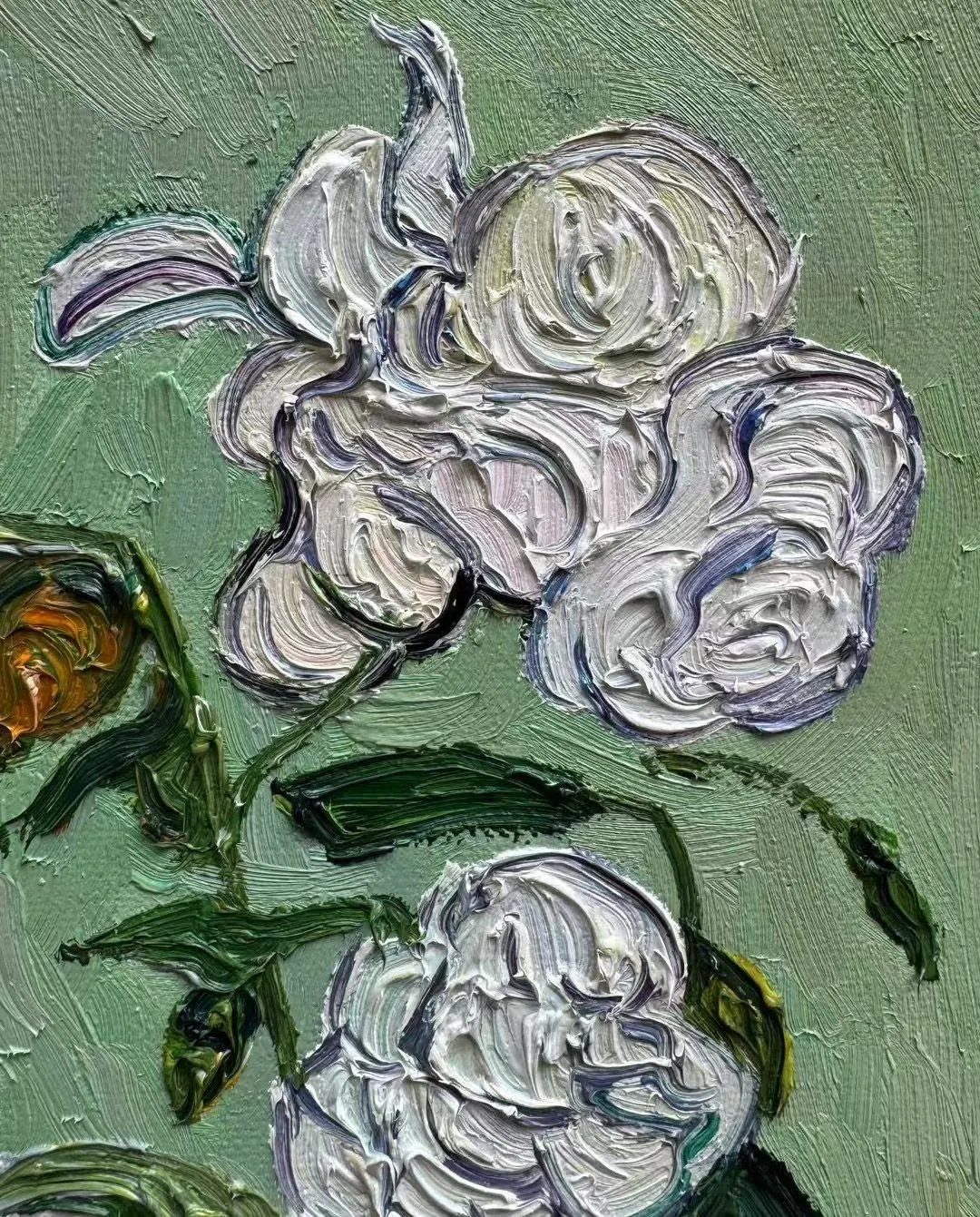
We also sell these honestly, which matters here: a reproduction is sold as a reproduction. We do not represent copies as originals and we do not issue certificates claiming otherwise. That is both the ethical position and the one that keeps a shipment out of trouble.
5. Rolled or framed: it changes freight and the tax base
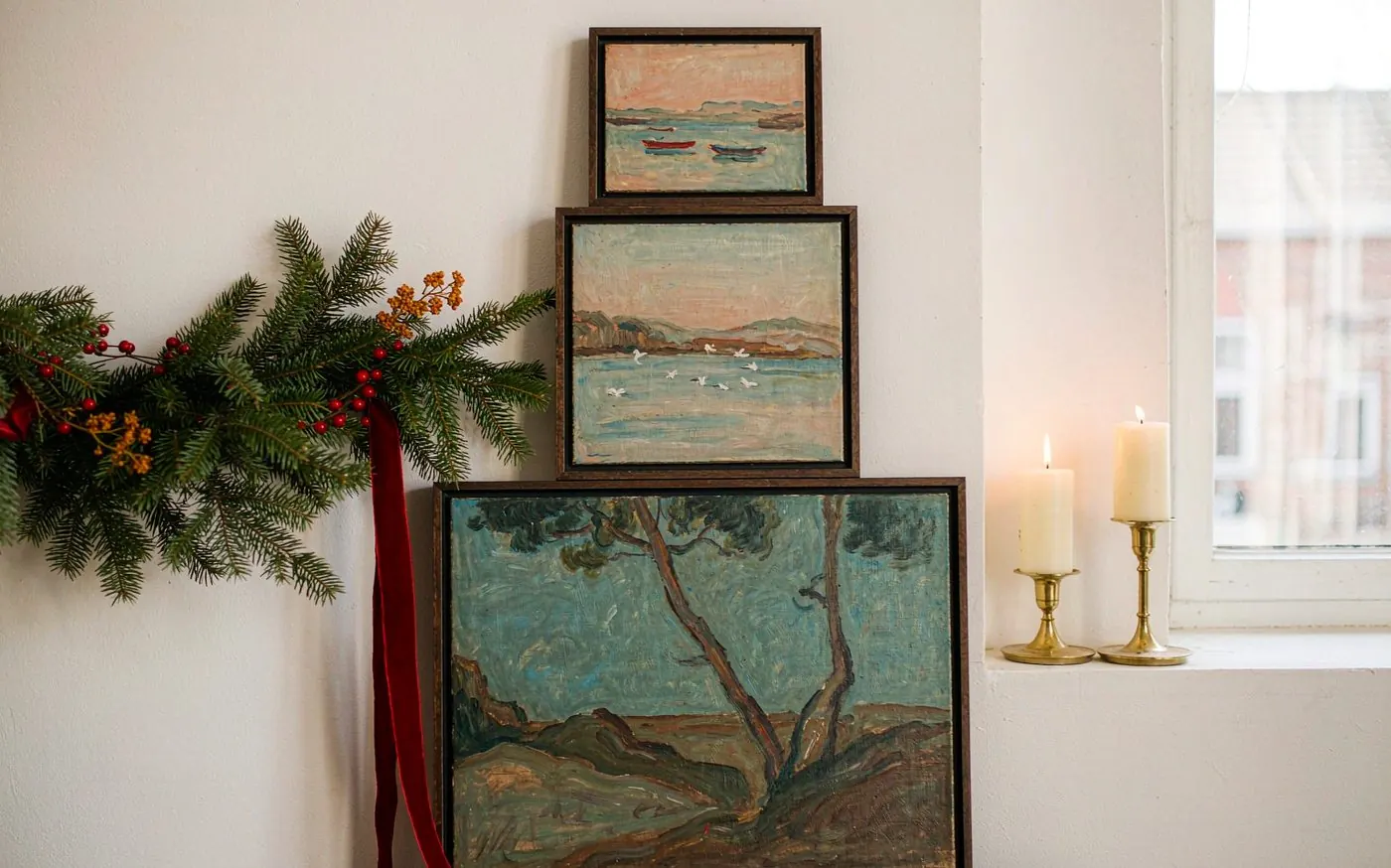
You can have a painting shipped stretched and framed, or rolled in a tube. Most buyers outside China choose rolled, and not only because of the freight.
- Freight. Rolling cuts the volumetric weight dramatically — on a large canvas it can be roughly two thirds less. That saving lands on the courier bill.
- Risk. A rolled canvas in a rigid tube survives handling better than a large framed piece with glass-free but vulnerable corners. Framed works over about a metre travel in a wooden crate, which is safe and heavier and more expensive.
- The tax base. In Australia, GST is charged on the customs value plus duty plus international freight and insurance. Freight is inside the base. Cheaper freight means a slightly smaller taxable figure.
- Local framing. Any competent framer can stretch a rolled canvas onto bars and frame it, and you get to choose the moulding against the actual room.
The one thing we will not do is rush it. Oil cures slowly — a heavy impasto passage can stay soft under the surface for weeks. We let a painting dry properly before it is rolled or packed, because a canvas rolled too early is a painting you will be unhappy with. If you are working to a date, tell us at the start and we will plan the drying time into the schedule rather than skip it.
6. The paperwork you get
Every shipment goes out with a commercial invoice that states:
- The description — hand-painted oil painting on canvas, executed entirely by hand
- The HS classification we are declaring under
- The declared value in the currency you were invoiced in
- The country of origin, stated honestly as China
- Our company details, because a broker will want a real entity on the paperwork
If your broker or freight forwarder needs anything else — a particular reference number for a project, a split invoice, a specific Incoterm — tell us before the painting ships. It is easy to get right beforehand and awkward afterwards.
7. How long it takes
Two clocks run in parallel and it helps to keep them separate. The first is painting time, which depends on size, subject and how many canvases are in the order. The second is transit: express courier runs 3–7 business days to most places, sea freight runs two to five weeks depending on the lane. Drying time sits between them and is not negotiable if you want the painting to last.
Our studio — Shenzhen Adam Art Co., Ltd., operating since 2016 — hand-paints to order with a team of collaborating painters and has produced canvases for buyers in over 20 countries, including pieces as large as 5 by 8 metres. Every canvas is hand-painted in oil on artist canvas. No printing, no giclée, no canvas transfer.
8. How ordering works
- Tell us the painting, size, frame and your country. WhatsApp is fastest. Send a photo of the wall if you want sizing advice.
- Get an exact quote, with the duty estimate and the lead time confirmed in writing.
- a deposit starts the painting. Bank transfer, PayPal, credit card or Wise.
- We send photographs of the finished painting. You approve it before anything ships. Tell us what to adjust and we adjust it.
- Pay the balance, then we ship by tracked worldwide courier.
Related pages
→ Dafen Oil Painting Village: the complete guide → Is Dafen Oil Painting Village legit? Scam or real source? → Shipping to the USA: duty and Section 301 → Shipping to the UK: 0% duty, 5% import VAT → Shipping to Germany: 0% duty, 7% VAT → Shipping to Australia: 0% duty, 10% GST → Shipping and returns policy → Contact us on WhatsApp → How to Order a Hand-Painted Oil Painting from DafenFAQ
Will I have to pay customs duty on a painting from China?
Usually no duty at all. Paintings executed entirely by hand are classified under HS 9701 and enter most major markets at 0% duty — including the USA, the UK, the EU and Australia. What you pay on arrival is normally an import VAT or GST. US buyers should also budget for the Section 301 tariff that applies to China-origin goods on top of the duty line.
What does DAP mean for me as the buyer?
We pay the freight, insurance and handling to your address. You pay the import duty and import taxes when the shipment arrives. DDP is available on request if you would rather have those prepaid so nothing is owed at the door.
Is a hand-painted reproduction taxed differently from a print?
Yes, in more than one place. Chapter 97 covers works executed entirely by hand; printed reproductions are classified elsewhere. In the UK the difference is stark — a qualifying work of art is valued at a quarter of its worth for import VAT, giving an effective 5%, while a print pays the full 20%.
How is the tax calculated?
On the customs value of the painting, which is the invoiced value. In Australia the base also includes duty plus the international freight and insurance, so cheaper freight slightly reduces the GST. Your broker makes the final determination of value and classification.
Can I get a duty estimate before I order?
Yes. Tell us your country, the size and whether you want it framed, and we quote the painting with the duty estimate shown separately, so you can see the landed figure before committing.
Should I order rolled or framed?
Rolled, unless the piece is small. It cuts freight substantially, survives handling better, and any local framer can stretch it onto bars and frame it to suit the room. Framed works over about a metre ship in a wooden crate.
What paperwork comes with the shipment?
A commercial invoice stating the description, the HS classification, the declared value, the country of origin and our company details. If your broker needs extra fields or a split invoice, ask before it ships.
Can a business reclaim the import VAT?
Often yes. A VAT-registered business can usually reclaim import VAT as input tax on its next return, which is why trade buyers frequently treat it as cash flow rather than cost. We issue a proper commercial invoice so the reclaim is straightforward.
Ready to order? Send the size, frame and country — quote with duty estimate back within the hour.
💬 Start My Order