About the original
Rembrandt died in 1669. That puts the painting well outside copyright, which is why we can paint it and you can own it anywhere in the world.
Ours is a painting made with brushes. There is no giclée, no canvas transfer and no digital underlayer anywhere in the process.
It is an original composition painted before 1669, and our version is painted from the surviving image of it.
If you want something printed, we are the wrong workshop. We do not own a printer that touches canvas.
What the painting is doing
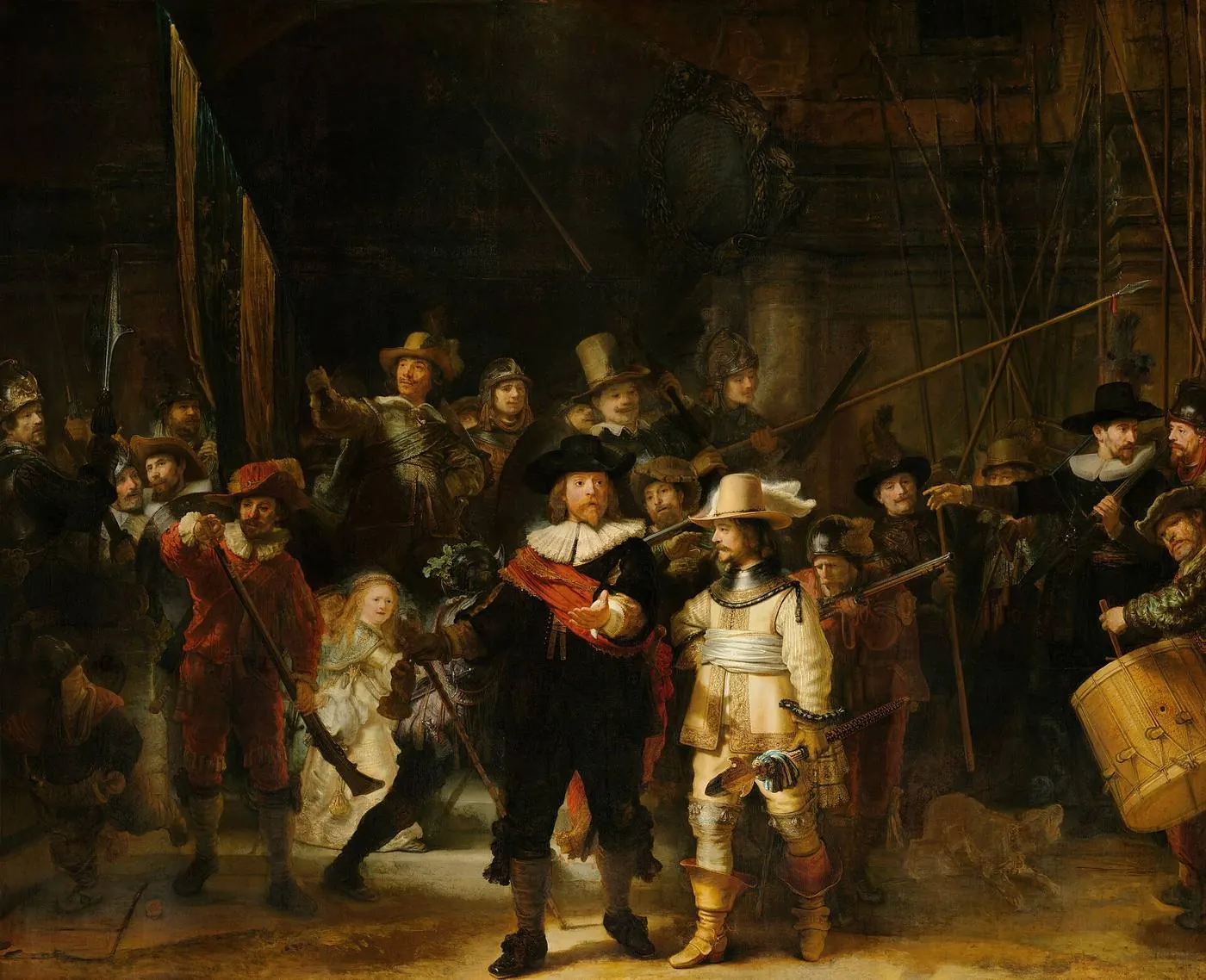
The reason The Night Watch Hand-Painted still works as a painting is that it was built as paint, not as a picture of a place.
Depth here is a matter of edges: sharp in front, lost at the back. It is the hardest thing to print and the easiest to paint.
Our painter leaves the highlights until last and puts them on thickly, so they stand off the surface.
Our painter keeps the colour relationships rather than the exact hues, because relationships are what survive.
The last marks are the ones that are left alone. Overworking is the enemy.
Matching the original's degree of finish is harder than matching its colours.
A plain wall is better than a busy one; the painting supplies the interest.
| Artist | Rembrandt |
|---|---|
| Title | The Night Watch Hand-Painted |
| What you receive | A hand-painted oil painting on canvas |
| Public domain | Yes — the artist died over 70 years ago |
What a print loses
A print reproduces the shapes and drops the substance. It is the substance you are buying.
Our painter follows the same logic rather than copying a photograph of it: the far distances go down cool and weak, the near ground stays loaded, and nothing is blended flat.
| Aspect | Hand-painted oil | Printed canvas |
|---|---|---|
| How it ages | Warms and settles; cleanable by a conservator | Fades, then cracks at the stretcher |
| Texture | Ridges and drag you can see from across a room | None, or a printed imitation of it |
| The surface | Built up with brushes and knives | Printed flat in one pass |
| Edges | Chosen by the painter, passage by passage | Whatever the file happens to contain |
| Value over time | Can be re-stretched, cleaned and re-framed | Little value beyond the print |
The difficulty is restraint: leaving out most of what a photograph would show.
Every canvas is painted to order, so the quote follows your size, frame and destination rather than a fixed list. Tell us what you need on WhatsApp and we reply with an exact figure, usually within the hour. There is no agency in between; the studio that paints your canvas is the one answering your messages.
How your painting is made
Every canvas is painted to order, so nothing is pulled off a shelf. This is the sequence:
- The canvas is stretched and primed — cotton or linen, sized and ready before any paint goes near it.
- A loose underdrawing — proportions checked by eye against the source image.
- The big shapes are blocked in — thin paint, one colour at a time, the whole canvas at once.
- Setting the key — how dark the darks go determines everything that follows.
- Colour is built up — warmer and cooler versions of each passage, laid over the underpainting.
- The detail and highlights go on — last, loaded, and left alone once they are down.
- It dries, then gets varnished — and only then is it photographed for you.
The difficult part is not the detail. It is keeping the whole canvas at the same stage of finish.
Living with it
Oil paint needs very little: no water, no cleaners, no sprays. A dry brush and a stable room.
Framing
Framing is quoted separately, so you can decide after you have seen the finished canvas in photographs.
Most clients wait for the photographs before choosing a frame, which is the sensible order.
What it is made of
The varnish is removable, so a conservator can clean the painting in fifty years without touching the paint. The ground is a proper acrylic sizing, so the oil does not rot the fabric over time.
Each painter works on one canvas at a time — the painting you ordered is not shared with another order. We do not use a printer at any stage. There is no giclée, no canvas transfer, no digital underlayer.
Choosing a size
Any size is possible. These are simply the ones that come up most often in quotes:
| Size (inches) | Size (cm) | Best for |
|---|---|---|
| 24 × 20 in | 60 × 50 cm | Study, home office, above a desk |
| 20 × 16 in | 50 × 40 cm | Bedroom, hallway, above a console |
| 16 × 12 in | 40 × 30 cm | A shelf, a small wall, a gallery group |
| 64 × 48 in | 163 × 122 cm | Villa scale, lobby, hospitality wall |
If your wall is an odd shape, send the measurement and we will work to it. Proportions from the original are kept unless you ask us to change them. We quote DAP, so any duty or tax your country charges is settled by you at import. We do not add a tax line of our own.
This reads well above a sofa or a sideboard, where it will be seen from two to three metres.
Tell us your size and frame — we reply with an exact quote, usually within the hour.
💬 Get a The Night Watch Quote on WhatsAppPlanning a wall or comparing options? Save this painting to Pinterest
How it reaches you
From order to finished canvas is 9–15 days. Freight appears as a separate line on the quote and is fixed before you pay.
In transit it is typically 7–10 business days by air, tracked door to door. We send photographs of the finished painting before it is packed, and again once it is boxed.
Nothing ships before you have seen it. Photographs of the finished painting go to you first. Adjustments are part of the process. Say what you want different and it gets done.
Shipments go out DAP. If your customs office charges duty or tax on arrival, that is between you and them — we do not collect it and we do not put a number on it.
A deposit starts the canvas and books the painter's time; the balance is due before the crate leaves. If a crate arrives damaged, tell us within 48 hours with photographs and we will take it up with the carrier. We do not promise compensation we could not honour.
The practical questions
Does it read well in a dim room?
Better than a print does, because the light in the painting is built from underlayers rather than from a bright surface coat.
What size should I order?
You choose the size. Each canvas is cut to your measurements rather than pulled from stock, so tell us the wall dimensions and we will tell you what proportion works.
What if it does not look right to me?
We send photographs of the actual painting for your approval before anything ships. That is the moment to tell us what to adjust.
Is it really painted by hand?
Yes. One painter, oil paint, brushes. We do not own a printer that touches canvas.
Do you ship to my country?
We export to more than 20 countries. Tell us where you are and we will quote the freight as a separate line.
What if it arrives damaged?
Report damage within 48 hours with photographs. We deal with the carrier rather than leaving you to argue alone.
What does it cost?
There is no price list, because the number depends on your size and frame. Message us and we will quote exactly.
Can you paint it from a different photograph of the same work?
Yes. If you have a better reference, send it on WhatsApp and we will work from yours.
Will I see it before it ships?
Yes — photographs of the actual painting go to you first, and nothing is packed until you have seen them.
Can you paint a different work by Rembrandt?
Yes. Send the image and we will quote it, or browse the other paintings we have listed.
What is the canvas made of?
Cotton duck as standard, linen on request, artist-grade oil paint, and a final varnish once the paint is fully dry.
Is owning a reproduction legal?
Yes. Rembrandt died more than 70 years ago, so the work is in the public domain and owning a hand-painted version is legal anywhere. We never pass ours off as the original.
Brushwork details
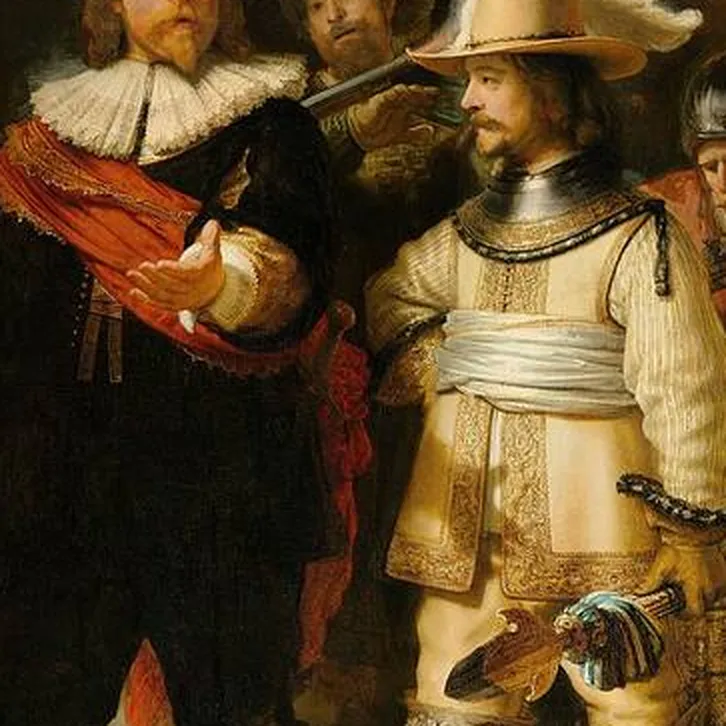
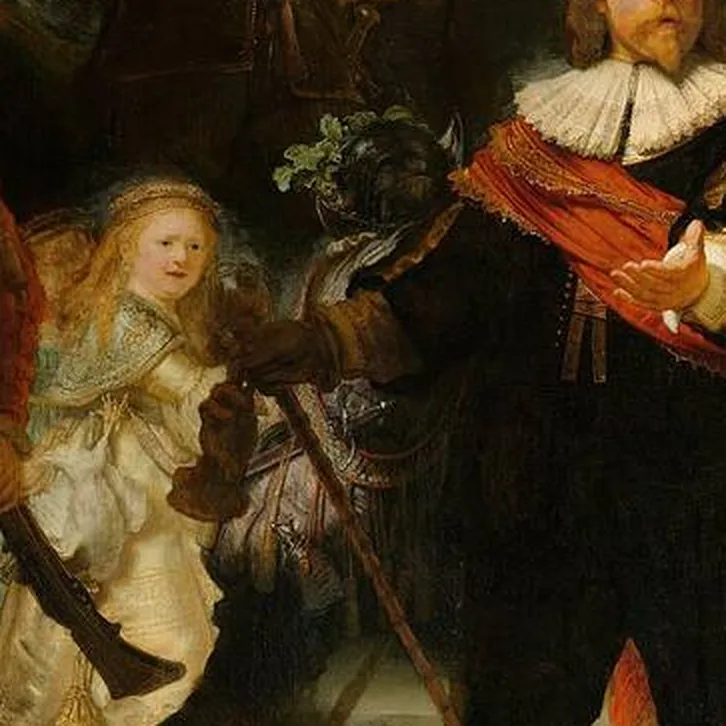
Close-up crops of this 100% hand-painted oil reproduction — real oil texture, never a print.