The original, and why we can paint it
Vincent Van Gogh died in 1890, so the work has been in the public domain for decades. Reproducing it by hand is legal, and so is owning one.
Every version we make is oil on canvas, painted by one painter from start to finish. No printing is involved at any stage.
It is an original composition painted before 1890, and our version is painted from the surviving image of it.
You are buying a painting, not a file. That distinction is the whole business we are in.
What the painting is doing
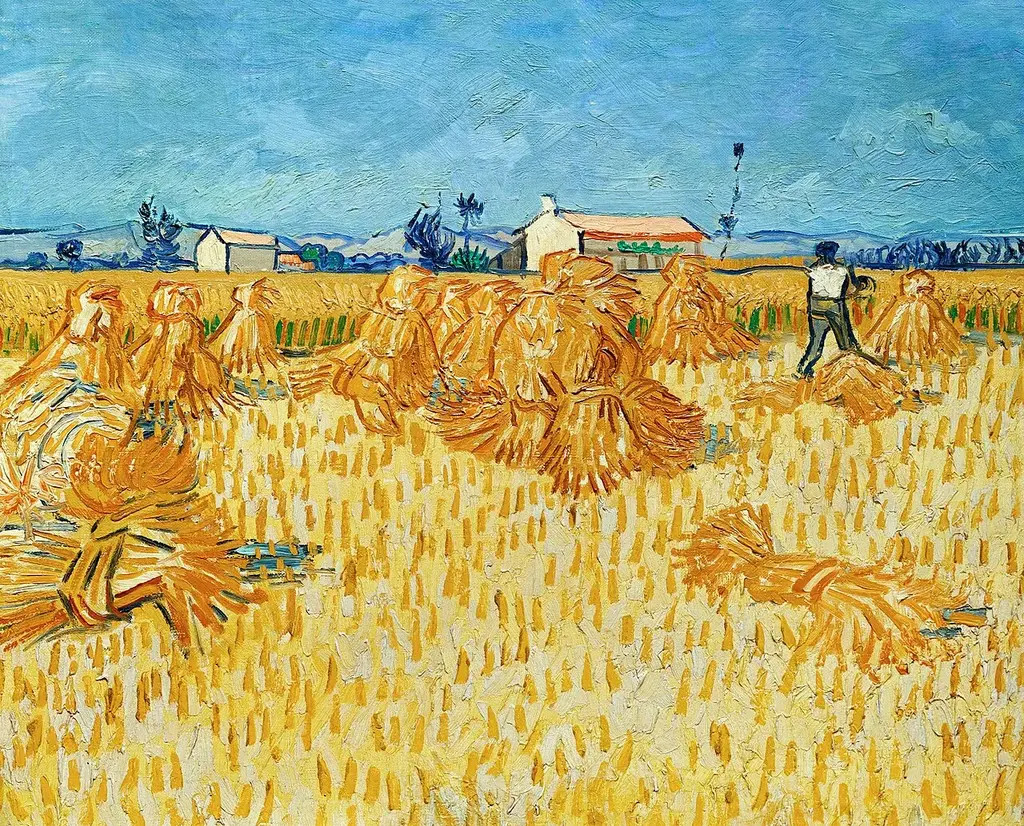
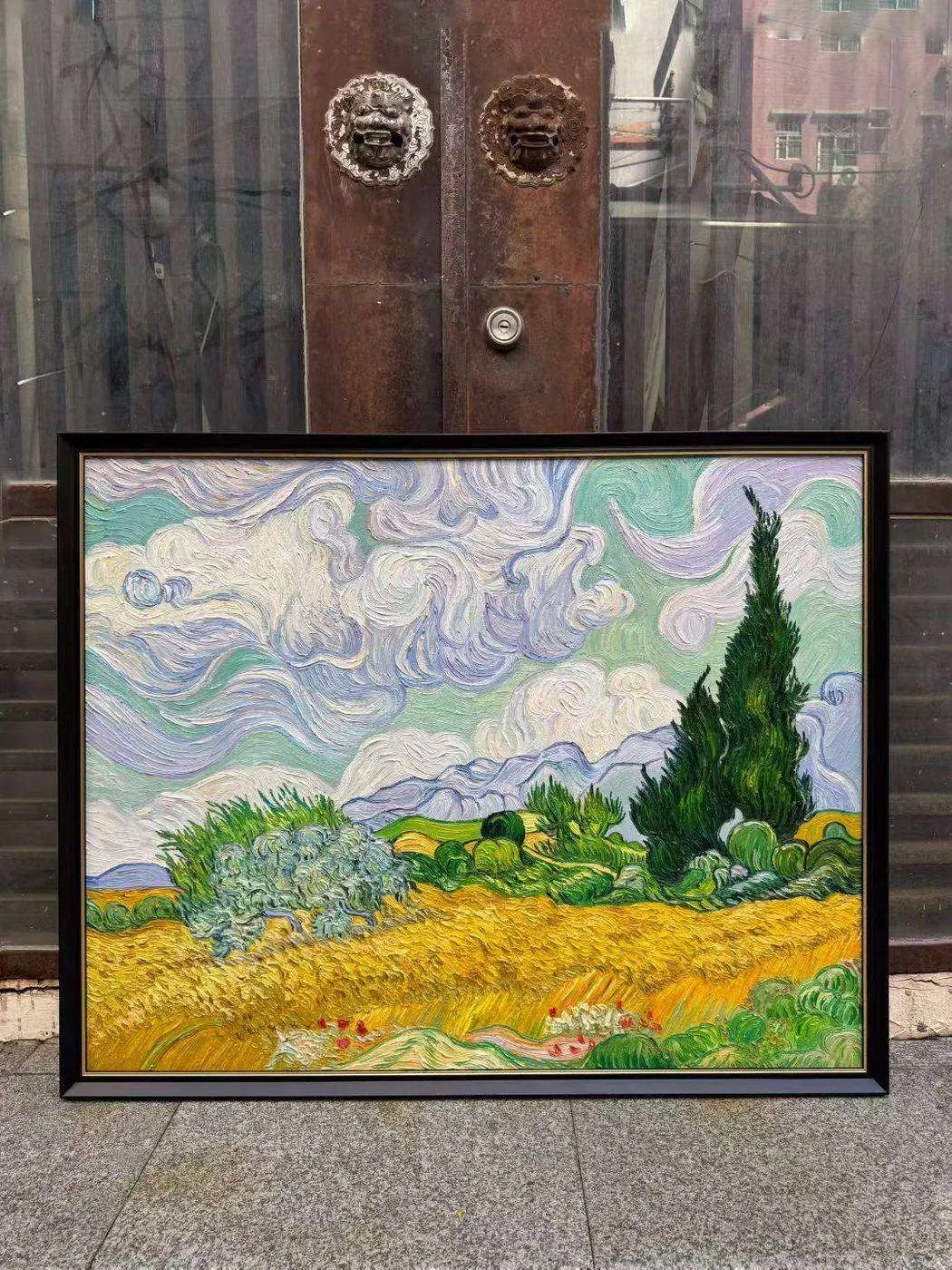
A painted a field subject is an argument about air. Copy the shapes and you still have not copied the argument.
Space in a field subject is made with value, not perspective: things that are further away are painted cooler and weaker.
Dusk and overcast passages are the hardest and the most rewarding — they are all half-tones.
Every colour in Van Gogh Wheat Field with has a warm version and a cool version, and the painter chooses between them passage by passage.
The last marks are the ones that are left alone. Overworking is the enemy.
What takes time here is the number of separate decisions, not the size of the canvas.
In a bedroom it works above a headboard, sized to about two-thirds of the furniture width.
| Artist | Vincent Van Gogh |
|---|---|
| Title | Van Gogh Wheat Field with |
| What you receive | A hand-painted oil painting on canvas |
| Public domain | Yes — the artist died over 70 years ago |
The case for painting it by hand
The difference is not subtle when the two hang side by side. Ink sits on the surface; oil stands off it.
Edges are left soft where the form turns away and sharp where it does not. That single habit is what separates a painting from a copy.
| Aspect | Hand-painted oil | Printed canvas |
|---|---|---|
| Value over time | Can be re-stretched, cleaned and re-framed | Little value beyond the print |
| What it takes | One painter, several days, start to finish | A machine, a few minutes |
| Sense of depth | Real, created by layers of paint | Simulated by darker ink |
| The surface | Built up with brushes and knives | Printed flat in one pass |
| Texture | Ridges and drag you can see from across a room | None, or a printed imitation of it |
The difficulty is restraint: leaving out most of what a photograph would show.
Every canvas is painted to order, so the quote follows your size, frame and destination rather than a fixed list. Tell us what you need on WhatsApp and we reply with an exact figure, usually within the hour. You deal directly with the studio that paints it — no reseller layer.
How the canvas is built
The order of work matters as much as the work itself. Ours runs like this:
- The canvas is stretched and primed — cotton or linen, sized and ready before any paint goes near it.
- The drawing goes down — charcoal or thin paint, done by eye rather than traced from a printout.
- Blocking the masses — thin paint, working the whole surface rather than one corner at a time.
- Getting the values right — the stage that decides whether the finished painting holds together.
- The colour passes — each area gets its own mixture rather than one colour used throughout.
- Finishing passes — the loaded highlights go on at the end and stay there.
- Drying and varnishing — the final varnish goes on once the paint has set, before we photograph it.
This one repaints badly, so our painter gets the values right early and leaves them.
On framing
If you are shipping, an unframed canvas rolled in a tube is considerably cheaper to move than a framed one.
Most clients wait for the photographs before choosing a frame, which is the sensible order.
What it is made of
Stretcher bars are kiln-dried and wedged, so the canvas can be re-tensioned years later. Varnish goes on only once the paint is properly dry, months after the last stroke, not before.
The paint is built in layers, fat over lean, which is what stops it cracking later. Oil paint dries by oxidation, not evaporation, which is why a finished canvas needs weeks before it travels.
Looking after it
Once the varnish has cured the surface can be cleaned by a conservator, but in a normal house it will not need it for decades.
Getting the size right
The canvas is cut to your wall, not the other way round. For reference, these are the dimensions most often requested:
| Size (inches) | Size (cm) | Best for |
|---|---|---|
| 16 × 24 in | 41 × 61 cm | Hallway end, beside a door |
| 20 × 30 in | 51 × 76 cm | A tight wall that needs height, not width |
| 24 × 36 in | 61 × 91 cm | Stairwell, tall entrance, gallery group |
| 30 × 45 in | 76 × 114 cm | Double-height space, narrow feature wall |
| 36 × 54 in | 91 × 137 cm | Lobby, chapel-like corner, tall foyer |
Tell us the wall width and we will tell you what looks right rather than what is standard. We quote DAP, so any duty or tax your country charges is settled by you at import. We do not add a tax line of our own.
For a stairwell or a double-height space, go larger than you think — the composition was built for distance.
Send your wall width and frame preference — we'll advise the ratio and quote.
💬 Get a Wheat Field QuotePlanning a wall or comparing options? Save this painting to Pinterest
How it reaches you
From order to finished canvas is 9–15 days. Freight appears as a separate line on the quote and is fixed before you pay.
Air freight runs about 7–10 business days, tracked, to your door. We send photographs of the finished painting before it is packed, and again once it is boxed.
Before anything is packed, you get photographs of the actual canvas and a chance to ask for changes. If something is not right, tell us what to adjust and we adjust it.
Terms are DAP. Import duties and taxes, where they apply, are paid by the buyer on arrival — we never collect them in advance and never guess at the amount.
A deposit starts the canvas and books the painter's time; the balance is due before the crate leaves. Report any transit damage within 48 hours with photographs and we will deal with the carrier. We will not promise a payout, but we will not leave you to argue alone either.
Before you order
Can I get this in a size that is not listed?
Yes — the listed sizes are the common requests, not a limit. Very wide or unusually tall proportions are routine for us.
Does it come with a certificate of authenticity?
No, and we would be wary of anyone who issues one for a public-domain reproduction. What you receive is a hand-painted canvas and photographs of it before it ships.
What does it cost?
There is no price list, because the number depends on your size and frame. Message us and we will quote exactly.
What if it arrives damaged?
Report damage within 48 hours with photographs. We deal with the carrier rather than leaving you to argue alone.
How long does it take?
From order to finished canvas is 9–15 days; delivery adds about 7–10 business days by air.
Does it come framed?
Frames are priced on their own line. Most clients choose after seeing the photographs.
Can I change the size?
Any size you like. We paint to the number you give us rather than to a standard range.
Do you take a deposit?
A deposit starts the canvas and the balance falls due before it ships. Both figures appear on the quote.
Can you change the colours to suit my room?
We can shift the palette, but we will tell you honestly when a change would spoil the painting.
Who pays the import duty?
You do. We sell DAP, so any duty or tax your customs authority charges is settled by you at import. We do not collect it and we do not estimate it.
How do I hang it?
Centre it at about 145 cm from the floor, or two-thirds the width of the furniture below it. We will tell you the exact number for your wall.