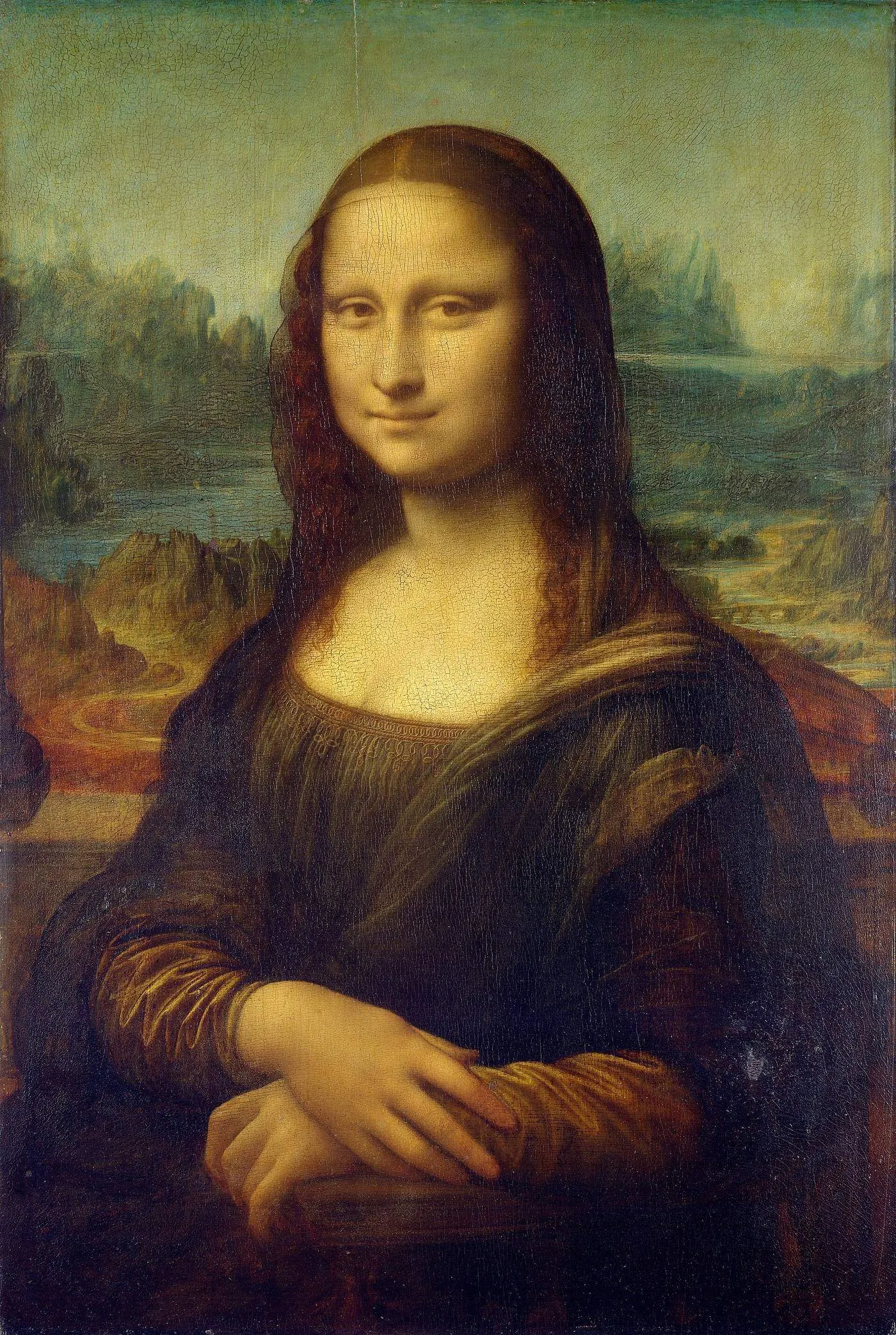
On 28 January 2010, more than 500 painters in a Shenzhen village sat down and each painted one small rectangle. None of them was painting a Mona Lisa. Each had a fragment — a sliver of sleeve, a patch of background, the edge of a smile — and no way to see what the five hundred other fragments looked like.
Fitted together afterwards, the 999 units made a Mona Lisa 43 metres long and 7 metres high. It became the facade of the Shenzhen Case Pavilion at Expo 2010 Shanghai, and the press called it the "Dafen Lisa."
It is a good story about a village that outsiders usually describe with numbers — thousands of studios, millions of canvases, most of the world's oil painting market. The Dafen Lisa is the version with people in it.
Want your own Mona Lisa, hand-painted in oil? Tell us the size and frame — exact quote back within the hour.
💬 Get a Quote on WhatsAppOn this page
1. What happened on 28 January 2010 2. The numbers behind it 3. What the painters wrote on the back 4. Why the Mona Lisa 5. At the Expo: opposite the Bologna pavilion 6. What the Dafen Lisa actually says about the village 7. Dafen today, and how to commission a canvas 8. FAQ1. What happened on 28 January 2010
The idea came from Meng Yan, the architect who designed the Dafen Art Museum and was chief designer of the Shenzhen Case Pavilion. His brief was to explain Shenzhen's thirty years of change, and he chose to do it with a village instead of a statistic.
The pavilion's theme was "Dafen Village, the Regeneration of an Urban Village in Shenzhen" — approved by the Expo's international selection committee on 29 September 2009. The facade would be the argument made visible.
On the day, 507 painters from Dafen painted 999 individual oil units. Each unit was small — roughly 30 by 20 centimetres — and each was signed in the painter's hand at the bottom right. Assembled, they covered about 300 square metres.
2. The numbers behind it
The Dafen Lisa was reported at the time as the largest decorative work based on the Mona Lisa in the world.
The segmentation was not even, because faces are not evenly detailed. One of Mona Lisa's eyes was built from 8 panels. Her mouth, the part everyone argues about, took 15 — fifteen separate painters resolving the same blur of a smile, working from the same reference, never seeing each other's work.
That is the part worth sitting with. The reason the assembled picture reads as one painting rather than a patchwork is not that the painters were told to match. It is that they were all trained to the same discipline: match the value first, then the hue, then let the edge go soft where the original goes soft.
3. What the painters wrote on the back
Each painter signed the front. On the back, many wrote their name, their age, their hometown — and a wish.
One of them, on the reverse of his panel, wrote: "Li Jichao, 27, from Zhanjiang, Guangdong. I want to become a brilliant artist. Go for it."
This is the detail that separates the Dafen Lisa from a publicity stunt. Assembly-line painting is usually described in terms of what it removes — the individual hand, the signature gesture. Here the process was used to build something that could not exist without each person's hand, and then the individuals were named anyway.
4. Why the Mona Lisa
Because it is the painting Dafen has copied more than any other. When Hong Kong art dealer Huang Jiang arrived in 1989 with a handful of painters and apprentices and began filling overseas orders, the Mona Lisa was on the list. It stayed on the list for twenty years.
Choosing it for the Expo facade was a deliberate inversion. Instead of hiding the fact that the village reproduces masterpieces, the pavilion made reproduction the subject — and asked what it means that several hundred people in one place have spent their working lives copying the same face.
The sfumato is the reason the picture rewards hand-painting at all. There is no line anywhere in it; every edge is a gradient built in thin glazes. A print flattens exactly the quality that makes the painting worth having. For a closer look at that problem, see our note on what makes the Mona Lisa difficult to copy.
5. At the Expo: opposite the Bologna pavilion
The Shenzhen Case Pavilion sat in the Urban Best Practice Area at Expo 2010 Shanghai. By luck of the site plan, it faced the pavilion of Bologna — a city in the country that produced the original.
So the largest hand-copied Mona Lisa in the world spent the summer of 2010 looking across at Italy. Reporters at the time noted the coincidence. The pavilion drew more than 10,000 visitors a day.
6. What the Dafen Lisa actually says about the village
Meng Yan's own framing was careful on this point. In Dafen, he said, it is neither an individual artist's experiment nor a mere copy of a classic — it is a collaborative creation, a conceptual work involving a great number of Dafen painters.
That distinction is useful for anyone trying to understand what they are buying. A Dafen reproduction is not a print, and it is not an invention. It is a hand-painted object made by someone who has spent years learning to reproduce someone else's painting, and the quality of the result depends almost entirely on how good that person is at edges, glazes and light.
The village has spent the years since trying to move up that scale — the Dafen Art Museum, the biennale, original work alongside reproduction. The Dafen Lisa was the moment the outside world was asked to look at the painters rather than the output.
7. Dafen today, and how to commission a canvas
Our studio — Shenzhen Adam Art Co., Ltd., operating since 2016 — works the same way the panels were made: one painter, one canvas, by hand in oil. We have produced canvases for buyers in over 20 countries, including pieces as large as 5 by 8 metres. Every canvas is hand-painted in oil on artist canvas — no printing, no giclée, no canvas transfer — and sold clearly as a reproduction, never as an original and never with a fake certificate.
If the Mona Lisa is the painting you want, you can see how we handle the sfumato on our Mona Lisa reproduction page, or browse the Leonardo da Vinci works we reproduce in oil.
How ordering works
- Tell us the painting, size and frame. WhatsApp is fastest — send a photo of the wall if you want sizing advice.
- Get an exact quote with the timeline confirmed in writing.
- a deposit starts the painting. Bank transfer, PayPal, credit card or Wise.
- We send photographs of the finished painting. You approve it before anything ships.
- Pay the balance, then we ship by tracked worldwide courier. Import duties & taxes are the buyer's responsibility.
Related pages
→ Dafen Oil Painting Village: the complete guide → Why Dafen became the world's oil painting factory → The history of Dafen Village → A tour of Dafen: museum, alleys, biennale → What is Dafen Oil Painting Village? → Inside Dafen — photo gallery → Mona Lisa, hand-painted in oil → Contact us on WhatsAppFAQ
What is the "Dafen Lisa"?
A 43-metre by 7-metre Mona Lisa made of 999 individual oil panels, painted by 507 painters from Dafen Oil Painting Village on 28 January 2010. It formed the facade of the Shenzhen Case Pavilion at Expo 2010 Shanghai.
Was it painted by 999 painters or 507?
507 painters produced 999 panels — several painters each completed more than one unit. Contemporary Chinese coverage of the event reported both figures, and some early reports confused the panel count with the headcount.
Why did the painters write on the back?
They were invited to sign each panel and, on the reverse, note their name, age, hometown and a wish. One painter wrote that he was 27, from Zhanjiang in Guangdong, and wanted to become a brilliant artist. The backs were part of the work, not a record-keeping exercise.
Who designed it?
Meng Yan, the architect who designed the Dafen Art Museum, was chief designer of the Shenzhen Case Pavilion. The pavilion's theme was "Dafen Village, the Regeneration of an Urban Village in Shenzhen."
Is the Dafen Lisa still on display?
It was created as the pavilion facade for Expo 2010 Shanghai and belonged to that installation. Dafen itself is open to visitors year-round — the Dafen Art Museum and the painting alleys are the parts most people go to see.
Can I commission a Mona Lisa reproduction for myself?
Yes, in any size, hand-painted in oil on canvas. The sfumato is the difficult part and it is worth discussing with the painter before you order, because it changes how the surface catches light in a room.
Does Dafen only copy famous paintings?
No. Reproduction is what made the village famous, but studios there also paint original work, abstracts, pet portraits and commissioned pieces from photographs. The painters' training in copying is what makes the custom work competent.
How do I order from outside China?
WhatsApp is fastest. Tell us the painting, size and frame, get an exact quote with the lead time in writing, pay a deposit, approve photographs of the finished canvas, then pay the balance and we ship by tracked courier. Import duties and taxes are the buyer's responsibility.
Ready to commission a hand-painted canvas? Send the size and frame — quote back within the hour.
💬 Start My Order