Oil Painting Education · No. 5
Oil Painting Techniques Explained: Why the Surface Looks Alive
People often say they want a painting to look "realistic" or "hand-painted" without knowing what creates that effect. In oil painting, realism is not just about copying an outline. It comes from controlling value, colour temperature, edges, transparency and the physical thickness of the paint. A believable eye, a soft patch of fur or the shine on a horse's coat may be built with several different marks.
This guide explains the main techniques in plain English, then shows how they relate to custom pet portraits and other made-to-order work from our studio in Dafen Oil Painting Village.
What is oil paint made of?
Traditional oil paint combines dry pigment with a drying oil binder, commonly linseed oil. It is usually applied to a prepared support such as canvas or wood. A ground or primer helps control absorbency and gives the artist a stable surface to work on. The exact materials vary by period, manufacturer and artist, so "oil painting" describes a medium rather than one fixed recipe.
That slow-drying quality is one reason oil paint is useful for portraiture. It gives the painter time to compare a reference image, soften an edge, adjust a colour and keep working across a larger area without the paint setting immediately.
Five techniques you will see on an oil painting
1. Underpainting
A first structure of simplified values and shapes. It establishes the composition, light and dark pattern before details are added.
2. Glazing
A thin transparent or semi-transparent colour layer placed over a dry layer. It can shift hue and add visual depth without flattening the layers below.
3. Impasto
Paint applied thickly enough for the brush or palette-knife mark to remain visible. It is often used for highlights, fur accents, clouds and expressive passages.
4. Blending
Softening a transition between colours or values. It is useful for rounded forms, skin, skies and the subtle turn from light into shadow.
5. Alla prima
Direct wet-on-wet painting, where fresh paint is worked into other still-wet paint. It can produce energetic, immediate colour and gesture.
6. Scumbling
A broken, relatively opaque brush layer that lets some of the underlayer show through. It can create atmosphere, dry-brush softness or a lively broken colour effect.
Glazing: the technique behind luminous depth
A glaze is not simply "more paint." It is a controlled transparent layer placed over a dry passage. Because some light travels through the transparent colour and returns from the lighter layer underneath, the result can feel deeper than a single mixed colour. Old Master paintings used layered methods like this to build complex flesh tones, fabrics and shadows.
In a custom portrait, glazing can be useful for the warm and cool colour shifts around an eye, the reflected colour in fur, or a dark background that needs depth without becoming a flat black shape. The effect depends on patience: each layer has to be sufficiently dry before the next one is added.
Impasto: when the brushstroke becomes part of the image
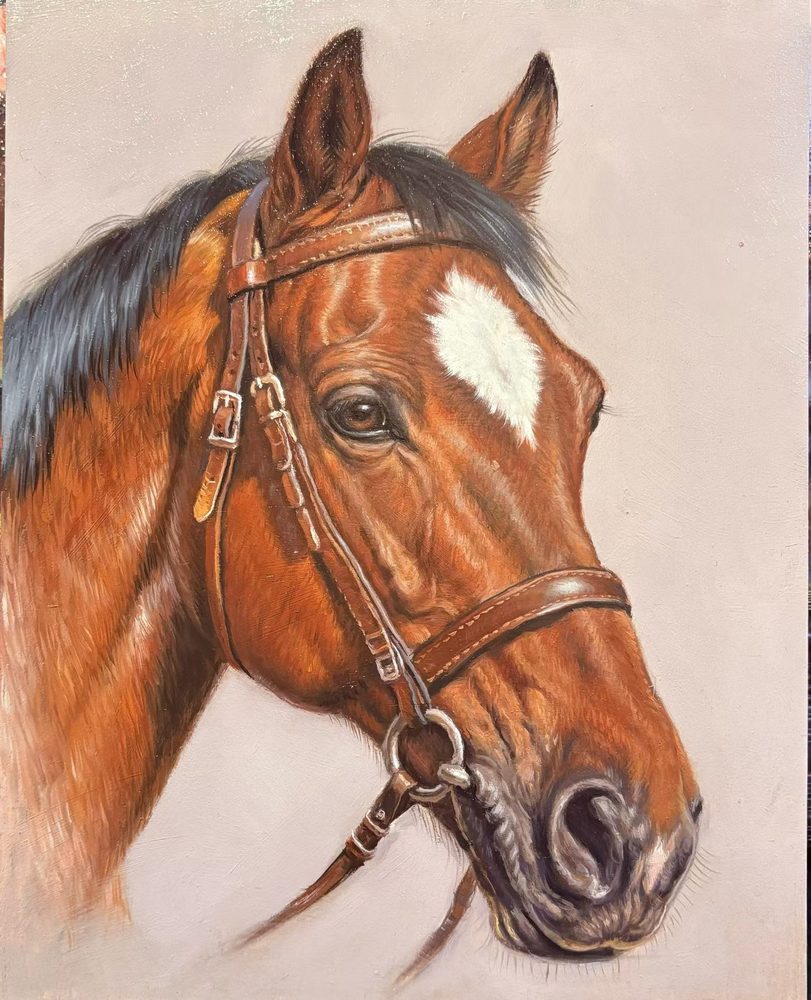
Impasto is thick paint that keeps the evidence of the artist's hand. A raised highlight can catch real light differently from a nearby thin passage. On a pet portrait, that can make sense for a glint in the eye, a ridge of fur, a nose highlight or a sunlit edge on an ear. The goal is not to make every square centimetre thick. Contrast between thinner and thicker passages is what gives the surface rhythm.
Thick paint also needs respect after the painting leaves the studio. A textured surface can collect dust, and the lower layers may continue to dry and harden for a long time. Do not scrub an impasto painting or press glass directly against raised paint. If a painting needs cleaning or restoration, consult a trained conservator.
How realistic pet portraits are actually built
- Reference selection. Sharp eyes, visible fur direction and usable light give the artist information to work from. A painting can improve a background, but it cannot reliably invent detail that the photograph never captured.
- Composition and drawing. The artist places the head, body, negative space and background before spending time on small details. Likeness is won by proportion first.
- Large value shapes. Broad light and dark passages establish the form. This stage may look simple, but it controls whether the face reads correctly from across the room.
- Layered colour and edges. Some areas are softened; others stay sharper. Transparent and opaque marks are balanced so the fur does not become a collection of identical lines.
- Accents and surface decisions. The final marks may include a small highlight, a lost edge, a thicker stroke or a background adjustment. These decisions make the portrait feel painted rather than filtered.
How to tell whether a painting is genuinely hand-painted
Look at the surface, not only at the image on a screen. A hand-painted oil work normally has variation in stroke direction, small changes in thickness, and edges that are not perfectly uniform. Tilt the work gently under a light to see whether the surface has physical relief and changing sheen. A printed image may reproduce colour, but it does not reproduce the changing height and direction of actual paint.
These observations are useful, but they are not a laboratory authentication. Materials, varnish and photography can change what you see. For a high-value historical work, technical examination belongs to a qualified conservator or art specialist.
Care basics for an oil painting at home
- Keep the painting away from persistent damp, direct strong sunlight, radiators and rapid temperature changes.
- Handle the frame rather than pressing the painted surface.
- Do not use household glass cleaner, water, alcohol or a cotton swab on the paint or varnish.
- Surface varnish can yellow, become cloudy or attract dirt as it ages. Cleaning and varnish removal require material testing and professional control.
- For shipping, use corner protection and a rigid outer package; framed and unframed works need different packing decisions.
- Encyclopaedia Britannica: Oil painting — supports the overview of support, underpainting, glazing, scumbling, impasto and varnish.
- National Gallery, London: Rembrandt and the cleaning of a painting — supports the cautions about ageing varnish and professional cleaning.
- The Metropolitan Museum of Art: Lead soaps in traditional oil paintings — supports the layered-material and conservation context.
- Canson: Basic concepts for painting with oils — supports the practical definitions of glazing, alla prima, blending and impasto.
Looking for a specific technique?
Tell us the style you have in mind — glazed classical, loose impressionist, thick impasto — and we will match it to the right artist in our Dafen studio.