What you are buying into
Because Rembrandt died in 1669, this work is in the public domain. We are painting a copy of a painting — we never pass it off as the original, and neither should anyone selling you one.
Ours is a painting made with brushes. There is no giclée, no canvas transfer and no digital underlayer anywhere in the process.
It is an original composition painted before 1669, and our version is painted from the surviving image of it.
What arrives is a canvas with paint on it, made by a person. That is the only thing we sell.
How to read it
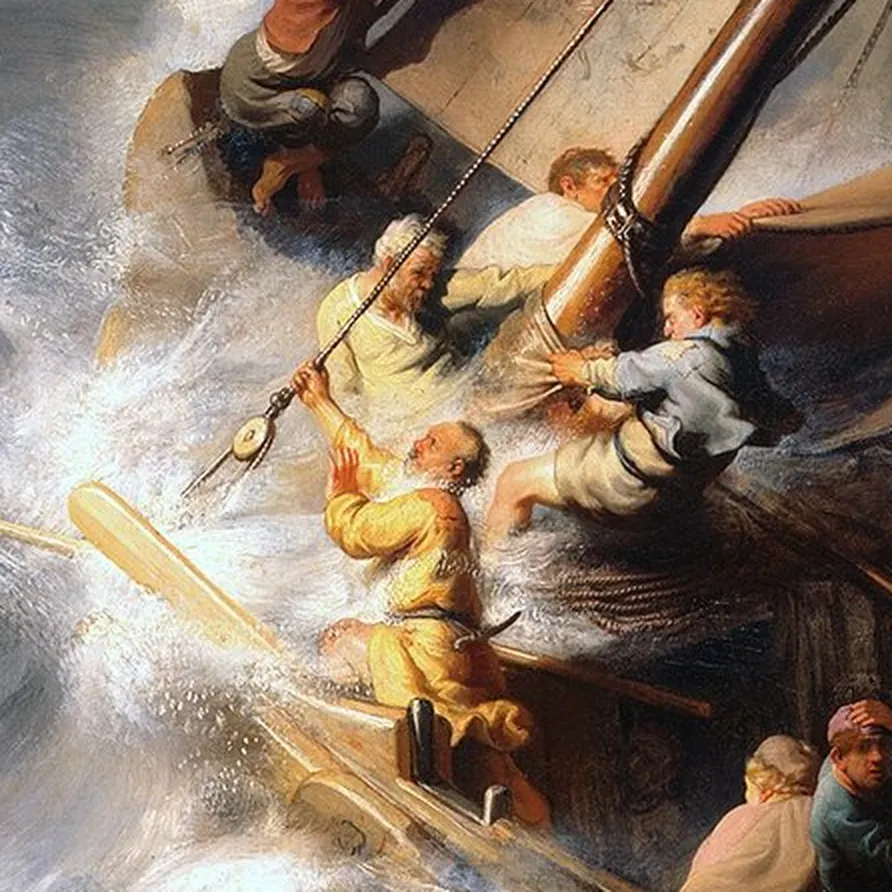
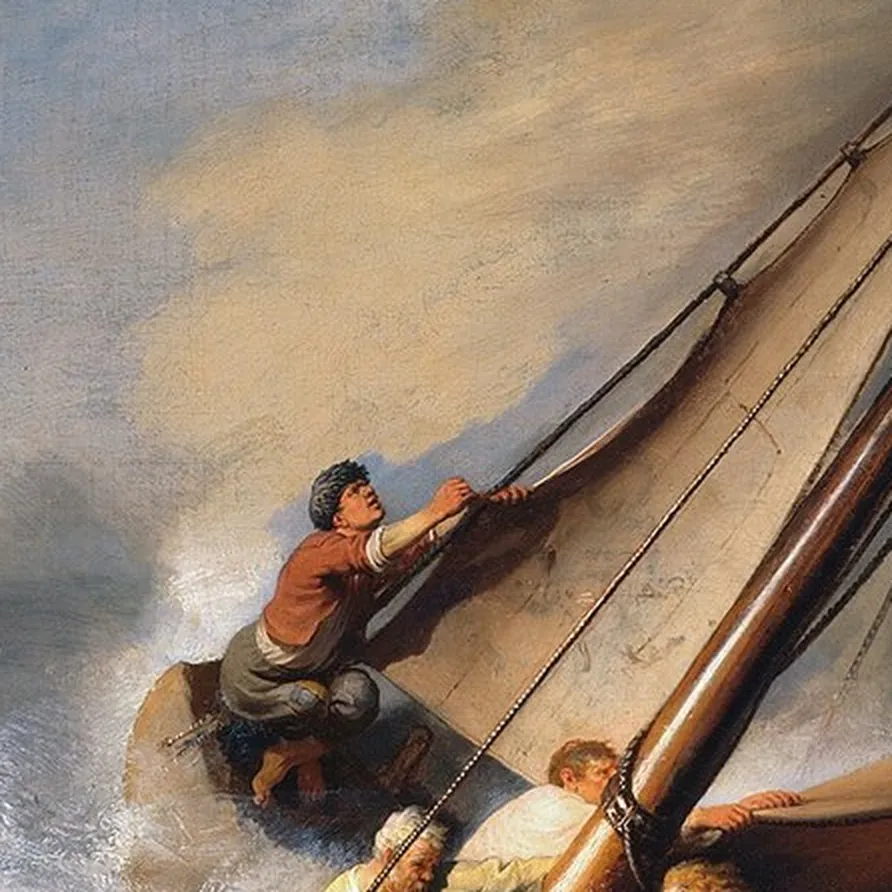
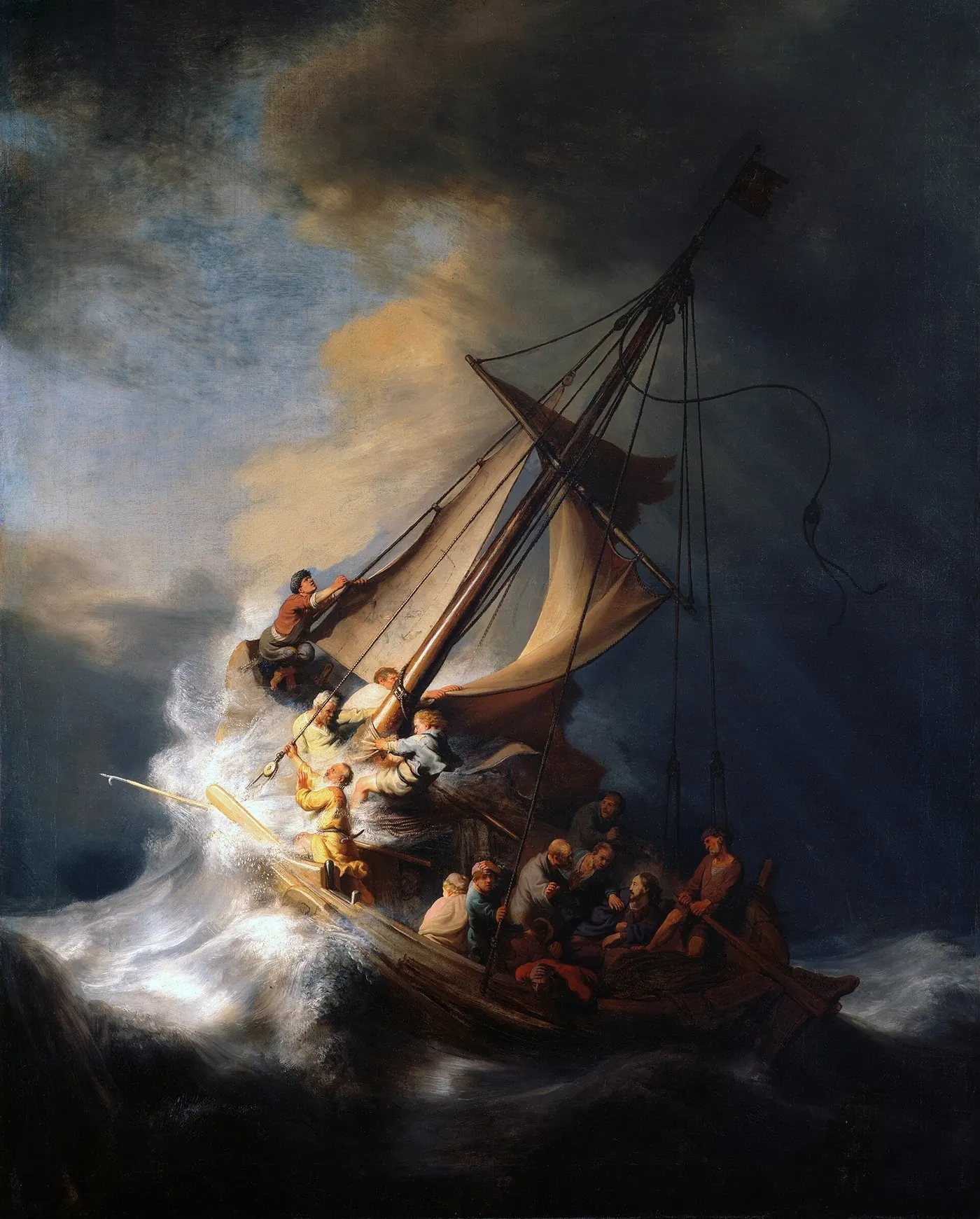
Painted by hand, The Storm on the Sea of keeps the hesitation in the brushwork that gives the place its scale.
Our painter blocks the big shapes first and lets the detail come last, so the composition holds at any size.
Light is handled as a value problem: how dark the darkest dark is determines the whole picture.
Temperature does the work of contrast in the quiet areas, where value differences are small.
The last marks are the ones that are left alone. Overworking is the enemy.
The risk with a seascape is overworking, and the way to avoid it is knowing when to stop.
A plain wall is better than a busy one; the painting supplies the interest.
| Artist | Rembrandt |
|---|---|
| Title | The Storm on the Sea of |
| Created (original) | 1633 |
| Medium | Oil on canvas, hand-painted to order |
| What you receive | A hand-painted oil painting on canvas |
| Public domain | Yes — the artist died over 70 years ago |
The case for painting it by hand
The difference is not subtle when the two hang side by side. Ink sits on the surface; oil stands off it.
Where the original is loaded, ours is loaded. Where it is thin, ours is thin. Matching the weight of the paint matters more than matching the colour.
| Aspect | Hand-painted oil | Printed canvas |
|---|---|---|
| Texture | Ridges and drag you can see from across a room | None, or a printed imitation of it |
| Value over time | Can be re-stretched, cleaned and re-framed | Little value beyond the print |
| Handling of colour | Mixed on the palette and finished on the canvas | Fixed by the colour profile |
| Sense of depth | Real, created by layers of paint | Simulated by darker ink |
| Time to make | Days of one painter's working time | Minutes |
The hardest passage is the quiet one, where a small mistake has nowhere to hide.
Every canvas is painted to order, so the quote follows your size, frame and destination rather than a fixed list. Tell us what you need on WhatsApp and we reply with an exact figure, usually within the hour. You deal directly with the studio that paints it — no reseller layer.
From blank canvas to finished painting
The order of work matters as much as the work itself. Ours runs like this:
- We start with the canvas itself — stretched, sized and left to settle before any colour is mixed.
- The drawing goes down — charcoal or thin paint, done by eye rather than traced from a printout.
- Blocking the masses — thin paint, working the whole surface rather than one corner at a time.
- Getting the values right — the stage that decides whether the finished painting holds together.
- Building the colour — a warm and a cool version of each passage, put down in order.
- Detail and highlights last — put on thickly and then not touched again.
- Drying and varnishing — the final varnish goes on once the paint has set, before we photograph it.
What takes time here is the number of separate decisions, not the size of the canvas.
On framing
If you are shipping, an unframed canvas rolled in a tube is considerably cheaper to move than a framed one.
Most clients wait for the photographs before choosing a frame, which is the sensible order.
Canvas, paint and varnish
The paint is built in layers, fat over lean, which is what stops it cracking later. We buy pigment in tubes from the same suppliers the village has used for years, not in bulk drums.
We use a neutral-sized ground so the whites stay warm rather than going blue over time. We use cotton duck for most sizes and linen where the canvas is large or the client asks for it.
Care and cleaning
Do not wipe it with anything wet. Dust lightly, hang it somewhere stable, and forget about it.
What size works
You are not choosing from a list; you are telling us a measurement. These are the common ones:
| Size (inches) | Size (cm) | Best for |
|---|---|---|
| 12 × 16 in | 30 × 40 cm | A narrow wall between two openings |
| 16 × 24 in | 41 × 61 cm | Hallway end, beside a door |
| 20 × 30 in | 51 × 76 cm | A tight wall that needs height, not width |
| 24 × 36 in | 61 × 91 cm | Stairwell, tall entrance, gallery group |
Tell us the wall width and we will tell you what looks right rather than what is standard. Terms are DAP. Import duties and taxes, where they apply, are paid by the buyer on arrival — we never collect them in advance and never guess at the amount.
Hang it at eye level — roughly 145 cm from the floor to the centre — and it will hold the wall.
Tell us your size and frame — we reply with an exact quote, usually within the hour.
💬 Get a The Storm on the Sea of Galilee Quote on WhatsAppPlanning a wall or comparing options? Save this painting to Pinterest
Order, painting, shipping
Allow 9–15 days for the painting itself. Shipping is a separate line on your quote — you see it before payment, not after.
In transit it is typically 7–10 business days by air, tracked door to door. Unframed canvases are rolled face-out on a tube; framed ones are corner-protected and crated.
You approve the painting from photographs before it is packed — that is the checkpoint. Changes are handled by telling us what to change; we change it and send new photographs.
Shipments go out DAP. If your customs office charges duty or tax on arrival, that is between you and them — we do not collect it and we do not put a number on it.
A deposit starts the canvas and books the painter's time; the balance is due before the crate leaves. If a crate arrives damaged, send us photographs within 48 hours and contact us directly — we will sort it out with you.
Questions worth asking
How do you handle the sky?
The sky is worked wet into wet so the cloud edges stay soft where they should be. A print flattens a storm into a poster; paint keeps the movement in it.
How do I know what size will look right?
Measure the wall and send a photograph. We will say honestly if the canvas you have in mind is too small for the space, which is the most common mistake.
What if my wall is an unusual shape?
That is normal for us. Send the measurements and we will work out a canvas proportion that suits the space.
What does it cost?
Every canvas is quoted on size, frame and destination rather than a fixed list. Tell us what you need and we reply with an exact figure.
How do I hang it?
Centre it at about 145 cm from the floor, or two-thirds the width of the furniture below it. We will tell you the exact number for your wall.
What is the canvas made of?
Cotton or linen, oil colour, and varnish. Stretcher bars are wedged so the canvas can be re-tensioned later.
How long does it take?
Allow 9–15 days for the painting itself, then roughly 7–10 business days in transit.
Who pays the import duty?
The buyer does. Terms are DAP: duties and taxes, where they apply, are paid on arrival. We never add a tax line of our own.
Do you sell prints?
No. Hand-painted oil on canvas only. No printing, no giclée, no canvas transfer.
What if it arrives damaged?
send us photographs within 48 hours and contact us directly — we will sort it out with you.
Can you paint it from a different photograph of the same work?
Send your own reference image and we will paint from that instead.
Is owning a reproduction legal?
Yes. Rembrandt died more than 70 years ago, so the work is in the public domain and owning a hand-painted version is legal anywhere. We never pass ours off as the original.
Brushwork details
Close-up crops of this 100% hand-painted oil reproduction — real oil texture, never a print.