Why build a gallery wall instead of one big painting?
A single statement canvas is the obvious choice, and sometimes it is the right one. But a gallery wall solves three problems a lone painting cannot. First, it fills an awkward wall — long corridors, staircases and the space above a sideboard are rarely a tidy single rectangle. Second, it lets you collect: a wall of six small oils reads as a personality, not a purchase. Third, it is forgiving on budget and risk, because you can grow it over time instead of committing to one large commission up front.
There is a practical reason oil suits this better than prints. A hand-painted oil has depth and a real surface, so a row of them under changing light reads as a collection of objects, not a row of posters. Where a printed grid tends to look like office decor, a group of genuine canvases reads as a home.
How many paintings should a gallery wall have?
For a normal home wall, 3 to 9 pieces is the sweet spot. Three is the minimum that reads as a "wall" rather than a pair; nine is about the limit before a standard living-room wall feels busy. Larger walls — staircases, hotel corridors, lobbies — comfortably take 12 or more.
The easy rule: use odd numbers (3, 5, 7, 9). They balance naturally around a centre line, whereas an even count forces a hard split down the middle that is harder to get right. One larger "anchor" piece in the group gives the eye somewhere to land; the rest can be smaller and more equal.
Should the frames match?
Not necessarily — but you need exactly one consistent rule, and you should follow it everywhere on the wall. The two safe rules are:
- All matched. The same frame on every piece. This is the most foolproof option and makes even very different subjects look like a set.
- All minimal. Thin matte-black frames or unframed gallery-wrap on every piece. Contemporary, graphic, and it disappears against the wall so the art does the talking.
Mixing an ornate gold frame with a bare canvas can work, but only if you repeat that exact contrast deliberately across the wall — it is a high-risk look and we usually steer first-time buyers toward one of the two safe rules. When in doubt, a single consistent frame line is the fastest way to make a mixed-subject wall look designed rather than random.
How much space between paintings?
Keep the gap between frames consistent. For a tight, modern grid use 5–8 cm (2–3 in); for a more relaxed salon hang use 7–10 cm (3–4 in). The single most common mistake is letting the gap drift as you move across the wall — uneven spacing is what makes a wall look accidental.
Our method: measure the gap once, cut all the spacers to the same length, and use that one gap everywhere. If two pieces "want" different gaps because of their sizes, adjust by shifting the whole group, not by changing the rule between neighbours.
Layout patterns: grid, salon, staircase, lean
Four patterns cover almost every wall we are asked about:
- Grid. Equal-size pieces in tidy rows and columns, aligned on both top and side edges. Calm and architectural; best with matched frames and identical sizes. Good for offices and corridors.
- Salon hang. Mixed sizes clustered around an invisible vertical axis, centres roughly aligned. The classic "collected over years" look. Energetic and forgiving. Best for living rooms and studies.
- Staircase. Pieces stepped to follow the rake of the stairs, equal rise between centres. The only correct answer for a stairwell.
- Lean (shelf hang). Larger pieces propped on a picture ledge or sideboard, sometimes layered two deep. No wall damage, and you can swap them seasonally. Good for renters.

Mixing artists and styles without it looking random
Yes, you can hang a Van Gogh next to a Hokusai next to a Vermeer — and it can look collected and confident. The trick is a thread. Pick one of these and hold it:
- A shared colour. All warm golds, or all cool blues and greys. Colour is the strongest unifier and the easiest to see from across the room.
- A shared subject. Landscape with seascape, or portraits with figures. Subject rhyme keeps a wall coherent even when the eras clash.
- A shared frame. When subjects and colours vary, a single frame line does the unifying.
Without a thread, a mixed wall reads like a clearance rack. When we plan a wall for you, the first question we ask is which thread you want — most buyers pick colour, because it is the most forgiving.
Three ready-made gallery wall combinations
If you would rather not start from a blank wall, these are three combinations our customers order repeatedly. Each links to the individual paintings so you can swap any piece.
Combination 1 — "Blue & Gold" living room (5 pieces)
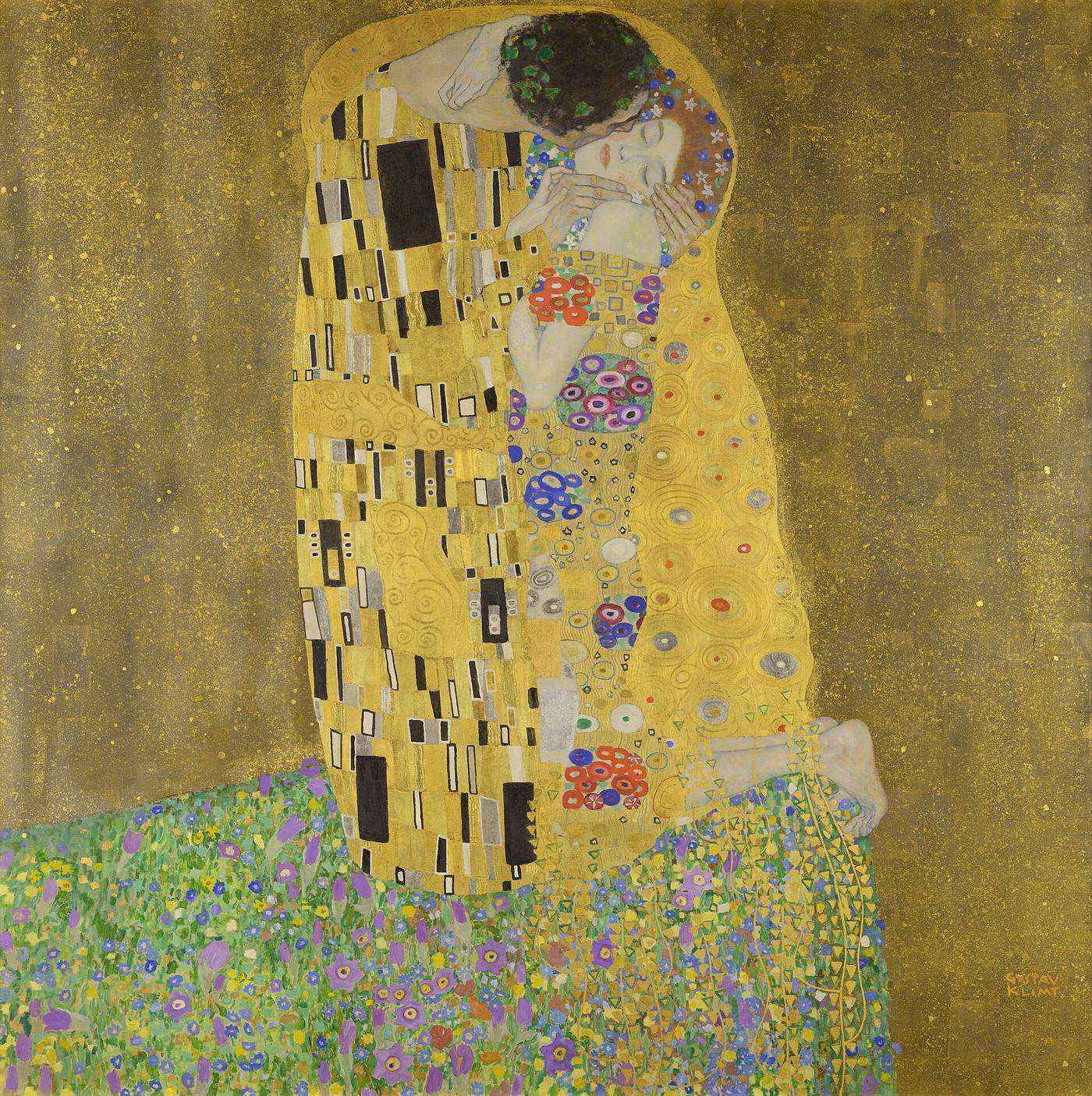
A cool, collected wall: a large Starry Night anchor, a calm Girl with a Pearl Earring, a serene Great Wave off Kanagawa, a golden The Kiss, and a quiet Plum Garden at Kameido. Thread: blue-and-gold colour, all thin black frames. Reads well above a sofa or along a long dining wall.
Combination 2 — "Quiet Corner" bedroom or study (3 pieces)
A restful trio for a north-facing room: Girl with a Pearl Earring, Irises, and Plum Garden at Kameido. Thread: muted colour and small scale (30×40 to 40×50 cm), unframed gallery-wrap. Calm under artificial light, no single piece shouting.

→ Girl with a Pearl Earring: sizes, framing options and how to order
Combination 3 — "Grand Landscape" staircase or lobby (4 pieces)
For a tall wall that wants scale: The Great Wave, a large Rocky Mountains, Lander's Peak, Luncheon of the Boating Party, and Sunflowers as the warm counterpoint. Thread: landscape-and-life subject, matched gold or walnut frames. Designed for a staircase rake or a hotel corridor.

→ Rocky Mountains, Lander's Peak: sizes, framing options and how to order
Want a wall that is yours, not a template? Send a photo of the wall and the mood you want — we return a sized layout with frame recommendations, free.
💬 Plan My Wall on WhatsAppHow we plan your wall from a photo
You do not have to do the floor-template dance alone. The service is free and happens before you order anything:
- Send a straight-on photo of the wall with rough width and height (a tape measure or a door in shot gives us scale).
- Tell us the mood — calm, dramatic, colourful, classic — and roughly how many pieces you imagine.
- We return a layout sketch: piece sizes, spacing, frame choices, and which paintings we suggest, drawn to your wall's proportions.
- You adjust with us, then order only what you want. No commitment until you say go.
This is the same planning we do for hotel corridors and multi-unit projects, just scaled to your living room.
Choosing sizes for the wall
A gallery wall is more forgiving than a single statement piece, because the group carries the scale. A useful starting table:
| Wall / use | Per-piece size | Notes |
|---|---|---|
| Bedroom, study, narrow hallway | 30 × 40 cm / 12 × 16 in | Quiet corners; 3–5 pieces |
| Above a sofa (group) | 40 × 50 cm / 16 × 20 in mixed with one 60 × 80 cm anchor | Salon or loose grid |
| Living room feature wall | 50 × 60 cm / 20 × 24 in, plus 60 × 80 cm anchors | 5–7 pieces reads rich |
| Staircase, lobby, corridor | 40 × 50 to 60 × 80 cm, stepped | Scale with the run; 6–12 pieces |
Avoid making every piece identical in size unless you are doing a strict grid — size variety is what gives a salon hang its energy. And keep one anchor larger than the rest so the wall has a centre.
What affects the price
We quote per wall rather than publishing a price list, because three things genuinely move the cost:
- Total canvas area. A wall of six 40×50 cm pieces costs less than one 120×160 cm canvas of the same total area would, because smaller pieces are faster to paint and frame — but more pieces mean more frames, which balances it.
- Difficulty of each painting. A glazed Turner sky or a Van Gogh impasto takes longer than a flatter classical portrait at the same size.
- Frames. Real wood frames, especially hand-finished gold leaf, add to the total; gallery-wrap is the most economical and the easiest to mix.
Send us the wall photo and your rough piece count on WhatsApp and you get an exact group quote — usually within the hour, no obligation.
How ordering works, step by step
- Tell us the wall, sizes and frames on WhatsApp (or use the free planning step above). We reply in writing with a firm quote and a timeline you can hold us to.
- 50% deposit to start — a secure payment link, your choice of method. The deposit reserves your painters' slots and covers materials and studio time already committed.
- Your painters get to work. Ground, oil layers, finishing — every piece hand-painted in Dafen Village. Typical time is 2–4 weeks for a wall; large multi-piece projects can run longer, and we say so upfront.
- You approve finished photos. When each painting is nearly complete we send photographs of the finished work. Happy? Pay the 50% balance. Want something adjusted? Tell us what to adjust and we adjust it.
- Shipping. Once the balance is settled, the paintings are packed — acid-free paper, corner protectors, rigid tube or crate — and shipped worldwide by tracked courier (DHL or FedEx). Import duties and taxes in your destination country are the buyer's responsibility (DAP).
FAQ
How many oil paintings make a good gallery wall?
For a home wall, 3 to 9 pieces reads as intentional rather than cluttered. Three is the minimum to call it a "wall" rather than a pair; nine is about the upper limit before a standard living-room wall starts to feel busy. Bigger walls in lobbies, staircases and hotel corridors can comfortably take 12 or more. Start with odd numbers (3, 5, 7) — they are easier to balance around a centre line.
Should all the frames on a gallery wall match?
Not necessarily, but you need one consistent rule. The cleanest results come from either "all matched" (same frame on every piece) or "all minimal" (thin black or unframed gallery-wrap on every piece). Mixing ornate gold with bare canvas only works if you repeat the contrast deliberately. A single consistent frame line is the fastest way to make a mixed-subject wall look designed rather than random.
How much space should be between paintings on a gallery wall?
Keep the gap between frames consistent: 5–8 cm (2–3 in) for a tight, modern grid, or 7–10 cm (3–4 in) for a more relaxed salon hang. The mistake most people make is varying the gap as they go — uneven spacing is what makes a wall look accidental. Measure once, cut all the spacers, and use the same gap everywhere.
Can I mix different artists and styles on one gallery wall?
Yes, and a mixed wall is often more interesting than a single-subject one — as long as there is a thread. Common threads that work: a shared colour (all warm golds, all cool blues), a shared subject (landscape + seascape), or a shared frame. A Van Gogh next to a Hokusai next to a Vermeer can look collected and confident if the frames and spacing are consistent. Without that thread, it reads as a clearance sale.
How do I lay out a gallery wall before drilling holes?
Do it on the floor first. Trace each frame onto newspaper or kraft paper, tape the papers to the wall, and live with the arrangement for a day. Move the papers, not the holes. This is also exactly what we do for you: send a photo of your wall with rough dimensions on WhatsApp and we return a layout sketch showing sizes, spacing and frame choices — free, before you order anything.
What sizes work best for a gallery wall?
A gallery wall is more forgiving than a single statement piece because the group carries the scale. Good starting sizes are 30×40 cm, 40×50 cm and 50×60 cm mixed, with one or two slightly larger anchor pieces (60×80 cm) to hold the eye. Avoid making every piece the same size unless you are doing a strict grid — variety in size is what gives a salon hang its energy.
How do I keep a gallery wall straight and level?
Pick one horizontal line (usually the centre of your largest piece, or a common top edge) and align everything to it. Use a laser level or a long spirit level and a single measured centre point. For a grid, align both tops and sides to the same baseline. For a salon hang, align the centres to an invisible vertical axis. Mark every hook position on the paper templates before removing them.
Do you help plan a gallery wall, and are the paintings hand-painted?
Both. Every painting we supply is 100% hand-painted in oil on artist-grade canvas by studio painters in Dafen Village — no printing, no giclée, no canvas transfers. And we plan the wall with you: send a photo of the wall, tell us the mood you want, and we return a sized layout with frame recommendations. We have produced 3,000+ hand-painted canvases since 2016 across 50+ partner painters, so mixed walls of any size are normal work for us.
Ready to fill that wall? Send a photo of the space and the mood you want — we sketch the layout and quote the group, free.
💬 Plan My Gallery Wall on WhatsApp