Why photos are the honest test
A photograph of a painting is a strange kind of evidence. Flattering lighting can make a cheap print look rich, and a careless photo can make a good painting look flat. But one thing a photo cannot fake is brushwork — the actual ridges and directions of paint laid down by a hand. Ink sits in dots; paint sits in strokes. Once you know what to look for, you can tell the difference from a phone photo faster than with any certificate.
So instead of telling you that our paintings are hand-painted, we would rather show you what that means while it happens. Every photo below was taken in Dafen Oil Painting Village, Shenzhen, in the studios and lanes where our painters work — most of them of canvases that were still wet.
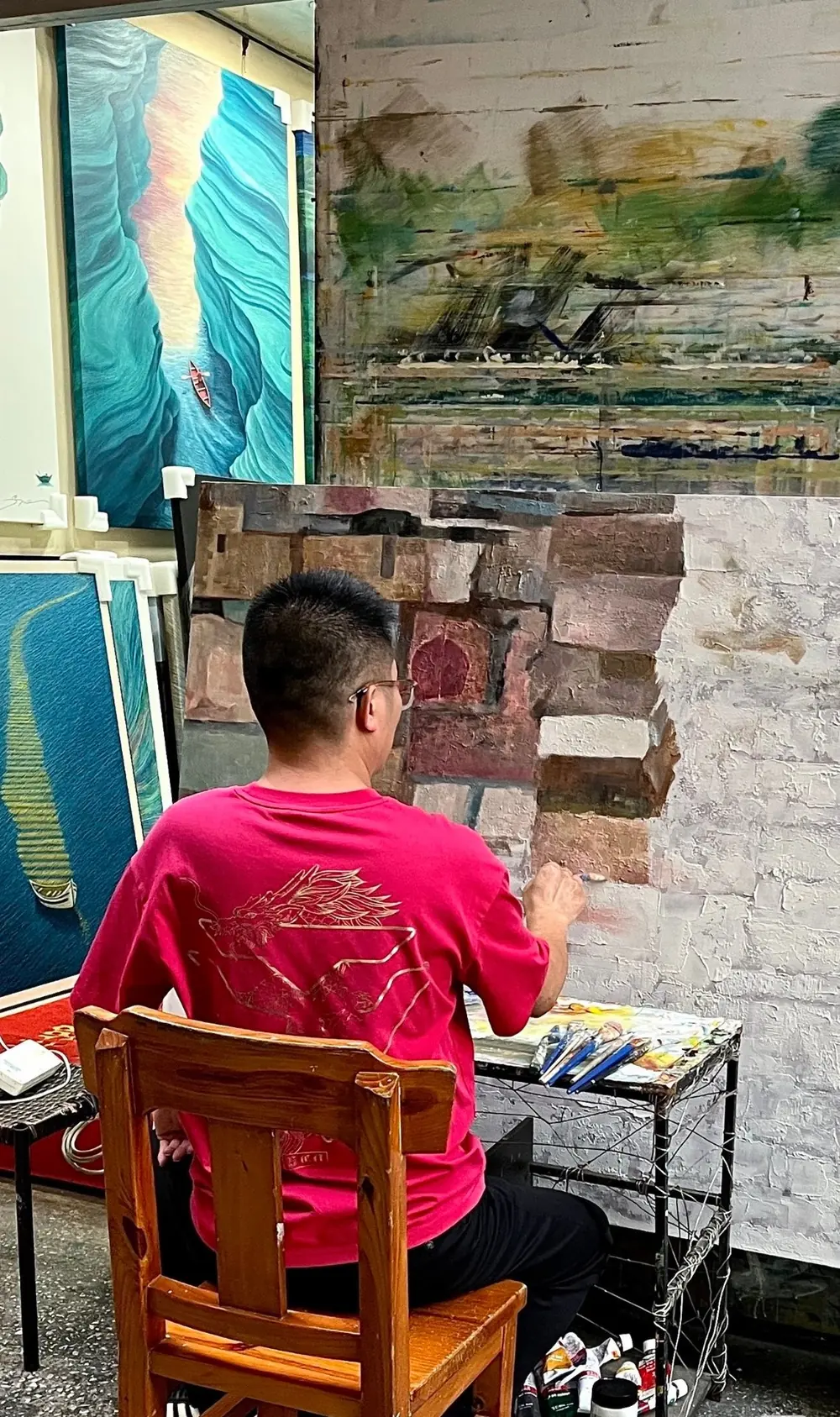
The wet brick wall, mid-build
This painter is halfway through a textured brick-wall piece, working from a palette you can see on the table beside him. Three things are worth noticing in this photo:
- No two "bricks" repeat. Each one is a separate passage of paint — a slightly different size, a slightly different mix. In a printed texture, the pattern tiles. In hand-work, it never does.
- The colours are mixed, not squeezed. Real brick red is rarely straight from the tube; you can see greys and ochres worked into the wet edges where one brick meets the next.
- The paint has height. Even at this photo's distance, the wall's surface catches light unevenly — because the strokes stand proud of the canvas.
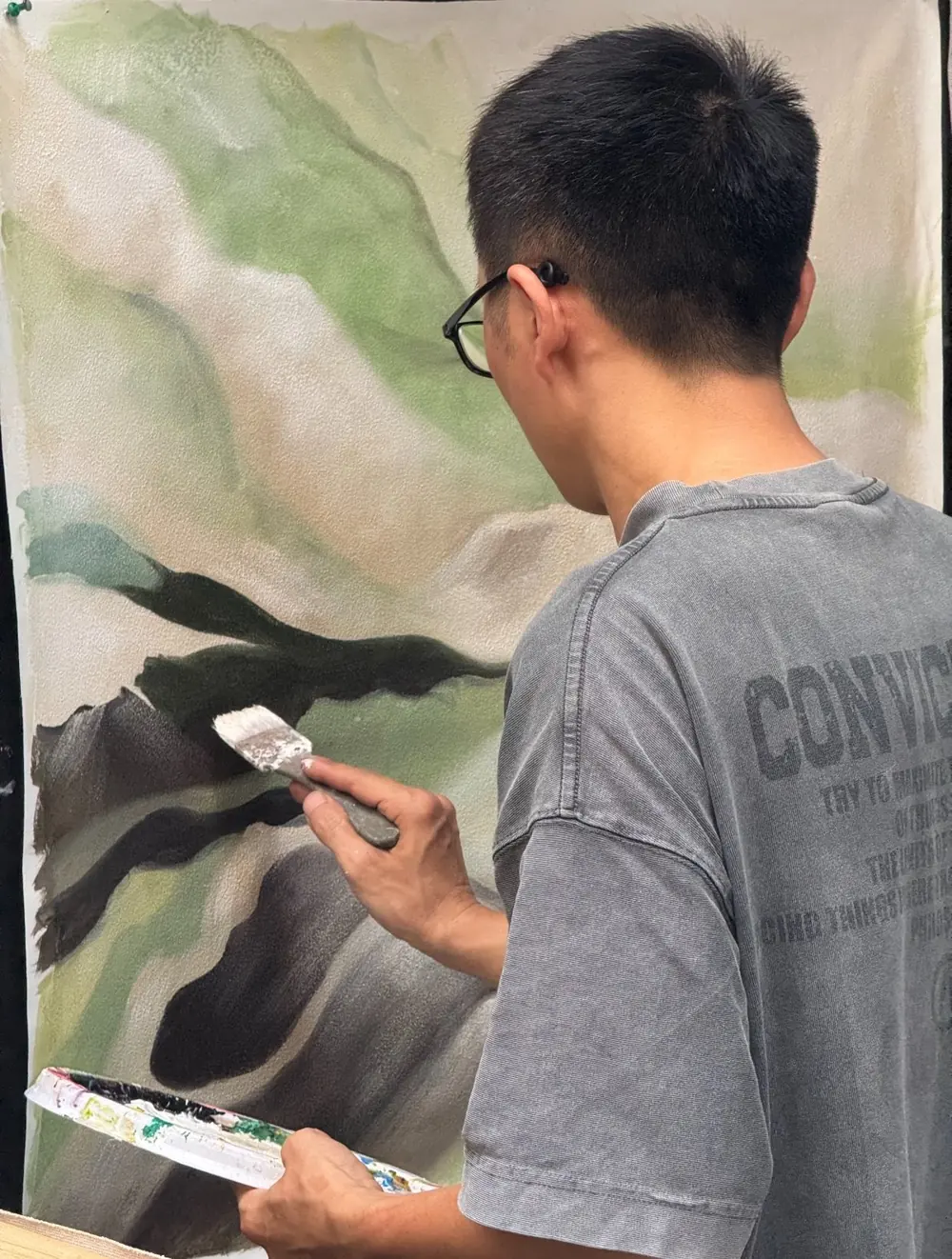
First passes on a green landscape
Here a painter is laying in a large abstract green landscape with a wide flat brush. This is the stage a print can never show you, because a print has no stages — it arrives fully formed. A painting does not. It starts thin: broad, loose passes that establish where the dark masses sit and where the light will fall. Detail comes later, on top.
The visible sign of honesty in a finished painting is this layering. Look at any canvas claimed to be hand-painted and ask: does the detail sit on top of broad underpasses, or does everything sit on one flat, even surface? Real work has a history of layers; a print has only its surface.
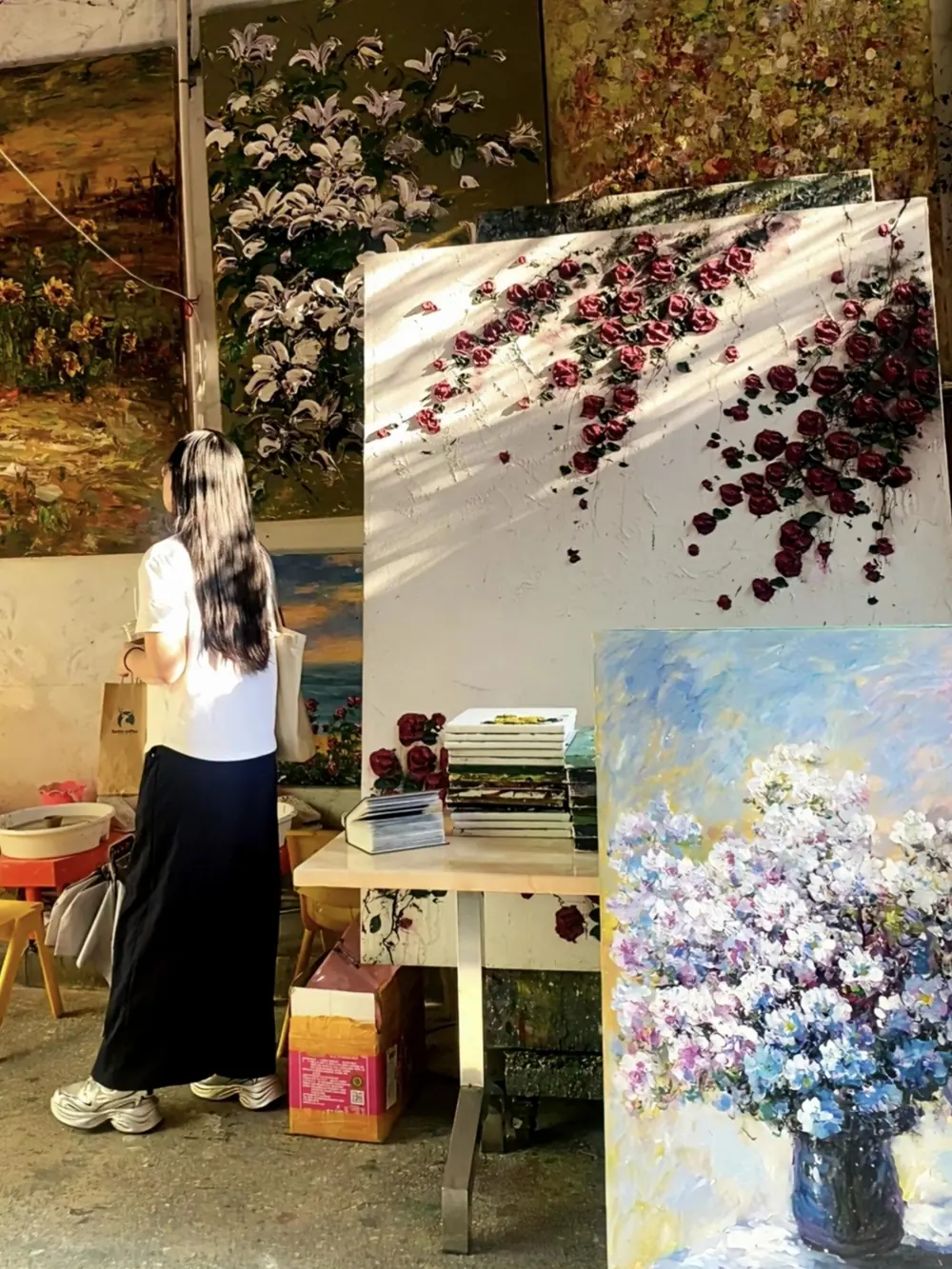
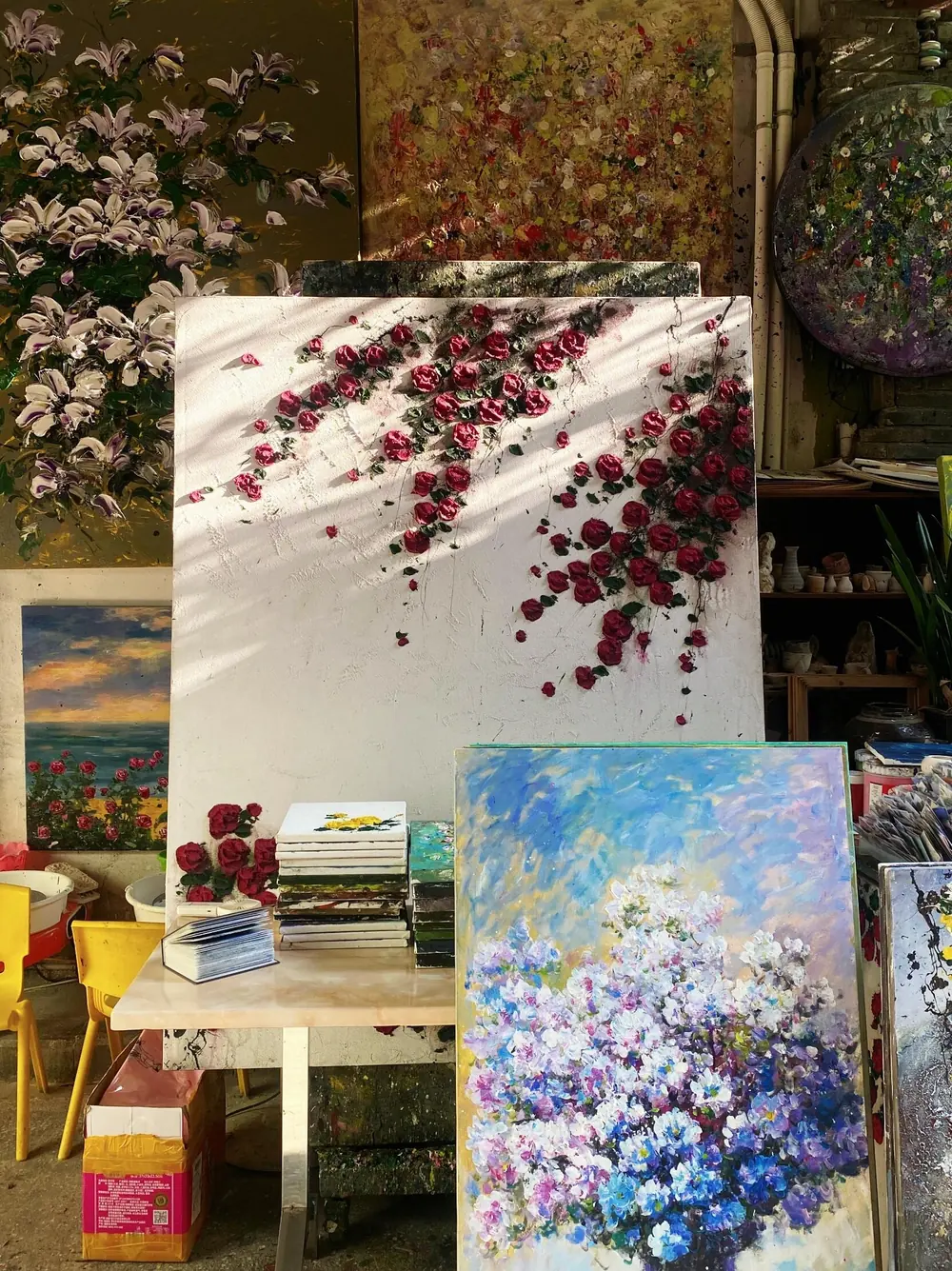
Roses in side light
These two photos were taken minutes apart in the same studio, as afternoon light came across a stack of finished floral pieces. Side light is the classic test because it is free and brutal: where there are ridges of paint, a low sun or a window throws a tiny shadow off every stroke.
Look at the deep red roses. Each petal is one loaded stroke of a palette knife, and the knife's edge leaves a small clean ridge you can follow with your eye — and with a fingernail, if you ever get the chance. The blue-and-white bouquet next to it is built the opposite way: soft, blended strokes, more paint on the highlights than the shadows. Same hand, two different logics, chosen per painting. A print has no logics. It has one surface.
A wall of Van Gogh studies
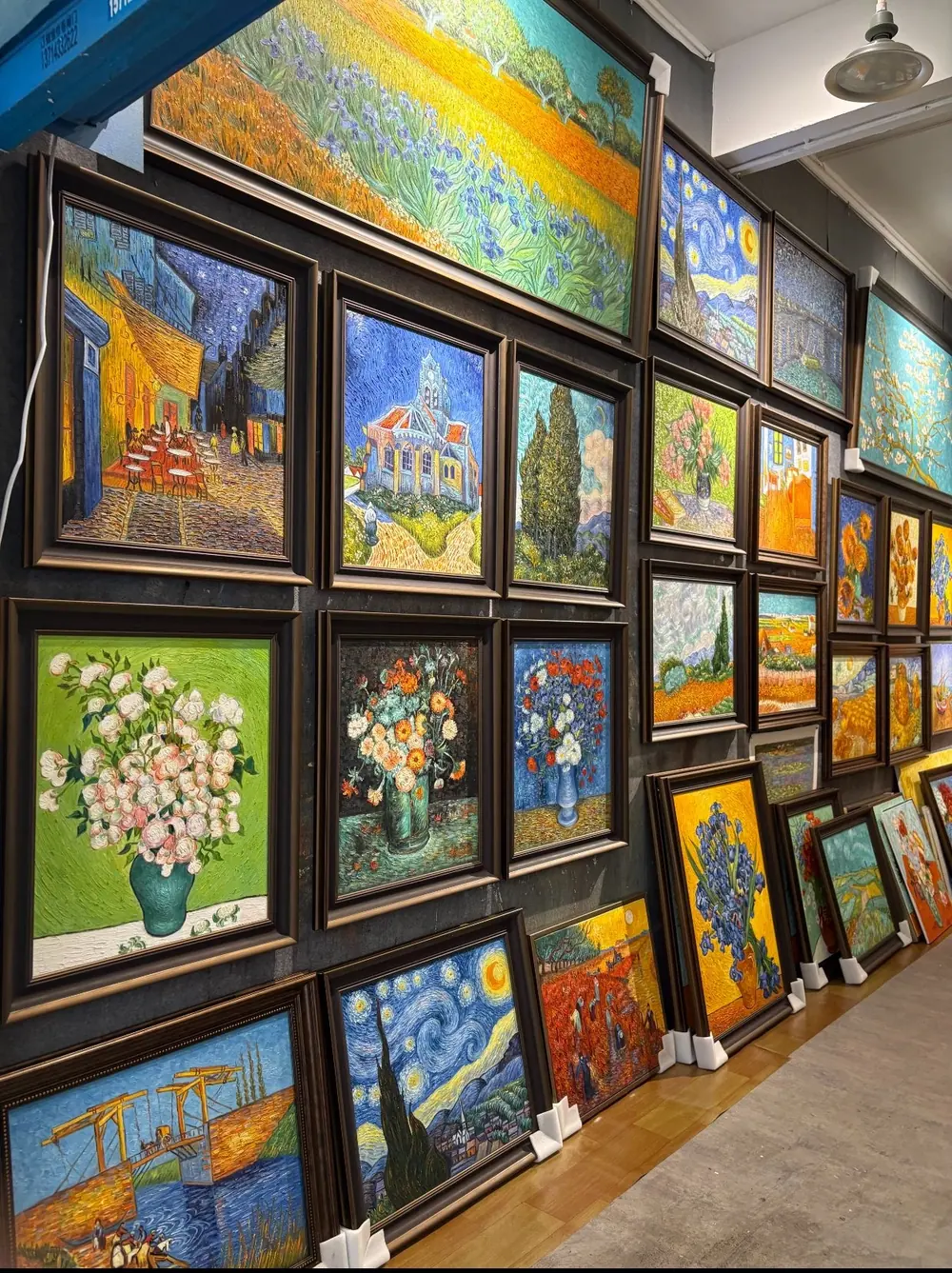
Van Gogh is the most requested artist in the world for reproductions, and the most honest one to photograph — because his style is visible brushwork. On this wall, every painting is a hand-painted study: The Starry Night, the café terrace, sunflowers, the irises.
Two details tell you these are painted, not printed. First, the stroke direction follows the original's logic — the sky swirls because a hand pushed paint in swirls. Second, look across two copies of the same image: they are alike but not identical. Small differences in edge, in mix, in the weight of a stroke. That is what a room full of hands produces. A print run produces sameness.
Three panels, one set
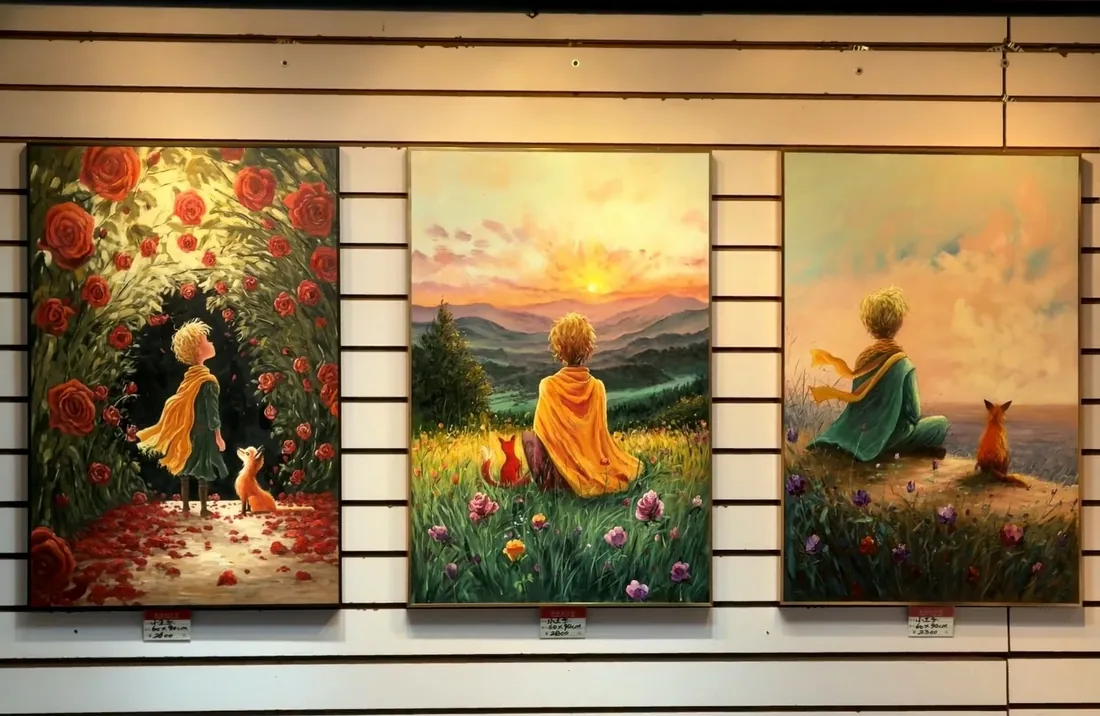
Sets are where prints cheat most easily — the same file printed three times — and where hand-work quietly shows. These three Le Petit Prince panels were painted as a set: the palette matches across all three, so they hang together. But the stroke inside each panel is individual, painted panel by panel, in sequence.
If you commission a set from us, that is the deal: matched colours, individual strokes. It is a small thing, and it is the whole difference.
Pets painted in Van Gogh's language
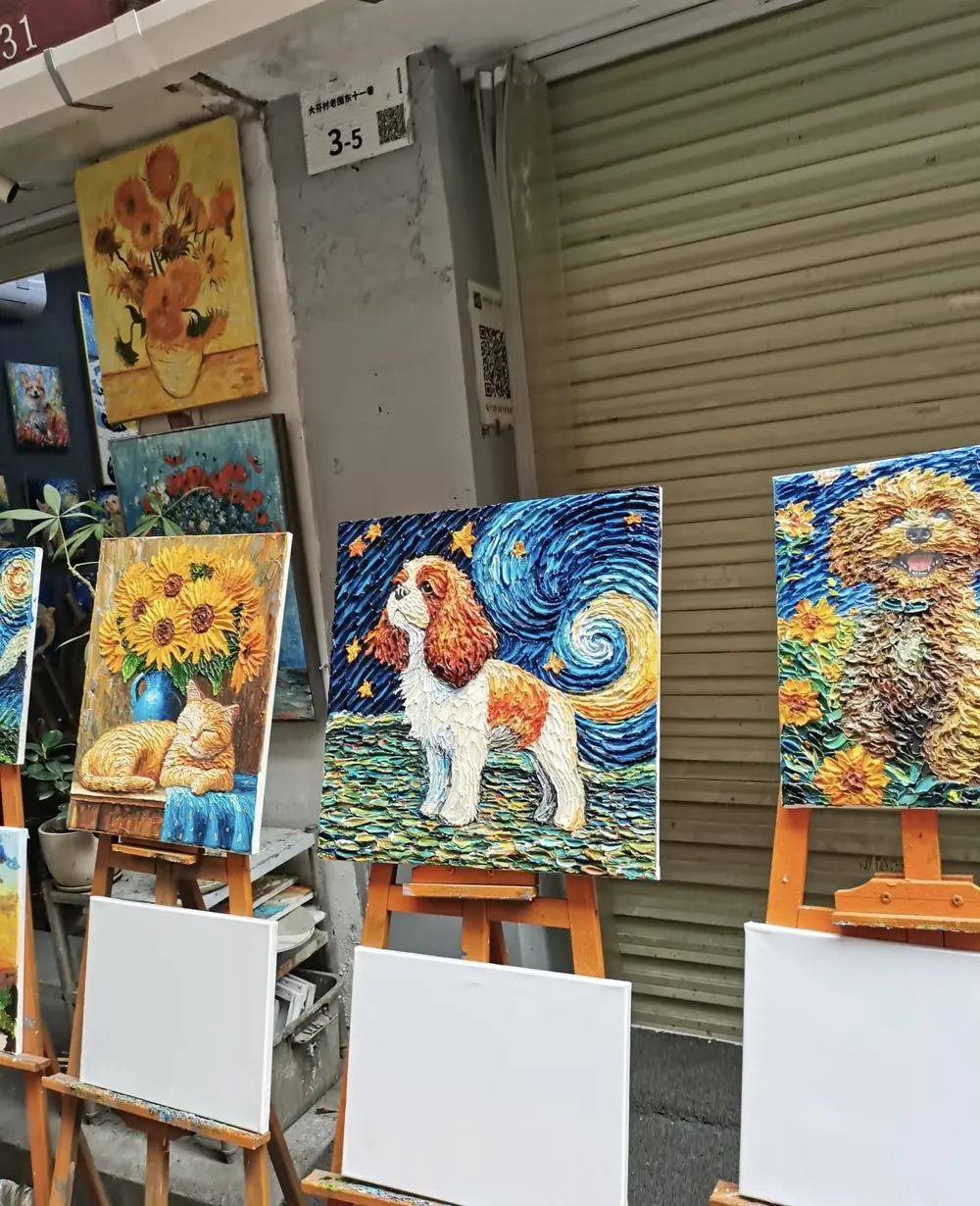
One of the most fun things a hand-painted studio can do, and one a print shop simply cannot offer at all: your own dog, painted as if Van Gogh had met him. The swirls of The Starry Night become the dog's coat; the sunflower golds become the background. It takes a painter, not a filter — every swirl is a decision.
The ten-second photo test
Next time a seller sends you a photo of "hand-painted," give it ten seconds and four questions:
- Is the texture directional? Real strokes go somewhere — following a form, a petal, a sky's turn. Printer texture is uniform noise.
- Does anything repeat exactly? Leaves, bricks, waves: hand-work varies them even when it tries not to.
- Do highlights sit on top of ridges? Zoom in. Painted highlights break across the stroke edges; printed highlights are flat shapes.
- Do multiple "copies" differ? If a shop sells the same image twice, compare the two photos. Hands drift; files don't.
For the full method — including the edge test, the back-of-canvas test and the magnifier test you can run when the painting is physically in front of you — read our companion guide: Hand-Painted Oil Painting vs. Print: 7 reliable ways to tell. This article is the photo version; that one is the checklist.
Where these photos come from
All of the photographs in this article were taken on one afternoon in Dafen Oil Painting Village, Shenzhen — the neighborhood of studios and lanes where our painters have worked since the 1990s, and where our own studio has been since 2016. If you ever visit Shenzhen, the village is a 40-minute metro ride from the border and worth a half-day of anyone's life; we wrote a full visiting guide for exactly that trip.
Want to commission a painting like these?
Send us the image, the size and the frame you want — we reply with an exact quote, usually within an hour. Every painting is hand-painted in oil in Dafen, and you approve finished photos before any balance is paid.
Chat on WhatsApp →FAQ
- Are these photos really taken in Dafen Village?
- Yes. Every photo in this article was taken in Dafen Oil Painting Village, Shenzhen, in working studios and lanes — the canvases shown were in progress or newly finished, most still wet.
- Can I see photos of my painting before it ships?
- Yes. When your painting is nearly finished we send photographs of the completed work. You approve it first, and only then pay the balance for shipment. If you want something adjusted after seeing the photos, tell us and we adjust it.
- How can I tell a print from a hand-painted canvas using only photos?
- Use the ten-second test above: look for directional texture, exact repetition, highlights breaking across ridges, and differences between copies of the same image. For the full seven-test method, see our companion guide Hand-Painted Oil Painting vs. Print.
- Do you paint custom subjects, like a pet in Van Gogh's style?
- Yes — pets, family portraits, houses, cars, or any subject painted in the style of a public-domain artist. Send a clear photo and the style you want, and we confirm before starting.
- How long does a painting take?
- Most paintings take 9–15 days depending on size and brushwork density, confirmed in writing before any deposit. Thick impasto styles need proper drying time between layers, which we do not rush.
- How does payment work?
- 50% deposit to start, 50% balance before shipment — after you approve the finished-painting photos. Nothing ships until you have seen and approved the work.
- Do you ship worldwide? Who pays import duties?
- Yes, worldwide by tracked courier, rolled and packed in a rigid tube or crate. Shipping is quoted separately, and import duties and taxes in your country are the buyer's responsibility (DAP).