Why a painted child portrait is the keepsake people keep
A phone is full of photos of a child, but a phone photo is something you scroll past. A painting of that same child, in oil, is something you hang. It marks a moment that never comes back — the round-cheeked baby age, the first birthday, the way they stood before they learned to pose — and then it stays on the wall long after the milestone photos are buried three swipes deep in a gallery app.
The version that lands best is not a generic stock illustration but the actual child: a hand-painted canvas of a face a grandparent would recognise across a room. We have painted canvases like this out of Dafen Art Hub since 2016, working with 50+ collaborating artists and producing 3,000+ hand-painted oil paintings for buyers in 20+ countries. A child portrait is one of the few gifts that becomes part of how a family remembers a particular age.
How do you paint a child who won't sit still?
This is the question every parent asks first, and it is the reason a child portrait starts with a photograph rather than a live sitting. A two-year-old will not hold a pose for the hours an oil painting takes. But a photograph you already love — taken on a good day, in good light, when they happened to look exactly like themselves — freezes that expression perfectly. Our painters work from that photo, so the likeness is built into the brief from the first brushstroke.
In practice this is easier and lower-pressure than a studio sitting. You are not booking a restless sitter into a stranger's studio; you are sending us a picture that already caught the moment, and we translate it into oil. If you are unsure which photo to use, send two or three and we will tell you which one will paint best — often the "imperfect" candids read more like the child than the posed ones.
How is a custom child portrait actually made, from your photo?
You do not need to be an artist or even a confident photographer. The process starts with a single clear photo and ends with a finished oil painting on canvas. Here is exactly what happens:
- You send a photo. One clear, well-lit shot of the child's face and shoulders (for a head-and-shoulders portrait) or a fuller body shot if you want the setting too. Natural daylight near a window reads best; it shows the shape of the face without harsh shadows.
- We confirm the composition. Our artists decide the crop — a square for a nursery shelf, a portrait format for a tall wall, a landscape if you include a favourite chair or garden. We tell you if the photo has enough resolution for the size you want.
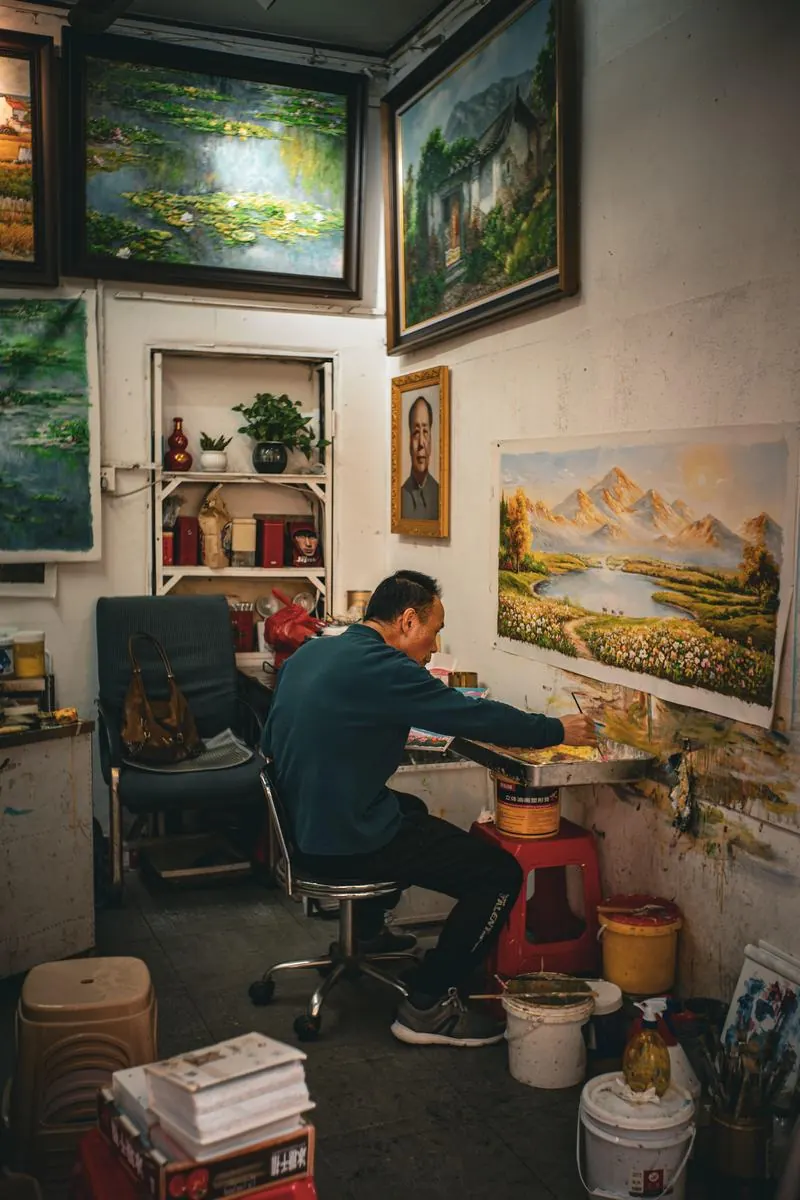
- We paint it in oil, by hand. One of our studio painters builds the likeness in oil on artist-grade canvas, layer over layer, with brush and palette knife. No printing, no canvas transfer, no giclée — the surface is real paint.
- We send finished photos. When the work is nearly complete we photograph the finished piece and send you the pictures, so you see exactly what you are getting before anything moves.
- You approve, we frame and ship. You tell us it is right (or what to adjust), we finish the frame if you ordered one, and ship it to you or directly to the recipient.
How can I tell it's really hand-painted, not a print?
If you have only ever seen flat prints, the thing that surprises people about a real oil painting is that the surface itself carries the image. On a child's face, the soft cheek, the catchlight in the eye, and the wisps of hair are not a smooth photograph — they are built from strokes of paint.
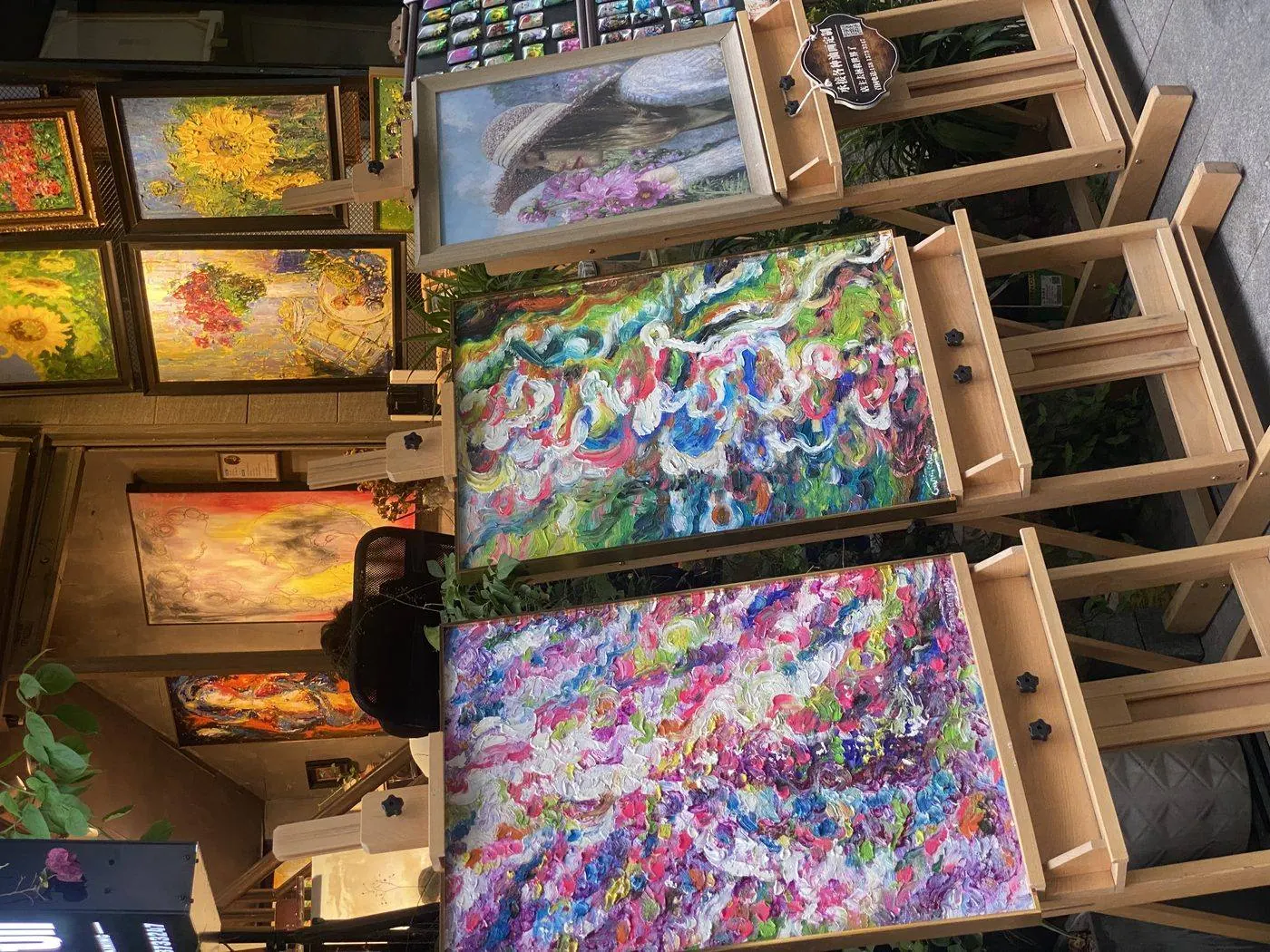
One detail that gives it away even in a photograph: where a painter uses a palette knife, the impasto (the raised ridge of paint) catches side light and throws a tiny shadow of its own. A print can reproduce the colour of that ridge but never the shadow, because it has no height. That is why an oil painting shifts a little as the light changes through the day, while a print looks identical at noon and midnight — and why a grandparent will run a thumb over the canvas the first time they see it.
What subjects and styles work for a child portrait?
A head-and-shoulders likeness is the default, but a child portrait can carry more than a face. Depending on the child and the room it will hang in, these directions all paint well, all to order in the same studio:
- A classic head-and-shoulders portrait in soft, warm tones — the safe, timeless choice for a nursery or a grandparent's wall.
- The child in a favourite place — their bedroom, the garden, the beach they loved at eighteen months. Including the setting tells the story of an age, not just a face.
- A loose, painterly style — soft edges and visible brushwork, the way 19th-century painters like Millet and Renoir handled children, which suits a relaxed family home better than tight photorealism.
- A paired siblings portrait — two canvases that hang side by side, or one composition with both children, for a gift that covers the whole family at one moment.
- A pet-and-child combination — we paint pets from photos too, and a child with the family dog is an easy crowd-pleaser that grows more precious as both get older.
We paint the child's likeness in our own hand-painted style rather than reproducing any copyrighted artwork; if you want a particular painterly mood, tell us "soft and impressionistic" or "clean and realistic" and we will match it. If you are unsure which direction fits the recipient, send us a photo of the room and we will suggest a style and colour balance that will sit comfortably on their wall.
What size should I choose for a child portrait?
Because each canvas is painted to order, any size is possible — we are not limited to what a warehouse happens to stock. As a starting point, these are the formats we paint most for child portraits:
| Canvas size (cm) | Format | Best place |
|---|---|---|
| 30 × 40 | portrait | nursery shelf, bedside, a nursery gallery wall of three |
| 40 × 50 | portrait | entryway, above a dresser, grandparent's hallway |
| 50 × 60 | portrait | child's bedroom feature, a reading nook |
| 60 × 80 | landscape / paired | above a sideboard; two siblings side by side |
| 80 × 100 | portrait | a larger single portrait above a cot or console |
| 90 × 120+ | portrait | a statement piece on a wide nursery or landing wall |
A simple rule we give every portrait buyer: for a single head-and-shoulders canvas, the longer side should roughly match the width of the furniture beneath it — a 40 × 50 above a 50 cm dresser, an 80 × 100 above a wider console. Send us a photo of the wall with rough dimensions noted and we will tell you honestly whether your shortlisted size is too small or too big before you order — there is no point painting the wrong scale as a gift.
Which frame should I pick?
The frame sets the whole tone of the portrait, and it arrives ready to hang either way:
- Floating frame — a slim wood or black border that leaves a small gap to the canvas. Modern, safe, works in almost any nursery or new-build.
- Classic gold or walnut — for a traditional home or a heritage feel. Reads "established," suitable for a grandparent's house.
- Thin matte white or black — the minimal option for a clean, contemporary nursery.
- Gallery wrap (no frame) — the image continues around the edges of the canvas, so it hangs frameless. Lightest to ship and easy to hang at child height.
For international gifting we can ship either framed (protected in a wooden crate) or rolled in a tube (lighter, the recipient frames locally). Tell us which when you order and we will pack accordingly.
How much does a custom child portrait cost?
We do not list a single price for a child portrait, because no two are the same job. The quote depends on a few straightforward things:
- Size — a 30 × 40 canvas uses a fraction of the paint and time of a 90 × 120 one.
- Complexity — a single head-and-shoulders is quicker than a full-body child in a detailed garden with dozens of leaves and toys.
- Style — tight photorealism takes longer than loose, painterly brushwork at the same size.
- Frame — a floating or gold frame adds material and crating; a gallery wrap adds none.
- Number of children — a siblings pair is priced as one composition, not two portraits charged twice.
So the only honest way to price it is per job. Send us the photo, the size you want and the frame, and we reply with an exact quote on WhatsApp — usually within a day. There is no catalogue price because there is no catalogue; each canvas is painted when it is ordered.
How does the order process work, step by step?
- Send the photo, size and frame on WhatsApp and get an exact quote — no obligation.
- Pay a deposit to start. We ask for a 50% deposit to reserve your painter's slot and cover materials; the balance is paid later, not up front.
- We paint it. You do not need to micromanage — we send finished photographs when the work is nearly done so you can see the result.
- You approve, then pay the balance. If you want something adjusted, tell us what to adjust and we adjust it; the remaining 50% is paid after you have approved the finished-painting photos, never before.
- We ship worldwide by tracked courier. Delivery is DAP — import duties and taxes in the destination country are the buyer's responsibility. We pack framed work in a crate or roll it for the recipient to frame locally.
One thing we do not do, by design: we do not promise refunds or repaint-and-reship if a courier marks a box, and we do not send hourly progress photos. What we do promise is a finished photograph before anything ships, so the portrait is exactly what you approved — the child's face, the colours, the frame — before you pay the balance.
Frequently asked questions
- Can you paint a child portrait from just a phone photo?
- Yes. A clear smartphone shot in daylight — face and shoulders, or fuller if you want the setting — is enough to work from. We crop and compose it to the shape of your wall, and we'll tell you if the photo has enough resolution for the size you want, or whether a second angle would help, before you pay anything.
- How do you capture a likeness if the child won't sit still?
- That's exactly why we work from a photo rather than a live sitting. You send a picture that already caught the child looking like themselves, and our painter builds the likeness from that reference. A candid shot often reads more like the child than a posed studio portrait, so the wigglier the sitter, the more a photo-based painting is the right call.
- Is the child portrait hand-painted or printed?
- 100% hand-painted in oil on artist-grade canvas by a studio painter in Dafen Village. No printing, no canvas transfers, no giclée. The real brush-and-knife texture is what makes the keepsake catch the light differently through the day — something a flat print cannot do.
- What size should I choose for a child portrait?
- For a nursery or bedside, 30 × 40 cm or 40 × 50 cm sits well. Above a dresser or console, 50 × 60 cm or 60 × 80 cm. Because we paint to order, any size is possible — send a photo of the wall with rough dimensions and we'll advise honestly before you order.
- How much does a custom child portrait cost, and who pays import duties?
- It varies with size, complexity, style and frame, so we quote per job rather than posting a fixed price. Send the photo, size and frame on WhatsApp and we reply with an exact number, usually within a day. Shipping is worldwide by tracked courier on DAP terms, which means import duties and taxes in the destination country are the buyer's responsibility.
- Can I include a sibling, a pet, or the child's favourite place?
- Yes — any photo can become the painting. Two siblings in one composition, the family dog beside the child, or the child in a garden they love: if you can photograph it, we can paint it in oil. Many child portraits combine the child with something personal, and we'll compose them into one canvas.
Turn their favourite photo into a painting
Send us the photo of the child and the size you want on WhatsApp. We'll reply with an exact quote and a mock-up of the composition before any deposit — so the keepsake is right before we start.