Why does wall art matter in an office?
A bare office wall is a missed asset. The art on it quietly sets how a visitor, a candidate or a client reads the company before anyone says a word — careful and considered, or bare and unfinished. For staff, the right piece on a long corridor or above a breakout sofa takes the edge off a day of screens. None of this needs to be expensive or loud; it needs to be chosen, which is the part most offices skip.
The mistake we see most is buying whatever was on sale at a furniture supplier and ending up with a flat, mass-produced print that looks like it came with the building. An oil painting — even a reproduction of a public-domain master — carries a surface and a depth a print cannot, and in an office that difference is exactly what makes a wall feel intentional rather than decorative-by-default.
We are Dafen Art Hub, the export studio of Shenzhen Adam Art Co., Ltd., painting in Dafen Oil Painting Village since 2016. Dafen is the world's centre for hand-painted oil reproduction — roughly 1,200 galleries and studios in one village — and we work with a network of 50+ partner painters. We have produced 3,000+ hand-painted canvases and shipped them to 20+ countries, including single commissioned works up to 5 m × 8 m. For an office, that means we can paint one reception piece or an entire headquarters, to the same standard.
What types of oil paintings work best in an office?
Offices are not homes. The art has to survive being glanced at by hundreds of people a week, look right under fluorescent and LED light, and not clash with branding or furniture. These are the works our corporate customers commission most.
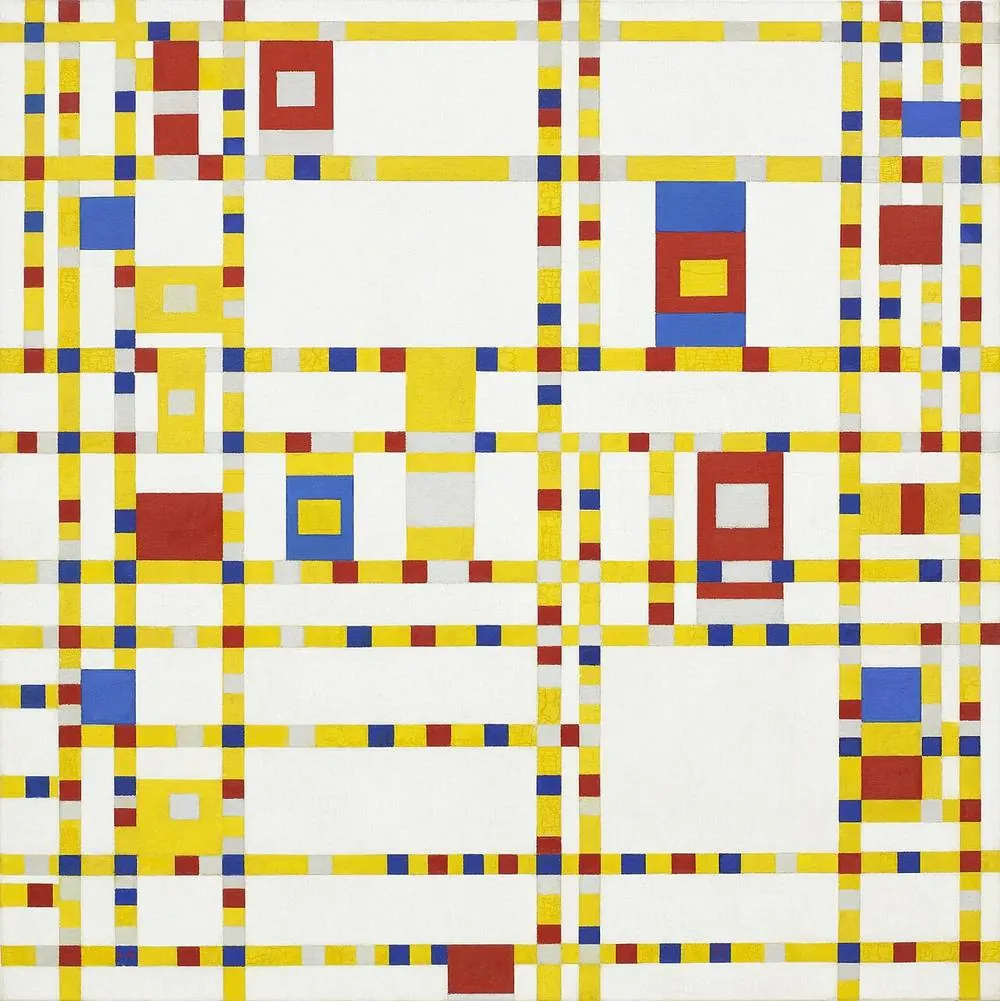
Mondrian — Broadway Boogie Woogie
The single most "office" painting in the canon. Its grid of red, yellow, blue and grey blocks reads as structured, optimistic and quietly corporate without being stuffy — which is why it shows up in so many modern headquarters. It works in a matte black frame or a slim floater, and it pairs naturally with glass, steel and open-plan layouts.
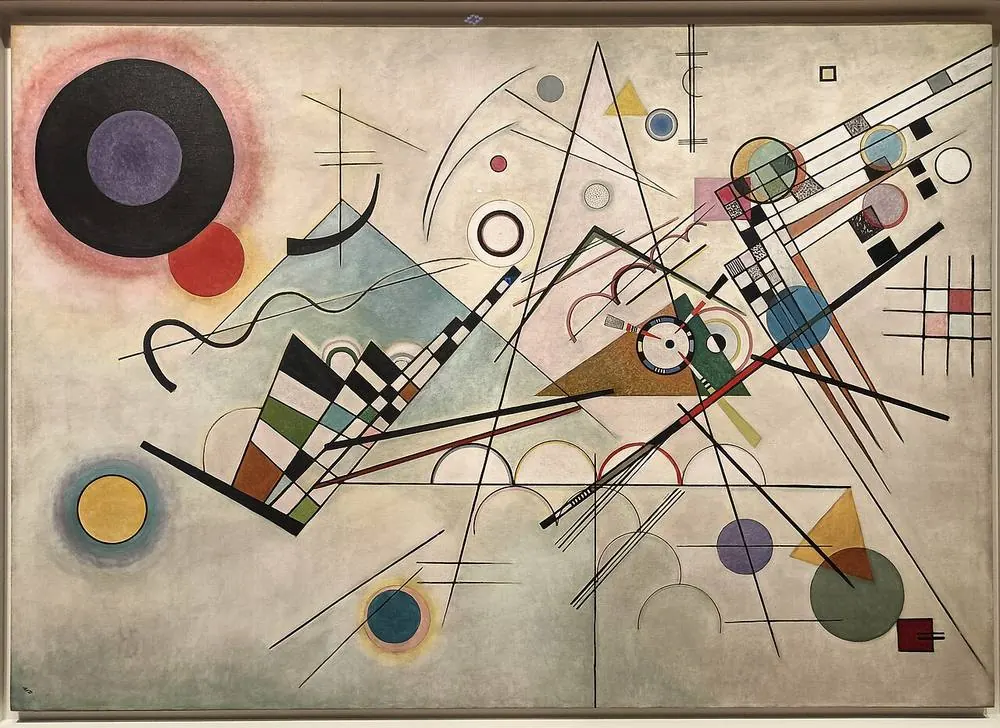
Kandinsky — Composition VIII / Yellow Red Blue
Pure energy without a single recognizable object. Kandinsky's abstractions are ideal for creative studios, lobbies and meeting rooms where you want people to feel something is happening without the art telling a literal story. Composition VIII is busier and more dynamic; Yellow Red Blue is cleaner and easier to live with across a long wall.
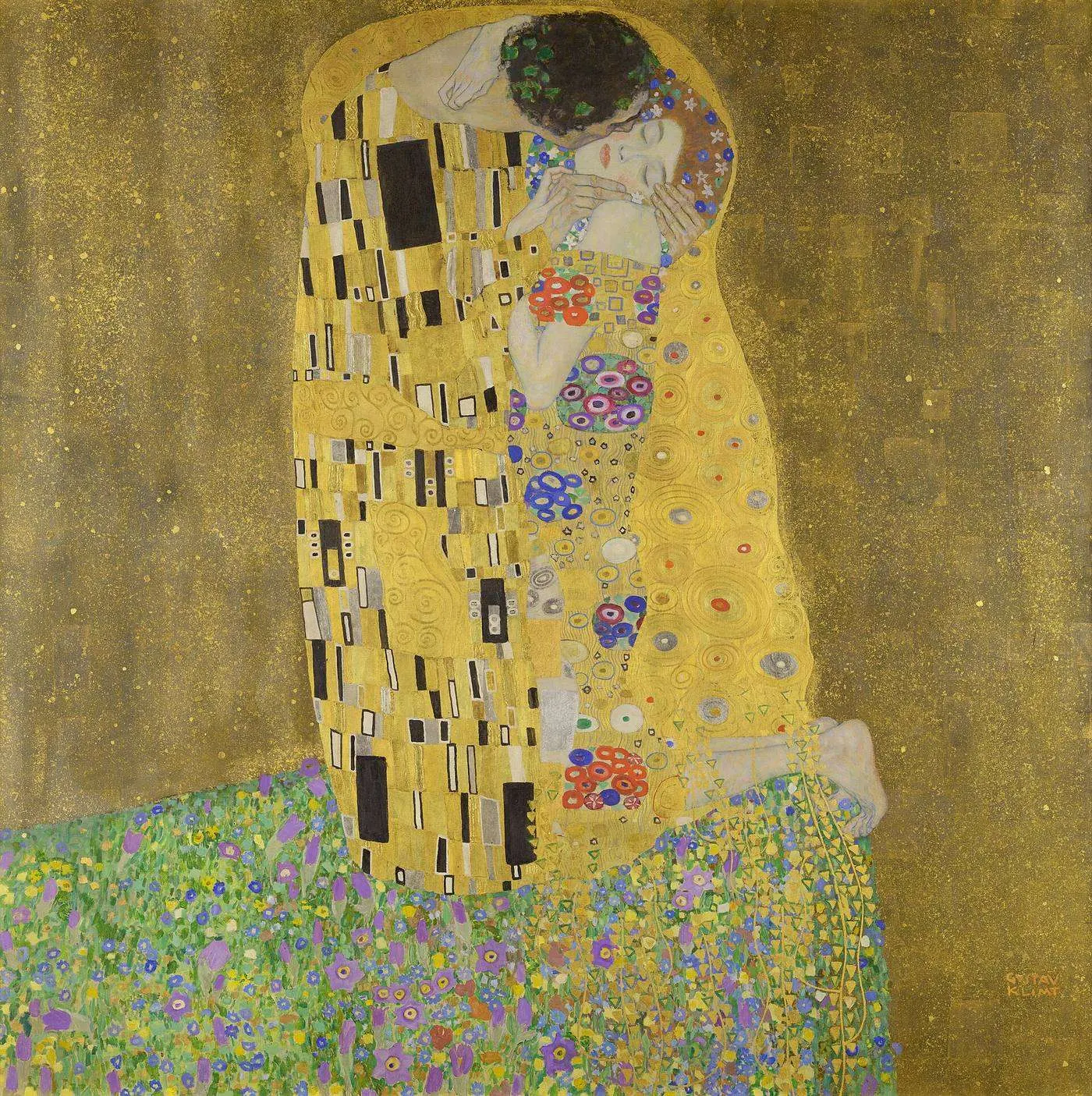
Klimt — The Kiss
Warm, gilded and unmistakable. The Kiss suits executive offices, boardrooms and private dining rooms where a more traditional, luxurious note is wanted. In a gold frame it reads as a deliberate statement of taste; it is the piece we reach for when a client says "I want the room to feel established."
Hokusai — The Great Wave off Kanagawa
A lobby statement piece. The Great Wave is instantly readable from across a room, works at large scale, and carries a story people recognise without needing a label. It suits entrance halls, atriums and any wall people pass rather than sit in front of. At 90 × 120 cm or larger it genuinely dominates a space.

Contemporary abstract — calm colour-field pieces
For open-plan floors and focus rooms, a calm abstract in blues or warm neutrals does the most work for the least distraction. These are pieces we paint to a brief rather than copy from a master — you tell us the palette of the room and we match it, so the art belongs to the space instead of fighting it.
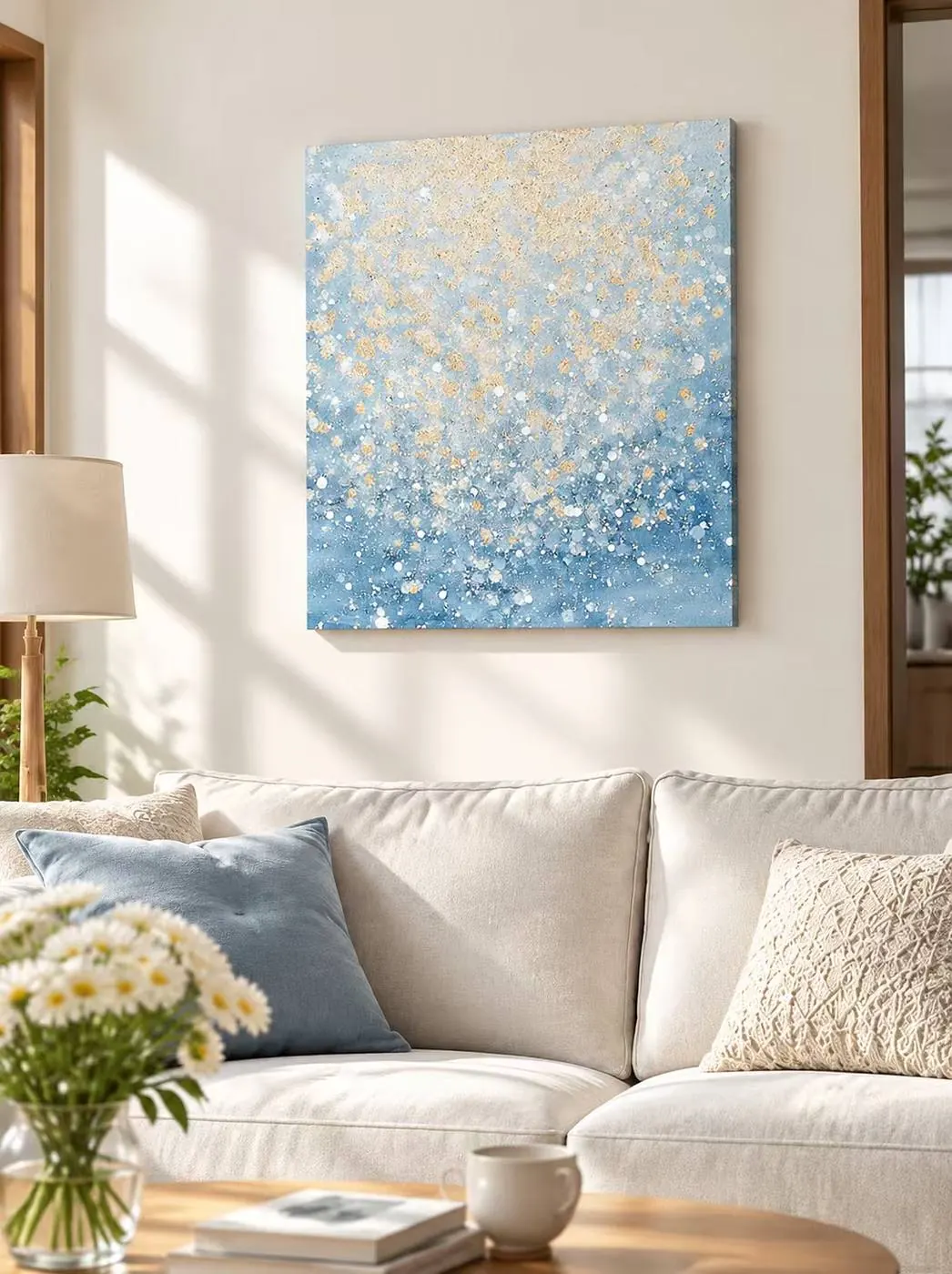
Have a specific wall and a specific brief? Send the room photo and the palette you are working with — we will suggest the works and the sizes, no obligation.
💬 Plan Office Art on WhatsAppWhich painting suits which office space?
A quick map based on what our corporate customers actually hang:
- Reception / lobby → a bold statement: Hokusai's Great Wave, a large Mondrian, or Kandinsky. This is the wall visitors remember, so spend the budget here.
- Boardroom / executive office → Klimt's The Kiss in gold, or a warm traditional landscape. Something that signals established taste and reads well under low evening light.
- Open-plan floor / breakout → calm abstracts and colour-field pieces. Energising but not distracting; pair the palette to the furniture.
- Meeting rooms → Mondrian or a mid-sized Kandinsky. Graphic and structured, and they survive being stared at during long calls.
- Corridors / stairwells → a repeating set of smaller abstracts or a single large landscape at the far end to draw the eye down the hall.
- Not sure where to start? Send photos of the actual rooms on WhatsApp and we will tell you honestly which wall deserves the statement piece and which should stay calm.
How do I choose the right size for an office wall?
Office walls are bigger and viewed from further away than home walls, so the usual "above the sofa" rules under-size them. A good rule is to fill roughly two-thirds of the available wall width, and to scale up with viewing distance — a lobby seen from six metres wants a far larger canvas than a piece above a desk. The sizing table we use for commercial interiors:
| Wall / use | Recommended canvas size | Works well for |
|---|---|---|
| Above a desk, small office, narrow corridor | 30 × 40 cm / 12 × 16 in | Small Kandinsky, calm abstract |
| Meeting room, single feature wall | 60 × 80 cm / 24 × 32 in | Mondrian, mid Kandinsky |
| Reception statement wall | 90 × 120 cm / 36 × 48 in | Great Wave, The Kiss, large abstract |
| Lobby, atrium, stairwell, boardroom | 120 × 160 cm / 48 × 63 in or larger | Great Wave, diptych pairings, custom abstract |
Because we paint to order, any size is possible — including a 5 m × 8 m atrium piece if that is your wall. Send a photo of the wall with rough dimensions on WhatsApp and we will tell you honestly if your chosen size is too small for the room; a painting that looks bold in a shop often disappears on a corporate wall.
Which frame should I choose for office art?
For offices, consistency beats variety. The frame is what makes a collection of different works read as one program rather than a mix bought at different times. Our usual approach:
- Matte black or slim floater — the default for contemporary and abstract work across an open floor; clean, graphic, and it disappears into a modern interior.
- Gold wood frame — for Klimt and warmer statement pieces in executive areas; the gilt answers the warm tones.
- Walnut / natural wood — for calm, timber-heavy or hospitality-style spaces.
The simplest way to keep a whole building coherent is to pick one frame profile and repeat it everywhere, letting the paintings vary while the frame stays constant. Full detail is in our frame buyer's guide, and we build the frame to the exact canvas in the same studio, so there is no forced fit.
How do I keep a consistent look across the whole floor?
This is the part that separates a considered interior from a random one. Three rules we give every corporate client:
- Fix the frame system first. One profile, repeated. It is the cheapest way to make thirty canvases look like one decision.
- Group by colour temperature, not by artist. Keep warm works in one zone (executive, dining) and cool/abstract works in another (open floor, meeting rooms) so each space has a mood instead of a clash.
- Scale to the sightline. Big walls get big pieces; corridors get a rhythm of smaller matching works rather than one lonely large canvas.
When we produce a program, we lay the whole floor out on one schedule so the colour story and the sizing step up logically from desk to lobby — you are not mixing and matching deliveries six months apart.
Can we order a whole floor or building at once?
Yes, and it is the most common way offices work with us. A multi-unit program might be a reception statement piece, a set of abstracts for an open floor, a Klimt for the boardroom and a rhythm of smaller works down the corridors — quoted and produced as one job. Send us the floor plan or a list of walls with rough dimensions and we return one program quote and one production schedule. This is the same way we run hotel and hospitality art programs and trade orders for interior designers; an office is just another multi-wall interior.
What affects the price?
We quote per order rather than publishing a price list, because three things genuinely move the cost:
- Size. The biggest factor — canvas area multiplies both materials and painter hours.
- Complexity. A calm abstract is faster than a tightly detailed master; fine line-work (Mondrian's grids, Kandinsky's geometry) needs a steadier hand than a loose seascape.
- Frame and count. Real wood frames add to the total, and a multi-unit program is quoted as a whole so the schedule and the frame system stay consistent.
Send us the walls, sizes and frame preference on WhatsApp and you get an exact quote — usually within the day, no obligation. For a whole building we quote the program as one number.
How ordering works, step by step
- Tell us the space, size and frame on WhatsApp — photos of the walls help most. We reply in writing with a firm quote and a timeline you can hold us to.
- a deposit to start — a secure payment link, your choice of method. The deposit reserves your painter's slot and covers materials and studio time already committed.
- Your painter gets to work. Ground, oil layers, finishing — and for a program, the canvases are scheduled so the colour story steps up across the floor. Typical time is 9–15 days per piece; large or detailed programs run longer, and we say so upfront.
- You approve finished photos. When each painting is nearly complete we send photographs of the finished work. Happy with it? Pay the balance. Want something adjusted? Tell us what to adjust and we adjust it.
- Shipping. Once the balance is settled, the canvases are packed — acid-free paper, corner protectors, rigid crate — and shipped worldwide by tracked courier (DHL or FedEx). Import duties and taxes in your destination country are the buyer's responsibility (DAP).
FAQ
Are your office paintings hand-painted or printed?
100% hand-painted in oil on artist-grade canvas by studio painters in Dafen Oil Painting Village, Shenzhen. No printing, no giclée, no canvas transfer. For a corporate interior this matters: a real oil surface catches office light differently through the day, and a hand-painted canvas reads as a considered object rather than a poster.
Which painting style works best in a corporate office?
It depends on the room's job. Lobbies and boardrooms suit bold, recognisable works — Mondrian, Hokusai's Great Wave, Kandinsky — that make a statement. Open-plan and focus areas suit calmer abstracts and colour-field pieces that energise without distracting. Executive and meeting rooms suit warmer, more traditional works such as a Klimt. We help you match the style to the space, not the other way round.
Can you produce a whole floor or building at once?
Yes. We regularly produce multi-unit programs for offices, hotels and other commercial interiors — dozens of canvases in one consistent frame system and colour story. Send us the floor plan or a list of walls with rough dimensions and we quote the collection as one program, with a single production schedule.
How do I choose the right size for a large office wall?
A good rule is to fill about two-thirds of the available wall width with the art, and to scale the piece to the viewing distance — a lobby seen from across the room wants a larger canvas than a piece above a desk. Our sizing table covers desk, meeting-room, statement-wall and stairwell/atrium scales. Send a photo of the wall with dimensions and we will tell you honestly if your size is too small.
How do I approve the painting and who pays import duties?
When each painting is nearly finished we send photographs of the completed work. You approve it first; only then do you pay the balance and we ship. If you want adjustments after seeing the photos, tell us what to adjust and we adjust it. Art ships worldwide by tracked courier; import duties and taxes in your destination country are the buyer's responsibility (DAP).
Is it legal for a company to display a reproduction of a famous painting?
Yes. We only reproduce painters who died more than 70 years ago — Mondrian, Kandinsky, Klimt, Hokusai and others — so the works are in the public domain and hand-painted reproductions are legal to commission, own and display commercially worldwide. We sell them clearly as reproductions, never as originals, and with no invented certificate of authenticity.
Ready to turn bare office walls into a space that reads as considered? Send the room photos and the sizes — program quote back within the day.
💬 Get an Office Art Quote on WhatsAppOffice walls with hand-painted art
Meeting rooms and studies take calm, structured landscapes — not stock posters.
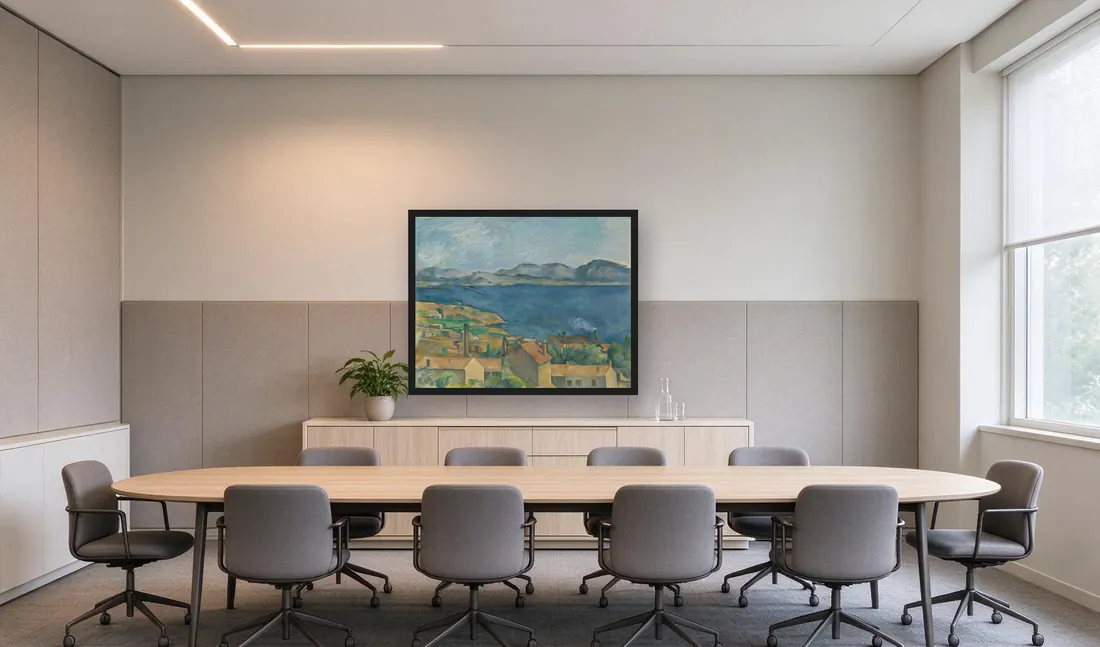
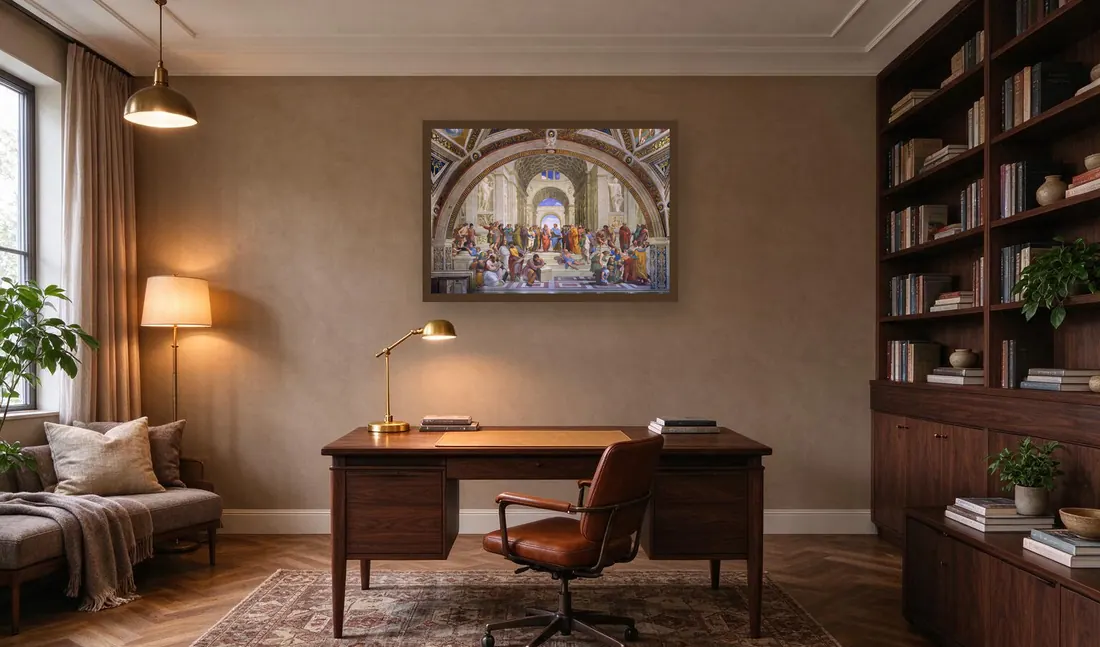
Room scenes shown are digital illustrations for reference. Every painting is 100% hand-painted.