The question people type is "can you hang an oil painting in a bathroom". The question they usually mean is the one that follows: the wall just outside the bathroom, the landing, the ensuite bedroom wall, the house by the sea. Inside the steam zone the honest answer is no — and not because oil paint is fragile, but because nothing made of fabric or wood survives there. Move one metre and the physics changes completely. This page is about which walls work, what fails first when one does not, and what we build differently when you tell us the wall runs damp.
Calm pieces suit the places this page is about — hallways, landings, bedroom corners. All hand-painted in oil on canvas, any size, painted to order in Dafen.
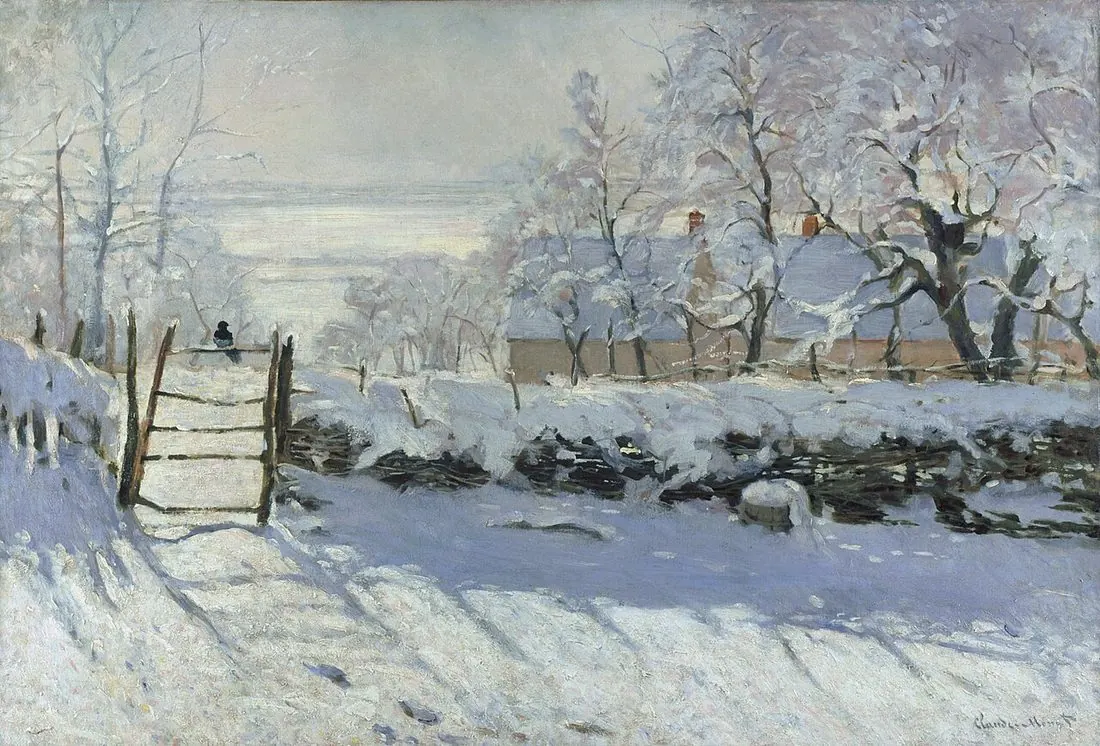
The Magpie
Claude Monet
Hand-painted · any size
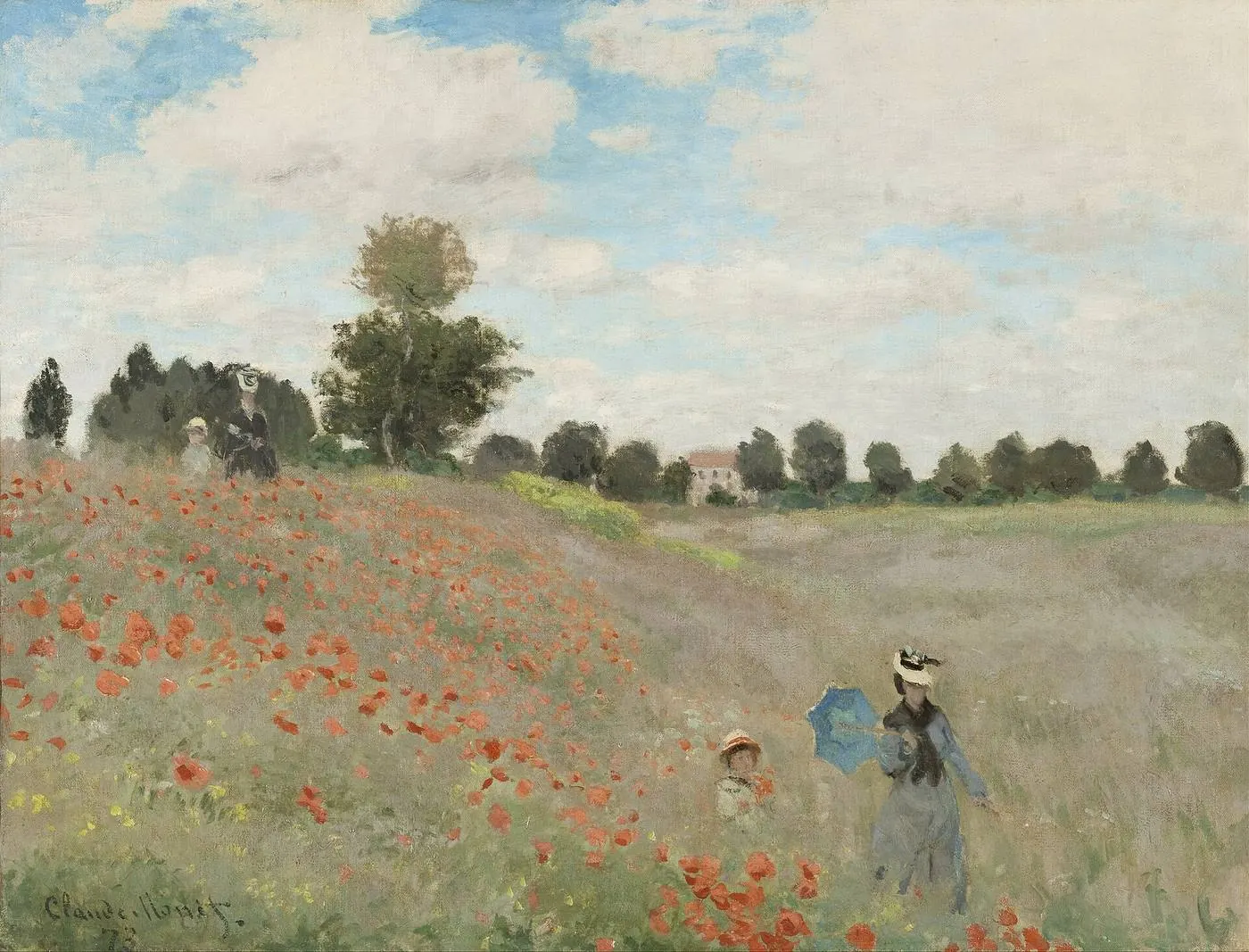
Poppies
Claude Monet
Hand-painted · any size
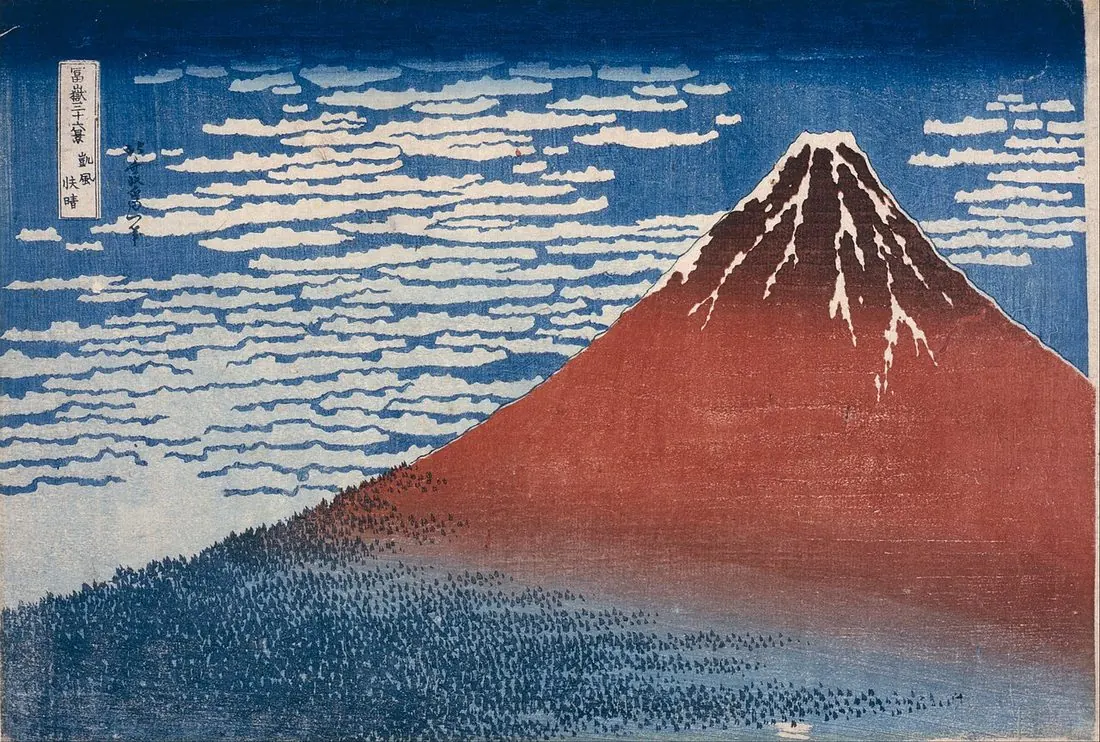
Fine Wind, Clear Morning
Katsushika Hokusai
Hand-painted · any size

Norham Castle, Sunrise
J.M.W. Turner
Hand-painted · any size
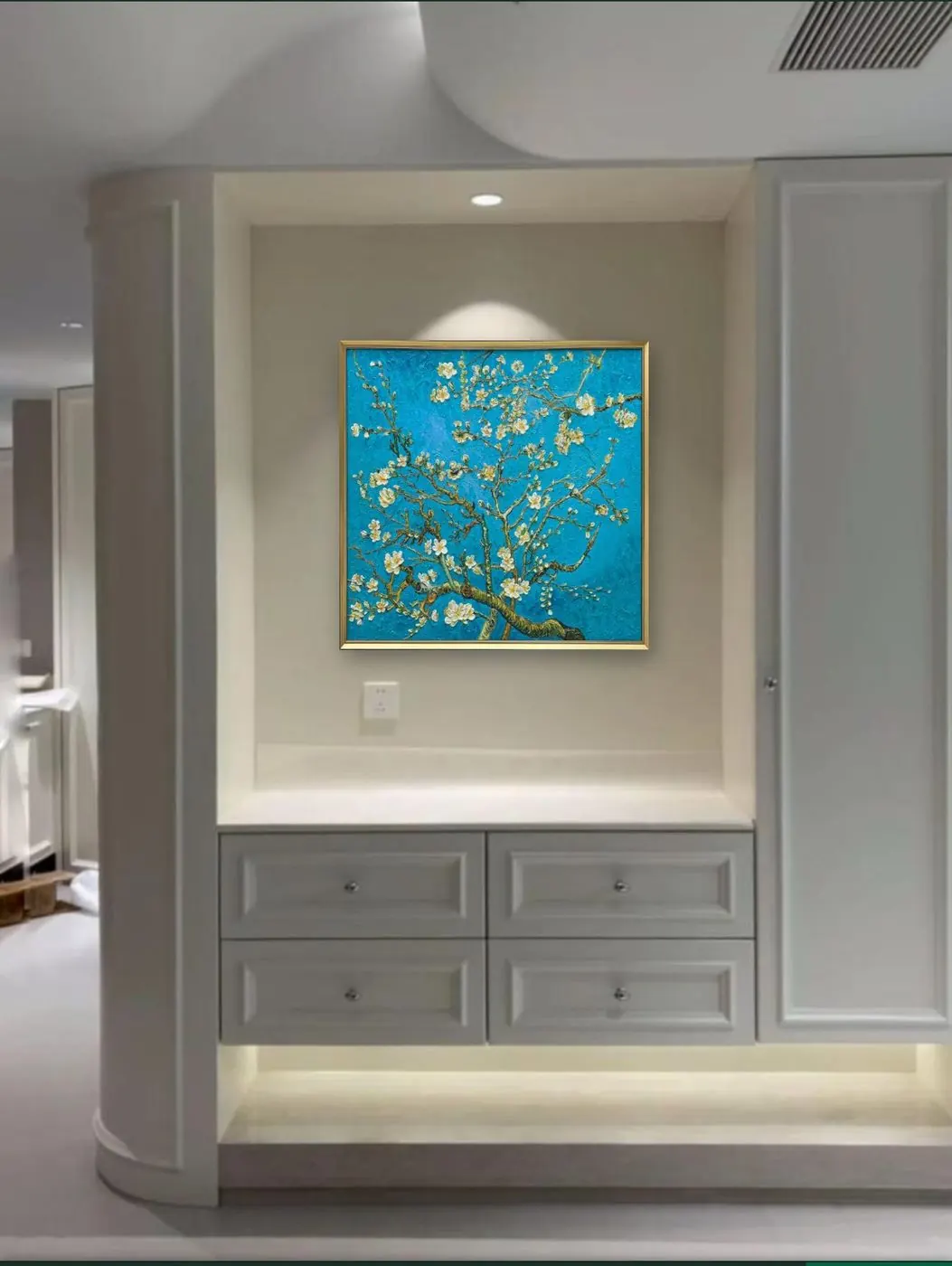
Almond Blossom
Vincent van Gogh
Hand-painted · any size

Girls on the Bridge
Edvard Munch
Hand-painted · any size
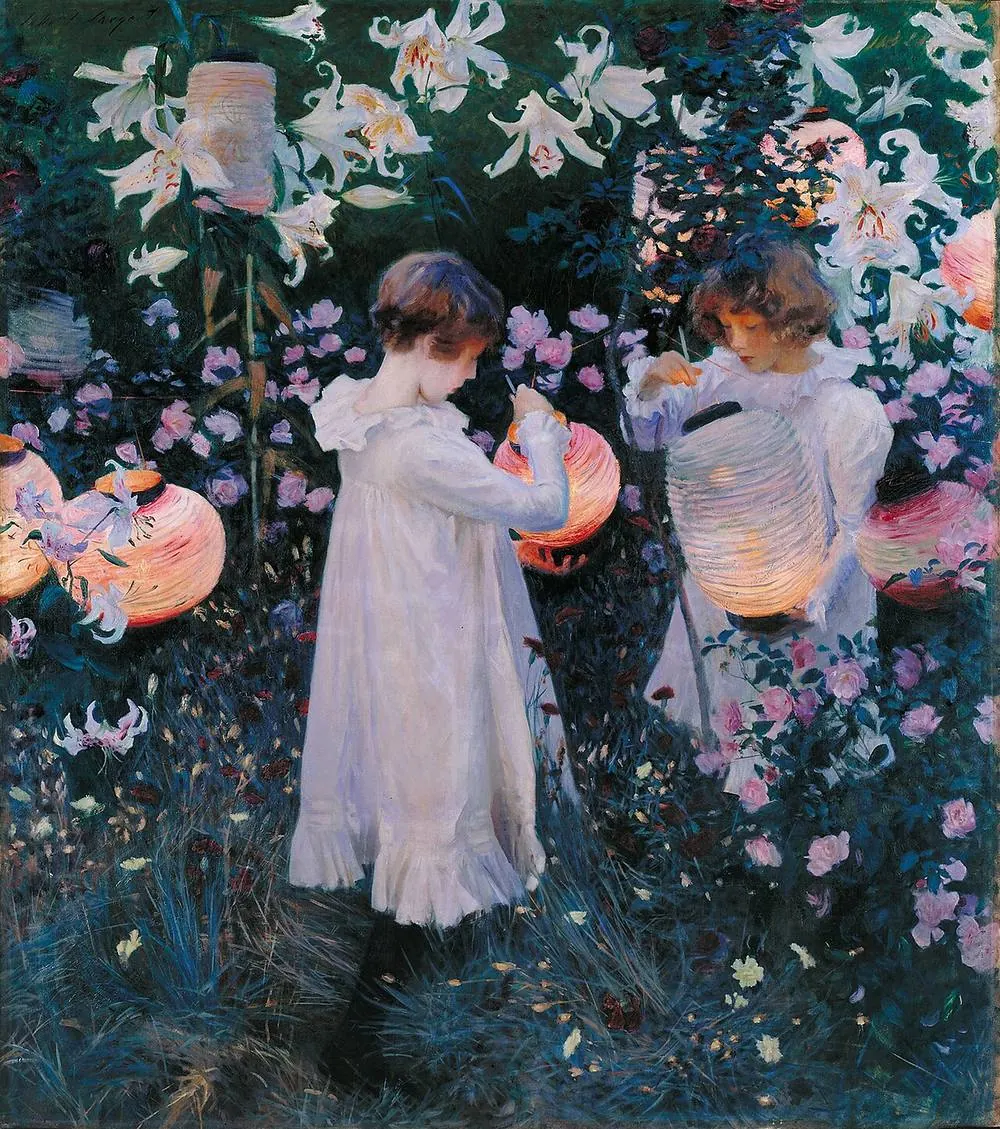
Carnation, Lily, Lily, Rose
John Singer Sargent
Hand-painted · any size

Sudden Shower over Ohashi
Utagawa Hiroshige
Hand-painted · any size
The paint film is the most tolerant part of the whole object. Linseed oil, once cured, shrugs off the kind of humidity swings a house goes through in a day; it flexes with the canvas and does not care. When a painting comes back from a damp wall, the damage is almost always in one of three places underneath it.
The stretcher bars go first. The pine frame the canvas is stretched on takes up moisture across the grain, swells slightly, and twists. The canvas responds by going slack in ripples — the first sign an owner notices is a wave in the surface when they look from the side. The paint is still perfectly attached. The object holding the paint is what warped.
Then the ground layer, from the back. Bare canvas at the rear of the painting drinks damp air directly. Mould establishes itself between the fibres, in the gesso ground, and shows through to the front as grey-black pinpoint marks that no amount of front-facing cleaning touches, because they live behind the paint. This is why "sealing the back" matters more than anything done to the visible surface.
Frame joints, if there is a frame. Mitred corners open by a millimetre, the filler cracks, and the exposed rebate then channels moisture straight at the canvas edge. Ironically, an unframed gallery-wrap canvas — the cheap-looking option — survives a damp-adjacent wall better than a handsome frame does.
Steam from a shower behaves predictably: it condenses on the first cold surfaces it meets — the mirror, the window, the ceiling — and the bulk of it never leaves the room. What escapes under the door is a small volume of warm wet air that has already dumped most of its water. Two steps down the corridor it is indistinguishable from the rest of the house. So the wall outside the bathroom door, the landing, and the corner of the bedroom away from the ensuite are, in practice, ordinary interior walls.
Four things make the difference between "fine" and "a warranty claim in eighteen months":
A quick verdict table for the places people actually ask about. "Yes" always assumes the air gap and the no-paper-backing rule above.
| Where | Verdict | Why |
|---|---|---|
| Inside the shower or bath zone | No | Any fabric loses here, and that includes canvas prints. Water hits the surface directly. This wall gets tile, glass or nothing. |
| The wall opposite the shower door, in its swing arc | No | The column of air the door releases into is the wettest in the house, several times a day. Move the painting a metre along the wall or around the corner. |
| The wall outside the bathroom door, a metre or more away | Yes | By the time the air reaches this wall it is back to room conditions. Give the canvas a small air gap behind it and hang it gallery-wrap where possible. |
| A landing or corridor off the bathroom | Yes | Usually the best spot people overlook: it gets the art seen, it is one air-change away from the steam, and the walls are interior partitions, which stay dry. |
| Above the kitchen hob or sink | No | The problem is not steam, it is cooking oil aerosol. It lands on the varnish and bonds into it, and it cannot be cleaned off safely at home. |
| The dining end of an open kitchen | Yes | Fine if the painting is out of the cooking line and away from the kettle or coffee machine. Two metres of separation does most of the work. |
| North-facing exterior wall, humid climate | Only with preparation | Cold exterior walls grow condensation when warm wet air arrives. It can work, but the canvas needs an air gap and a sealed back, and the room needs to dry out sometimes. |
| Laundry room or airing cupboard | No | These rooms cycle above 70 per cent relative humidity daily. That is mould territory for the back of a canvas. |
| Coastal house, salt air | Yes | Oil paint itself is not bothered by salt air; the enemy is condensation on cold walls. Same rules as any damp-adjacent wall: air gap, sealed edges, no paper backing. |
People assume the kitchen is a steam problem and it mostly is not. The thing that kills paintings over a cooking line is aerosolised cooking oil: an invisible deposit that lands on the varnish, oxidises, and bonds into it. It cannot be cleaned off a painting safely at home — the solvents that shift it also shift varnish, and varnish is what stands between the paint layer and everything else. Over a hob or a sink, no. At the dining end of an open kitchen, two metres out of the cooking line, entirely fine.
For keeping any painting healthy once it is up — dusting, light, temperature, when to call a conservator — see our care guide. Commercial kitchens are their own topic and we cover them in oil paintings in restaurants and cafés.
We work in Shenzhen, next door to Hong Kong, and we live with the returning-south weather every spring: warm wet air arrives off the sea, meets walls that are still cold from winter, and every surface in the house sweats for a week. Coastal Florida, the Gulf, Queensland, Singapore, a Japanese tsuyu — same physics, different calendar. So this is not a theoretical risk for us; our painters' own walls do it annually.
What that experience says: interior partition walls in a humid climate are fine, because they stay near room temperature and never become the cold surface the moisture condenses on. Exterior walls — especially north-facing ones in the winter half of the year — are the risk, because warm wet air finds them and condenses on them, on the inside face, right where a painting would hang. If your wall is cold to the touch on a muggy morning, that wall is where the water in the room is going.
The instrument that settles arguments is a hygrometer, which costs about the same as a coffee. Paintings are happiest around 45–55 per cent relative humidity; sustained readings above 70 per cent are where mould gets established on the back of a canvas; below 40 per cent the paint film goes brittle. If a room sits above 70 per cent for days at a time, fix the room first — a dehumidifier, a better door undercut, a fan that actually vents outside — and then hang the art. The painting is the most expensive hygrometer in the house and the least readable one.
Nothing about the painting itself changes — same ground, same paint, same drying time. What changes is everything around the canvas, and it costs nothing extra to ask for it:
None of this makes the inside of a shower a viable wall, and we will say so if that is the plan. What it does is move the line: with the right preparation, the wall just outside the bathroom, the landing and the coastal-house corridor all become places a hand-painted canvas lives for decades.
Which room, which wall, roughly how wide — and whether the wall runs cold or damp. We will say straight if the spot is wrong, and quote the right canvas for the one that is right. No obligation, no account to create.
A working studio inside Dafen Oil Painting Village, Shenzhen — since 2016. Every line below runs through the same floor and the same WhatsApp number.